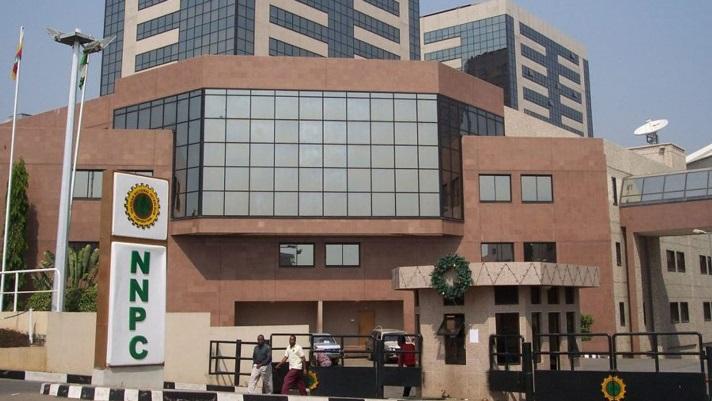
The Nigerian National Petroleum Company (NNPC) Limited is facing renewed scrutiny over how much of its record earnings will reach the federal purse, after reporting a profit after tax of N5.4 trillion for 2024, one of the strongest results since its transition to a commercial entity under the Petroleum Industry Act (PIA).
The state-owned energy company company posted revenue of N45.1 trillion, an 88 percent jump from the previous year, while profit rose 64 percent, Bayo Ojulari, group chief executive officer, said during an earnings call on Monday in Abuja.
Earnings per share climbed to N27.07, also 64 percent higher than a year earlier.
Read also: NNPC to engage private partners to rebuild refineries Ojulari

But despite the impressive top-line numbers, details from NNPC’s August 2025 revenue and distribution schedule to the Federation Account Allocation Committee (FAAC) raise questions about the company’s remittance capacity and the timing of its much-anticipated dividend payouts to the federal government.
The FAAC document, seen by BusinessDay, shows a sharp shortfall between budgeted and actual inflows from key oil-production sharing contract (PSC) revenue lines. Against a year-to-date budget of N3.75 trillion across PSC profit and distribution components, NNPC delivered just N1.06 trillion as of August, a deficit of N2.69 trillion.
The data suggest that while NNPC’s consolidated profit surged in 2024, operational cash available for government distribution remains far below projections, keeping pressure on federal revenues at a time Nigeria is grappling with rising debt costs, a weak currency, and widening fiscal deficits.
Shortfalls in PSC flows
At the heart of the underperformance is production sharing contract (PSC) profit, the largest contributor to FAAC remittances. NNPC budgeted N1.58 trillion in PSC profit for the period but delivered N1.06 trillion, leaving a negative variance of N518.8 billion.

The company also fell short in statutory set-asides: the 30 percent management fee and 30 percent frontier exploration fund each missed budget by N155.6 billion. The Federation’s 40 percent share of PSC profits underperformed by N207.5 billion.
Overall, PSC total distribution recorded the same N518.8 billion gap.
More notable, however, is the absence of the calendarised interim dividend NNPC was expected to remit to the federation. A budget of N2.17 trillion for the period showed zero actual remittance, contributing the biggest single deficit item and deepening pressure on the national treasury.
Combined, the grand total shows a massive N2.69 trillion revenue gap from NNPC as of August, a development likely to reignite longstanding debates about transparency, fiscal discipline, and the feasibility of NNPC’s new commercial structure.
Dividend expectations rise
The federal government, already struggling with weaker-than-expected crude production and a volatile exchange rate, has increasingly relied on NNPC’s remittances as a stabilisation tool. Under President Bola Tinubu’s administration, expectations are high that the company, now legally positioned as a profit-oriented limited liability entity, will contribute significantly more to the federation account.
Yet Monday’s earnings call was silent on the size or timing of dividends payable to the federal government, which remains NNPC’s sole shareholder.
Ojulari, in his briefing, positioned the 2024 results as proof that the company’s business transformation is gaining momentum.
“The earnings highlight the positive trajectory of our ongoing transformation and the unwavering commitment of our workforce,” he said. “They offer a solid foundation for the ambitious growth ahead and reaffirm our commitment to delivering value to Nigerians.”
Read also: NNPC posts ₦5.4trn record profit, as Ojulari sets $60bn energy investment plan
$60bn investment
Flush with earnings, NNPC has outlined an aggressive plan to attract $60 billion in investments across the upstream, midstream, and downstream before 2030, a target that hinges on investor confidence, regulatory stability, and security across Nigeria’s oil corridors.
The company aims to lift crude output to two million barrels per day by 2027 and three million barrels per day by 2030. Nigeria has repeatedly missed output targets in recent years, constrained by pipeline vandalism, theft, and aging infrastructure.
NNPC is also accelerating natural gas production, targeting 10 billion cubic feet per day by 2027 and 12 billion cubic feet per day by 2030. Key infrastructure, including the Ajaokuta-Kaduna-Kano (AKK) pipeline, the Escravos–Lagos Pipeline System, and the OB3 link, remains central to the plan.
“Our transformation is anchored on transparency, innovation, and disciplined growth,” Ojulari said. “We are positioning NNPC Limited as a globally competitive energy company capable of delivering sustainable returns while powering the future of Nigeria and Africa.”
Operational revenue constraints, cost-recovery mechanisms, joint-venture cash-call obligations, subsidy-related arrears, and crude theft all remain hurdles to consistent cash distribution.
Still, Ojulari insists 2025 will be even stronger.
“We will have a better financial year in 2025 compared to 2024, based on our fundamental performance, excluding the effect of foreign-exchange gains,” he said.