| The Nigerian National Petroleum Corporation (NNPC) recently disclosed that it wants to return to its original 20 per cent equity portion in the $20 billion Dangote refinery, Africa’s largest. The oil regulator had shunned this stake previously, preferring rather to hold just 7.2 per cent as it failed to complete its payment obligation to the colossal oil refiner in June 2024. The reversal tells a contrasting story of two Nigerias – one, a bumbling, oil-dependent state and the other, an ambitious, personally-forged giant that now holds its economic destiny.
Nigerians and their government view a multilayered implication of this reversal. It is a defensive investment, an admission that the future of Nigerian downstream oil may no longer be shaped in its own boardrooms, but in Dangote’s. For a corporation struggling to revitalise its own dilapidated refineries, this is a shortcut to relevance. From the lens of the latter, a larger equity stake in the country’s largest refining asset means an opportunity to profit from a potential gain of exporting refined-product exports. It also means relying less on imported petrol, and a great chance to lessen currency pressures and downstream subsidy loads – an admission that the future of Nigerian downstream oil is now shaped in Dangote’s boardrooms, not NNPC’s. |
|

| Nigerians who fill up their cars and worry about power cuts and pump-price shocks would view this as capable of reducing the ripple effects of fuel inflation in transport, food, and other commodities. They long to happily welcome the end of a costly, graft-ridden fuel subsidy regime. Dangote also benefits as additional funding amid high interest rates and a Naira devaluation could moderate its overall cost. If this doesn’t work, Nigerians will remain a prisoner of the same structural morass that the country has walked for decades.
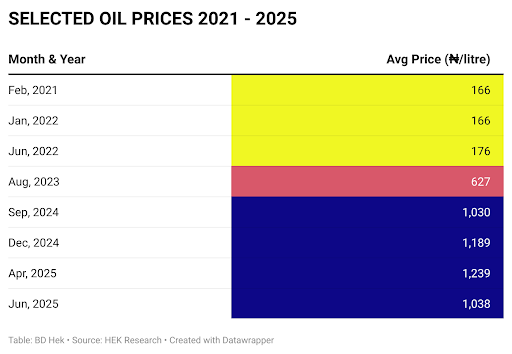
Yet, experience drags scepticism to moderate the burning hope of Nigerians. NNPC has been mired in opacity, corruption scandals, and inefficiency. This raises fears of political meddling diluted refinery efficiency. What is more, should the stake hike sacrifice national revenues at the altar of subsidised crude for Dangote, Nigerians would be burdened with the bill through increased taxes. And for a country where energy poverty afflicts millions, true success of the deal rests on transparent governance to steer it away from yet another chapter in Nigeria’s resource curse saga. Nigeria’s Oversubscribed Eurobond: Bonus or Bother? This portends double-edged implications. First, the proceeds will patch part of the N9.8 trillion ($6bn) 2025 budget hole and refinance a $1.1 billion Eurobond maturing this month. The country’s compelling repayment tensions are eased while preserving depleted reserves. External debt stands at $42 billion or 10 per cent of GDP while total public debt approaches 60 per cent. This is wieldy, but oil price swings make it vulnerable as Nigeria relies on crude for 90 per cent of exports. Lower perceived risk could trim future borrowing costs, freeing fiscal space for infrastructure in a country where blackouts strangle growth. But the glow is dimmer for Nigerians. Reforms have sparked hardship, with petrol prices tripling, food inflation hitting close to 40 per cent, and poverty afflicting over 100 million of them. Debt servicing already gulps 60 per cent of revenues and an oil price below $70 per barrel, reform failure, or increased interest payments could crowd out social spending on key sectors like health and education. While this oversubscription speaks of confidence in Tinubu’s reforms spin, sustainability cruces on execution. So, while the wall of cash builds a levee, the structural floods loom a threat. Aradel’s Rush: Bold Bet or Transient Froth The numbers say the price rise is justified. Nine months revenue to September 2025, stood at N581.2 billion, a 162.8 per cent leap from 2023, on the back of higher crude prices and refined product volumes. Profit after tax spiked 382.1 per cent to N259.1 billion to spur a final dividend hike to N22 per share. As a leading integrated indigenous player from upstream exploration to midstream refining in Nigeria’s lucrative oil sector, Aradel benefits from diversified streams less exposed to crude volatility. |
|

| Aradel has made investments that reinforce this growth, ramping up drilling and boosting output with four rigs in 2025 compared to one in 2024. Reserves have been boosted by key acquisitions, like the Olo and Olo West marginal fields in 2024; stakes in gas ventures such as 33% in Renaissance Africa Energy support Nigeria’s push for cleaner fuels. Aradel’s eyes are also set on renewables as the firm has invested in solar to cut emissions and position itself for energy transition subsidies.
Compared to peers, Aradel leaves mixed feelings. It towers above stragglers like Oando that drooped 30 per cent year-on-year and Conoil that shrunk 50 per cent from its February levels. And despite strong production, Seplat Energy, a closer upstream rival, trades flat around N5,917. What is more, Aradel’s P/E of 2.2x and low EV/EBITDA scream undervalued against global and regional benchmarks. But this rosy story is spiked by rising borrowings and higher finance costs. In pricing Aradel, the market appears to be betting on sustained export volumes, higher crude prices, and successful integration of acquisitions that will keep the flow in its cash pipeline. The first two is manifest in the financials, but the third whispers execution risk. Will Aradel sustain production, control costs and clip leverage to justify the current premium on its shares? Hek calls for cautious optimism: watch the margins but mind the debt books. |