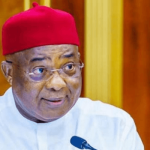
Christian Mulamula, Principal Country Officer, International Finance Corporation (IFC) Nigeria, says that Nigeria’s rich agricultural resources presents an opportunity for industrialisation in agricultural processing and food security.
He made the assertion on Tuesday in Lagos at the Lagos Chamber of Commerce and Industry (LCCI) International Business Conference and Expo 2025.
According to him, agricultural industrialisation opportunities are present in the development of food processing industries such as production of palm oil and cocoa processing.
Mulamula added that opportunities also lay in expansion of food crops like cassava, soybeans and others for domestic consumption and export.

“We deem this an opportunity to create over 300,000 jobs,” he said.
The IFC representative said a recently completed private sector diagnostic identified four sectors where public policy actions could attract significant private investment that created jobs and improved lives.
Read also: IFC’s $50m investments signals global confidence in Nigeria’s economy – Tinubu
According to him, they are Information and Communication Technology (ICT) infrastructure, agriculture and agro-processing, renewable energy and pharmaceutical manufacturing.
“Expanding the national backbone fibre network will open up new investment opportunities in digital for businesses, schools, hospitals and government agencies.

“At IFC, we look forward to continue to support the private sector investment opportunities in this and other sectors in Nigeria.
“Ultimately, the goal is to create jobs, improve lives, and help businesses compete and grow sustainably,” he said.
Christian Ebeke, the International Monetary Fund (IMF) Resident Representative in Nigeria, said recent gains such as slowing inflation, a more stable foreign exchange market and stronger external buffers were encouraging for businesses.
He, however, cautioned that foreign direct investment inflows remained too low, domestic credit was both inadequate and poorly allocated, while poverty and weak human capital persisted.
Ebeke identified priority areas to sustainably turn the economy around to include insecurity, a “Marshall plan” to fix the power sector, raising agricultural productivity and improving business regulation and governance.