



Nigeria’s recovery costs more than a meal, experts warn
By Oluwatobi Ojabello
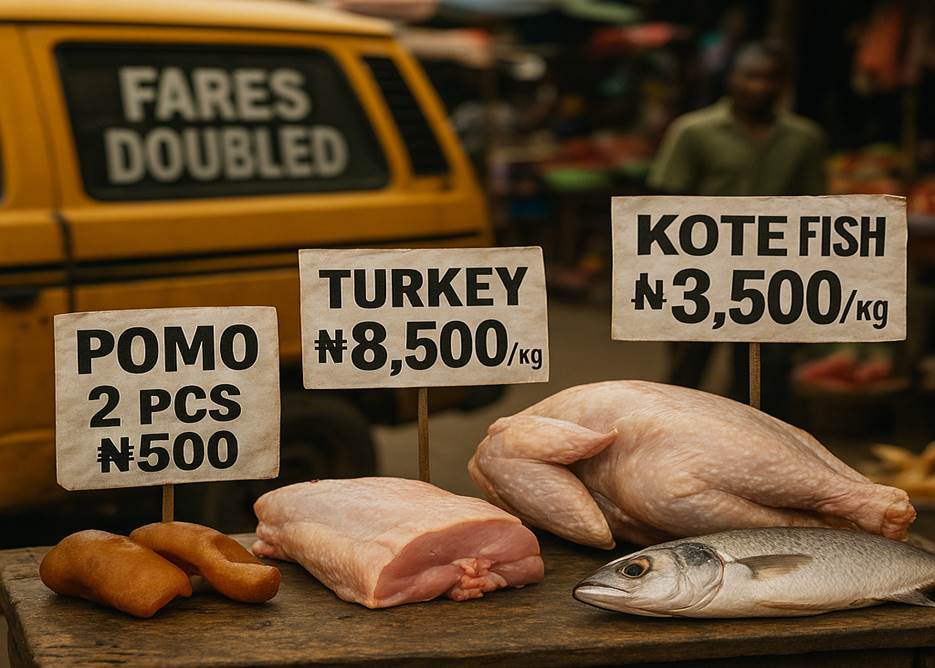
In Lagos, two pieces of pomo now sell for N500, turkey for N8,500 a kilo, and fares for a typical commute have doubled since last year. For millions of Nigerians, the promise of recovery remains invisible, even as international lenders and policymakers cheer reforms.
Meanwhile, at the macro level, the IMF has raised growth forecasts, the World Bank has praised ongoing fiscal reforms, and official data show that inflation is beginning to stabilise. The Purchasing Managers’ Index also suggests private-sector activity is picking up, pointing to a possible rebound.

Analysts warn that turning headline growth into better living conditions requires more than upbeat statistics; it needs targeted support, stronger institutions and policies that spread the benefits of growth.
Targeted support to protect purchasing power
Ngozi Okonjo-Iweala, Director-General of the World Trade Organization, welcomed the early reforms of the Tinubu administration, saying: “True progress begins with stability. The next challenge is driving growth while building social safety nets to cushion citizens.”
Economists agree that short-term measures should focus on protecting households through direct cash transfers. A former presidential adviser noted that policies such as fuel-subsidy removal or exchange-rate unification can quickly lose public backing if the poorest are left without protection.
It is now necessary for the government to expedite the process and ensure that support reaches those who need it most.

The government says it is moving in this direction. Tanko Sununu, Minister of State for Humanitarian Affairs and Poverty Reduction, recently announced that 2.2 million poor households will begin receiving cash transfers by the end of August 2025.
He said more than N419bn has already been paid to nearly five million Nigerians under the Conditional Cash Transfer (CCT) scheme, with 71 per cent of payments going to the north, 21 per cent to the south, and the remainder to other regions.
Follow the money, what does N419bn buy?
An analysis of the government’s figures shows that N419bn spread across five million individuals over 12 months amounts to about N6,983 per person monthly, roughly enough for a kilo of kote fish. If the same sum is divided among 2.2m households, it averages N15,871 monthly, covering one kilo of turkey and a chicken.
While government efforts such as student loans cannot be dismissed, implementation gaps persist. According to sources who spoke with BusinessDay, stipends were disbursed regularly each month until May 2025, but payments for June and July have yet to be made.
A public-finance analyst said this gap illustrates the broader struggle of sustaining welfare programmes once the initial announcements fade.
For experts, the credibility of these efforts depends on transparency and delivery. “Reform is not the problem; the challenge is making sure welfare reaches citizens,” said Faruq Quadri of the Helpman Development Institute. “Direct cash transfers work only if people see their neighbours benefiting. Otherwise, trust breaks down.”
Quadri suggested separating recipients into two groups: those with Bank Verification Numbers (BVNs) and those without, with monthly payments published openly. Registration would be a prerequisite for unbanked households. With more than 130 million Nigerians living in multidimensional poverty, such measures could stabilise consumption and ease social tensions.
Institutional reform to improve delivery
Nigeria has plenty of policies targeting agriculture, manufacturing and infrastructure. The problem lies in execution. “The challenge is not the absence of policy but the weakness of delivery,” said a development economist at a federal university.
Experts recommend tightening procurement rules, improving fiscal transparency at the state level, and insulating intervention funds from political capture. Strengthening NASSCO, they add, will be crucial if reforms are to reach communities beyond the political and business elite.
Inclusive growth through MSMEs and Agriculture
Small businesses and farms remain Nigeria’s backbone, making up over 95 per cent of enterprises and employing more than 80 per cent of the workforce, according to the World Bank. But they continue to struggle with weak access to credit, infrastructure bottlenecks and high costs of doing business.
Idris Oyekan, a capital-markets analyst, said: “Inclusive growth requires aligning macroeconomic policies with the realities of everyday business operators. Without targeted interventions such as financial inclusion and integrating smallholder farmers into bigger supply chains, growth will remain concentrated in a few sectors.”
Policy options include expanding credit to small firms, relaxing foreign-exchange restrictions for small importers and manufacturers, building rural roads to cut post-harvest losses, and supporting women-led informal enterprises. Lowering energy and licensing costs would help further.
From rebound to real transformation
Nigeria’s challenge is not just sustaining growth but ensuring that its benefits reach ordinary citizens. Reforms must be matched with relief, and fiscal stability must translate into fuller food baskets and more secure livelihoods.
Unless reforms are paired with protection for households, the risk is a rebound that lifts statistics but leaves citizens behind. The real test of Nigeria’s reforms will not be growth rates in Abuja reports, but whether families in Makoko and Mushin can afford fuller baskets and safer livelihoods. Without that, reforms risk becoming numbers without meaning





