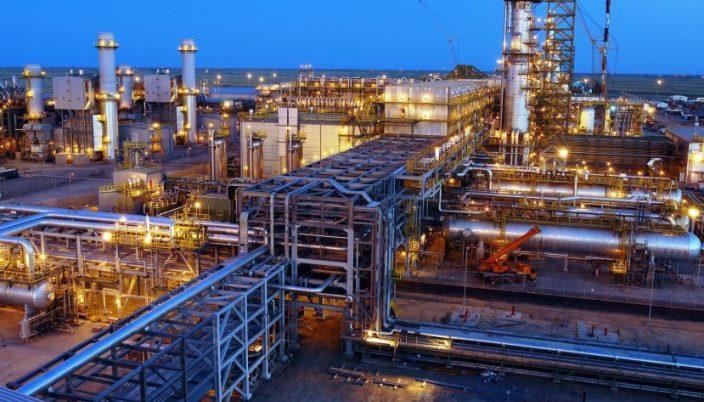
Nigeria’s proven gas reserves of 192 Trillion Cubic Feet (Tcf)may only last for 36 years without additional reserves if the country meets projected gas production of 15billion standard cubic feet (bscf) projected for 2025.
While investments to grow Nigeria’s current 1bscf consumption from proven reserves is being actively championed by government, there has not been an equal push towards investments in reserve addition for close to a decade.
“Nigeria has the world’s 9th largest gas reserves but ranks 17th on production demonstrating the vast untapped potential that exists in the country,” said Clay Neff, chairman of Oil Producers Trade Section and managing Director Chevron Nigeria.
Gas consumption has rapidly grown in Nigeria through its use in power plants to provide electricity, for manufacturing purpose in factories, utilisation for feedstock and for Compressed Natural Gas (CNG) and Liquefied Petroleum Gas (LPG).

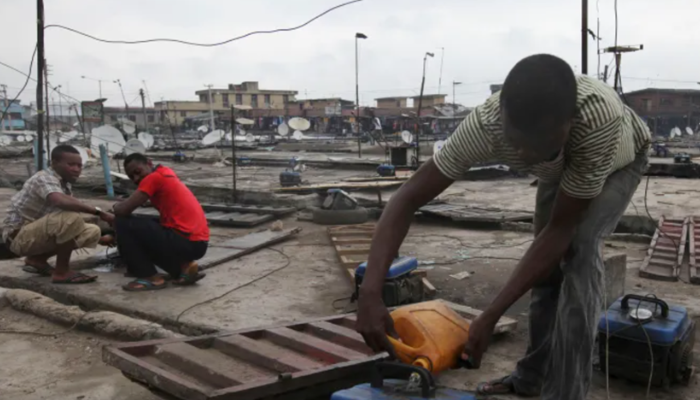
From a modest supply of about 300 million standard cubic feet/ per day (mmscfd) to power plants in 1990’s, consumption has ramped up to about 1bscfd by February 2016. Power plants have grown from just 9 in 1999 to 22 in 2016.
Gas for commercial sector is responsible for 350mmmscfd which is used in cement factory and manufacturing companies. Gas utilization for feedstock including fertilizer, petrochemicals, methanol and ammonia has risen to 300mmscfd.
Companies like Dangote and Indorama have seen growth on the back of increased utilisation of domestic gas. Indorama produces 360,000 MT of polyethylene and 120,000MT of polypropylene per annum
Absence of a strong regulatory and fiscal framework continues to impede development of over 200 oil and gas open acreages the government has ready for allocation.
“Stability in policies and a legal framework is a critical consideration in Nigeria. Although security is a big issue, uncertainty in the legal and fiscal framework makes it impossible for capital to flow. Investors and entrepreneurs can model risks but not uncertainty,”

Isreal Aye, oil and gas consultant and managing partner of Sterling Partnership told BusinessDay.
Nigeria’s gas development was hampered due to lack of deliberate effort to explore for gas. Upstream operators collected gas by the barrel of the gun – at the threat of gas flaring charges or government sanctions that may impede oil production.
But these efforts were not backed by requisite regulatory and fiscal framework to deepen exploration activities and create enabling environment through that will yield commercial value for investors through domestic gas pricing.
Nigerian Liquefied Natural Gas (NLNG) incorporated in 1989 could not take off until 1999 when a bilateral agreement was reached between the shareholders countries – United Kingdom, Netherlands (Shell), France (Total) and Italy (Eni) with stipulations that elevated the act to the status of a treaty.
Yet, Nigeria has made five failed attempts at tearing up NLNG act despite contributing $33billion in revenue to the government in 16 years. In April, the House of Representatives committee on gas resources instituted a public hearing to amend the act again.
“While in order lands, legislatures change business contracts in national interests, but NLNG is successful and is the best run organization in Nigeria. Tinkering with the act affect investors’ confidence,” OluAkinola, Lagos-based legal practitioner told BusinessDay. Industry stakeholders say the sector is over-legislated; hence regulatory matters are brought into legislation making amendment process herculean and creating conflict between laws and regulations. The sector bill which scaled second reading this week, has been stranded since 2008.
“Nigeria needs clarity in its laws and he existing fiscal regime to encourage investments in the sector,” said Sena Anthony, legal expert and former group general manager, corporate secretariat and legal division of the Nigerian National Petroleum Corporation (NNPC) at a recent industry event in Lagos.