The current dip in power supply in Nigeria is having a bruising effect on small and medium-scale businesses struggling to break even, as fuel cost constitutes 30 percent of their operating expenses, BusinessDay investigation has revealed.
Inquiries made at printing presses in clusters around Agege, Abule-Egba, Mushin and parts of Lagos Island, reveal that lack of electric power may cripple these small-scale businesses, worsening unemployment figures and spiralling social unrest.
However, Shomolu with the biggest printing cluster in Lagos, employing over 15,000 people, is worse hit as investigation reveals that self-power generation is now the biggest operating expenses, higher than both rent and staff cost.
BusinessDay learns that small presses operating off-press machines in Shomolu spend between N7,000 and N10,000 daily on petroleum products, while large printing presses spend between N20,000 and 25,000.

Sam Odimayo, managing director of Alpa Press, says he spends N21,000 daily on diesel, and “I have decided not to think about the cost again, because if I do, I will do nothing.”
BusinessDay also learns that some large printing presses have turned to retaining staff on contract basis, as a handful of small presses have shut down operations.
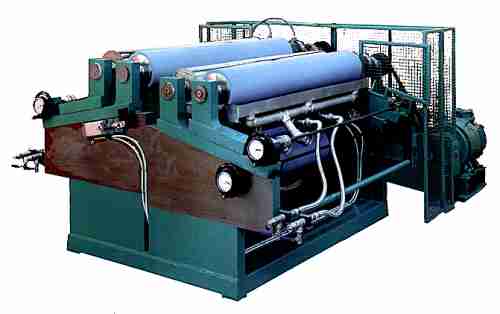
Mohammed Abubakar, registrar, Chartered Institute of Professional Printers of Nigeria (CIPPON), speaks of another challenge, “The machine slate always runs faster because the machines are not built to run on alternative power. It does not conform to the installed capacity hence poses a problem.”
“I think the Ikeja disco has completely abandoned this area,” says Akim Jimoh, who operates a small press in Shomolu, “Since they moved their Onipanu Undertaking to Anthony, they have completely removed us from their plans.”
Ikeja Distribution Company, who manages power in the Shomolu district, has been embroiled in labour dispute with unions over the purported sack of staff, which led to shutting the company last week.

In December 2011, the Lagos State government through the commissioner for energy and mineral resources, Taofiq Tijani, announced an initiative to alleviate the electricity challenge by installing a dedicated plant for Shomolu so that government facilities would be taken off the grid to allow for more power to the citizens.
However, enquiries at the Lagos State Ministry of Energy and Mineral Resources, last week, reveal that the government is now taking a global view of the problem and is partnering the distribution companies to find a solution.
“We have carried out an energy audit of commercial clusters in Lagos like Shomolu, Matori, Agege, etc, to ascertain their energy needs and we are partnering with the discos to see what can be done. We are government, we can only provide power for ourselves,” says a source at the energy ministry, who craved anonymity.
Meanwhile, businesses in commercial clusters in Lagos continue to operate with generating sets, constituting serious hazards both to the environment and human health.
“See the houses around here all black from the smoke Imagine what it is doing to us who inhale it every day,” remarks Victor Odinaka, a press operator on Akeju Street, Shomolu.
Corroborating this view, Christopher Ebong of the Niger Delta University, states that excessive short-term inhalation/exposure to generator fumes can lead to dizziness, drowsiness, and loss of coordination, blood pressure elevation, and lung and kidney damage.
Further investigation shows that afternoons in Shomolu is a medley of ear-splitting sounds from generating sets.
Residents have learnt to live with it. Aina Adegbenro, resident at Shipeolu Street, Shomolu, says: “We are now used to the noise, my infant child only have trouble sleeping when everywhere is quiet.”