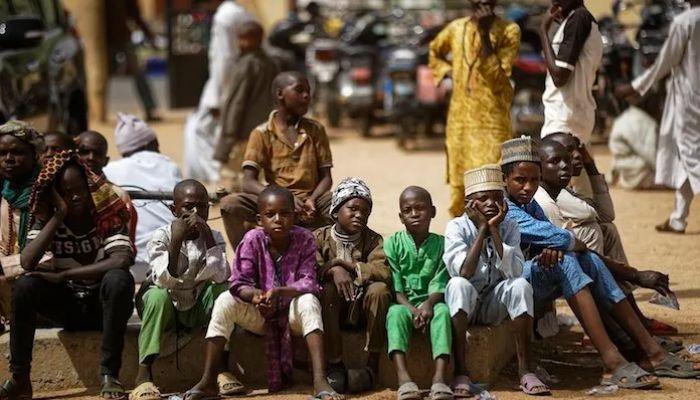
In April 2025, the World Bank released its latest Poverty and Equity Brief for Nigeria. The findings were grim—though not entirely surprising. Poverty continues to gnaw at the fabric of the nation, but more worryingly, it is increasingly territorial. The rural poverty rate has soared to 75.5 percent, starkly overshadowing the urban poverty figure of 41.3 percent. Taken together, these statistics suggest a deepening divide not just between the rich and the poor, but between cities and the countryside, the north and the south, and indeed, between hope and despair.
“When citizens lose faith that hard work yields upward mobility, the social contract frays, and populism, crime, and hopelessness creep in.”
For many Nigerians, particularly those beyond the periphery of the metropolises, the idea of economic stability remains a fantasy. While the national average poverty rate hovers around 57 percent —a sobering figure in its own right—the real Nigeria is a patchwork of hardship layered in inequalities. In the north, for instance, the 2018/19 survey already showed poverty affecting 46.5 percent of residents, compared to a mere 13.5 percent in the south. The disparity has likely grown wider.
But even this data is now subject to dispute.
Some economists—albeit anonymously—have begun to question the fidelity of the World Bank’s figures, particularly the 41.3 percent urban poverty rate. “Urban poverty has gone up in recent times,” said one. “It is almost competing with rural poverty.” There is anecdotal evidence to support this claim; cities like Lagos, Kano, and Port Harcourt may teem with economic activity, but the benefits are poorly distributed. Informal settlements mushroom as housing becomes unaffordable. Fuel scarcity, unemployment, and inflation have forced even the lower-middle class to ration food, forgo healthcare, and abandon schooling for their children.

Take, for instance, the humble Nigerian university professor—a symbol of respect, intellect, and public service. In what rational economy do the highest-paid staff in academia find it nearly impossible to purchase a second-hand car (“tokunbo”) priced at ₦9 million? This is not just a case of lifestyle inflation; it is a reflection of economic attrition. When even professionals—the supposed middle class—are struggling to afford basics, it suggests that the poverty line is not just a demarcation of income but of dignity.
The larger tragedy lies in what this erosion of the middle class means. Historically, a thriving middle class serves as a buffer against social unrest, a catalyst for innovation, and a counterweight to both oligarchy and destitution. Its disappearance threatens not just consumer confidence but the democratic compact itself. When citizens lose faith that hard work yields upward mobility, the social contract frays, and populism, crime, and hopelessness creep in.
Read also: World Bank sees poverty rising in Nigeria despite economic growth
There is also a demographic concern. Nigeria’s population, now estimated at over 220 million, is disproportionately young. The youth bulge, if properly harnessed, could fuel economic growth. But with this level of poverty and institutional stagnation, it risks becoming a ticking time bomb. The result? A swelling tide of rural-urban migration—though not in the classic sense of opportunity-seeking, but in a last-ditch effort to survive.
With the poverty ratio in the country, the gap between the rural and urban areas in terms of development continues to widen with no end in sight to the class-gap saga. This is as a result of the fact that most businesses and industries involved in the major sectors of the country, such as manufacturing, oil & gas, tech, etc., usually operate in the urban areas, thereby neglecting the possibility of development reaching the rural areas.

It is here that the limitations of data become evident. Migration in Nigeria today is messy, fragmented, and often undocumented. Young people leave their villages not because of dreams of skyscrapers but out of necessity—escaping banditry, hunger, and climate-driven agricultural collapse. But what awaits them in the cities is often worse: overcrowded slums, gig work that pays less than a subsistence wage, and social dislocation. The World Bank’s surveys, no matter how rigorous, may not fully capture these transient, precarious lives.
So what is to be done?
One school of thought calls for drastic intervention, particularly in rural Nigeria. This goes beyond just handing out palliatives. It means investing in rural infrastructure—roads, electricity, and irrigation. It means reforming agricultural value chains so that farmers earn more than a subsistence wage. It requires expanding microcredit access and deploying mobile technology to deliver services to isolated communities.
Another approach must tackle the structural issues that affect both urban and rural areas: inflation control, job creation, quality education, and functional healthcare. The country must rethink its fiscal federalism so that state and local governments have both the resources and the accountability mechanisms to drive grassroots development.
Critically, Nigeria needs to revisit its definition of economic success. GDP growth, though helpful, does not always tell the full story. A nation can grow richer on paper while its people grow poorer in practice. Poverty metrics, in this regard, must move beyond income to include measures of access—access to education, healthcare, sanitation, and most importantly, opportunity.
The poverty statistics released by the World Bank are more than just numbers; they are a mirror. They reflect a nation at a crossroads—one where geography defines destiny and where policy failure translates into generational loss. Whether in the dusty roads of Borno or the traffic-choked streets of Lagos, the question is the same: can the Nigerian state muster the political will to not just acknowledge poverty but to actively fight it?
Nigeria should also endeavour to strike a realistic balance between rural and urban development. This will create an enabling economy on all fronts and decrease the rate of rural-urban migration and encourage rural investments and enable rural areas to achieve near-urban characteristics in the long run.
The clock is ticking, and poverty, as history shows, does not wait quietly.
Dr Oluyemi Adeosun is BusinessDay’s Chief Economist.