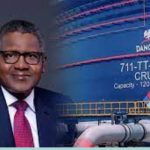
Dangote, President of the Dangote Group, has announced that the price of petrol in Nigeria is currently 55 percent below the average cost seen in neighboring West African countries. This significant reduction is a direct outcome of the operations of the Dangote Petroleum Refinery, a monumental project hailed by the Economic Community of West African States (ECOWAS) as a beacon of hope for the continent.
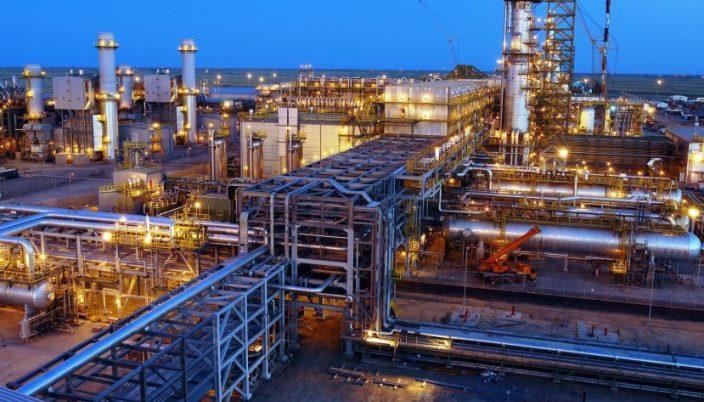
The revelation came during a high-level visit by an ECOWAS Commission delegation, led by its President, H.E. Dr. Omar Alieu Touray, to the colossal 650,000 barrels-per-day facility in the Lekki Free Zone. Touray, visibly impressed by the scale and sophistication of the refinery, lauded it as a clear demonstration of the private sector’s capacity to drive regional industrialisation.
Read also: Dangote refinery reduces petrol price again, six times in 2025
“What I have seen today gives me a lot of hope, and everybody who doesn’t believe in Africa should come here,” Dr. Touray remarked. “Visiting here will give you more hope because this is exactly what our continent should focus on.”

Dangote, leading the ECOWAS delegation on a comprehensive tour, highlighted the transformative impact of local refining on Nigeria’s economy. He pointed out that while the average price of petrol in neighboring countries hovers around $1 per litre (approximately N1,600), the Dangote Refinery is selling petrol at between N815 and N820 per litre.
“Many Nigerians don’t realise that they are currently paying just 55% of what others in the region are paying for petrol,” Dangote stated, emphasizing the direct benefit of the refinery to the Nigerian populace.
Read also: Relief for Nigerians as Dangote cuts petrol price to N865/litre
This price reduction echoes an earlier success seen with diesel production. “Last year, when we began diesel production, we were able to reduce the price from N1,700 to N1,100 at a go, and as of today, the price has crashed further,” Dangote explained. “This reduction has made a significant impact across various sectors. It has supported industries, benefited those of us in mining, and provided vital relief to the agricultural sector. The effect has been far-reaching.”
Touray underscored the refinery’s critical role in enabling the ECOWAS region to meet its 50ppm sulfur limit for petroleum products, a standard often missed by imported fuels. He stressed the need for stronger collaboration between governments and the private sector, emphasizing that policy decisions must reflect the realities faced by African industrialists.

“We cannot continue to make decisions on behalf of the private sector from a distance,” Dr. Touray asserted, pledging the ECOWAS Commission’s full support in opening wider ECOWAS markets for regional giants like Dangote Group.
Dangote reiterated his long-held belief that Africa’s continued dependence on imported goods is unsustainable and hinders economic sovereignty. “As long as we continue importing what we can produce, we will remain underdeveloped,” he affirmed. “This refinery is proof that we can build for ourselves at scale, to global standards.”
The Dangote Refinery, he assured, is fully equipped to meet the petroleum needs of not only Nigeria but the entire West African region, dispelling previous claims of insufficient output. “There have been many claims suggesting that we don’t even produce enough to meet Nigeria’s needs, so how could we possibly supply other West African countries? But now, they are here to see the reality for themselves,” he concluded, hinting at further unannounced initiatives designed to benefit Nigerians maximally from the refinery’s operations.
The Dangote Refinery stands as a powerful symbol of Africa’s capacity for self-reliance and industrial prowess, with its immediate impact on fuel affordability already bringing tangible relief to millions.