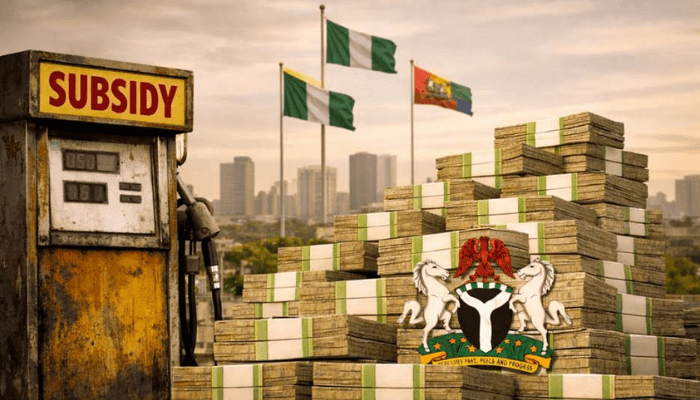
In September of this year, President Bola Ahmed Tinubu briefly announced that Nigeria had achieved its 2025 revenue goal ahead of schedule, stating that efforts to boost non-oil revenue had generated sufficient funds to meet this year’s revenue targets by August.
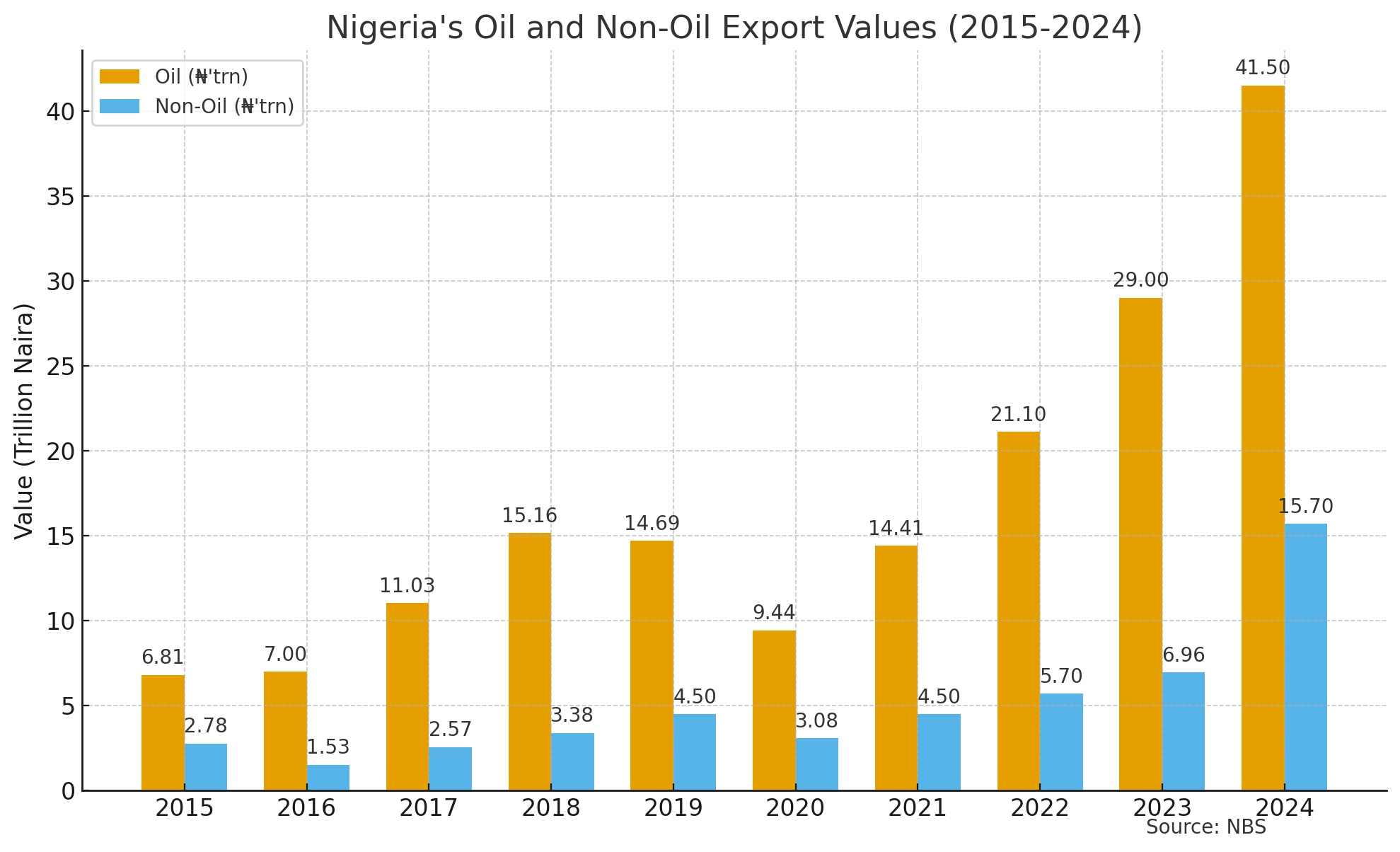
However, while non-oil exports reached a record-breaking ₦15.7 trillion in 2024, local investors found themselves sidelined in a boom dominated by foreign actors. Although the figures were impressive, the reality was different; a story of missed opportunities. Cashew farmers in Kogi have complained that foreign buyers outbid locals, harvest early, and export without repatriating earnings, leaving Nigerian processors and producers struggling to remain relevant.
Nigeria’s exports are still largely raw commodities, with cocoa, cashew, and sesame seeds shipped out unprocessed, resulting in billions in potential earnings being forfeited.

Nigeria, Africa’s largest economy, sits on a goldmine of export potential, from agro-commodities to digital services, yet it continues to underperform. While global demand for African goods surges, Nigeria’s non-oil exports remain a fraction of what they could be.
This contradiction, rising export figures amid deep underutilization, is Nigeria’s export puzzle. Despite an impressive bounce from the non-oil sector, the sector remains constrained by data gaps, informal trade routes, systemic challenges, and limited value addition.
The illusion of progress
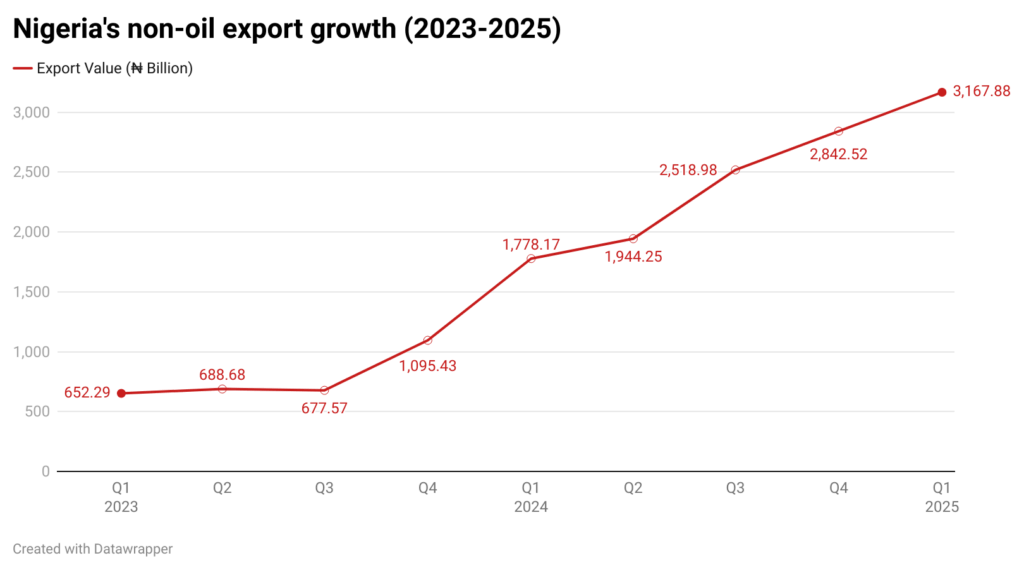
Nigeria’s non-oil exports surged to ₦4.8 trillion in early 2025, marking a 78% year-on-year increase. Cocoa beans, cashew nuts, and urea fertilizer led the charge, with cocoa alone accounting for 35% of total earnings. On the surface, this boom signals success in diversification. But beneath the numbers lies a troubling inconsistency: growth without scale.
Although the figures are impressive, local investors and producers remain largely excluded. Informal trade routes dominate, and weak institutions distort the true impact of this expansion. Industry insiders warn that foreign operators, particularly from India, China, Lebanon, and Vietnam, are capturing the lion’s share of the gains. Their business models often bypass local value chains, exporting raw commodities with minimal processing and limited reinvestment in Nigeria’s economy.

Experts caution that the boom may be illusory, driven more by FX volatility than structural transformation. The NEPC’s report of $3.225 billion in non-oil exports in H1 2025 masks deep-rooted challenges: poor logistics, fragmented data systems, and restricted access to trade finance.
There are signs of optimism, with a 19.6% increase compared to the previous year, rising demand from emerging markets, and early indications of local value addition, all of which suggest that momentum is building. However, real progress requires more than just exports; it needs inclusive systems, resilient institutions, and a clear strategy to increase local participation. Until then, Nigeria’s export story remains a paradox: impressive growth but elusive impact.
The structural traps
Although the sector is expanding, it is not undergoing a fundamental transformation. Analysts caution that Nigeria remains trapped in a cycle of exporting raw commodities, thereby missing out on the true wealth generated through value addition.
Dr. Mark Ojobi of Yakubu Gowon University notes that the removal of subsidies and the floating of the naira has made exports more profitable, and the AfCFTA is unlocking new regional markets. But he cautions: “We are still largely exporting raw commodities. That’s the difference between earning $13 billion and $50 billion for the same volume.”
Chief Peter Ameh adds that informal trade routes and administrative bottlenecks distort the data. Much of Nigeria’s trade with neighbors like Benin and Cameroon remains unrecorded, and the NBS acknowledges that its figures are estimates.
Watchdog groups, such as CISLAC, argue that Nigeria’s export system is “operating below capacity.” Their call is clear: build inclusive value chains, digitize trade systems, and ensure that statistics reflect real impact, not just numbers.
Diversification dilemma
All these bring to the fore the never-ending quest for diversification. Nigeria’s push for economic diversification dates back to the 1962 National Development Plan. From agriculture to energy, successive governments have championed sectoral reforms to reduce oil dependence and boost inclusive growth. Despite bold plans and policy promises, the journey remains unfinished.
In 2024, the government announced a ₦75 billion industrial investment and launched the Talent Export Programme (NATEP) to stimulate non-oil exports and create one million jobs. These are steps in the right direction, but they echo a familiar pattern: ambition without scale.
The challenge isn’t just planning-it’s execution. Growth has been uneven, and Nigeria’s per capita income still trails behind countries it once outpaced. Without structural reforms, value addition, and inclusive systems, diversification will remain a slogan rather than a solution.
To unlock real progress, Nigeria must turn its quest for diversification of non-oil exports into a results-driven revolution that empowers producers, scales up exports, and transforms lives.
The untapped edge: Path to sustainable growth
Nigeria’s non-oil sectors hold great potential for fostering inclusive economic growth, including agriculture, manufacturing, creative industries, and digital services. However, within this broad landscape, there are several underutilised segments. quick wins ready for rapid growth and revenue increase. These areas present immediate chances to boost exports, generate jobs, and diversify income sources.
- Agriculture: Riding a wave of global demand
Agriculture remains Nigeria’s strongest card in the non-oil export deck. In the final quarter of 2024, agricultural exports surged to ₦671.12 billion, up by 103.7% year-on-year. The world is clamoring for ethically sourced cocoa, sesame, and cashew nuts, and Nigerian farmers are meeting the demand. But to sustain this momentum, the country must go beyond growing crops to processing and branding them.
Imagine a Nigeria where cocoa beans become premium chocolate bars stamped “Made in Abeokuta” or cashews processed in Kwara find their way to supermarket shelves in São Paulo and Berlin. That future isn’t far-fetched; it only needs the right support systems.
- Minerals: Wealth beneath the ground
Nigeria’s mineral wealth is another untapped goldmine, quite literally. Exports of solid minerals, such as lithium and gold, increased to ₦60.7 billion in the final quarter of 2024. Yet most of these exports remain raw ores. Without local smelting, refining, and proper geological mapping, Nigeria continues to export potential instead of prosperity.
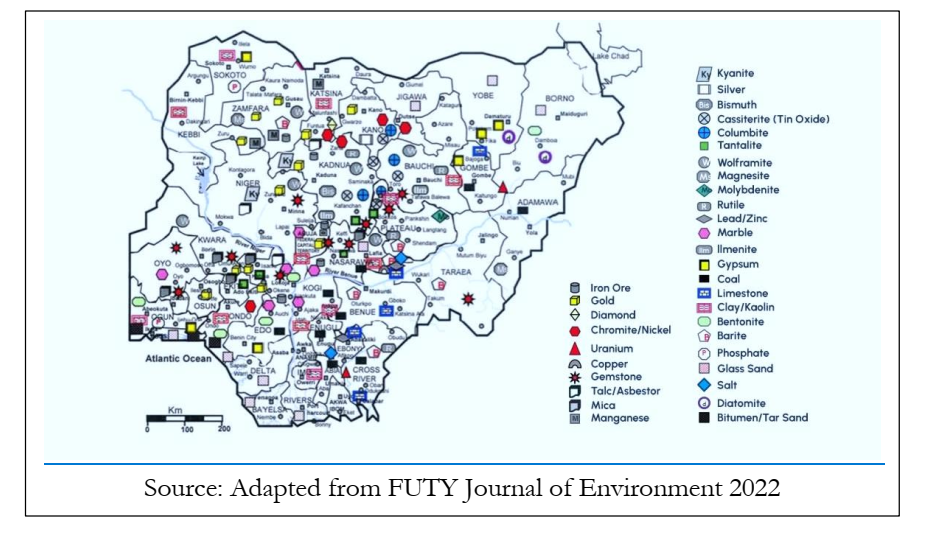
The country sits atop vast reserves that could fuel the global energy transition, but it must secure mining zones, attract serious investors, and build value chains that retain profits and jobs within its borders.