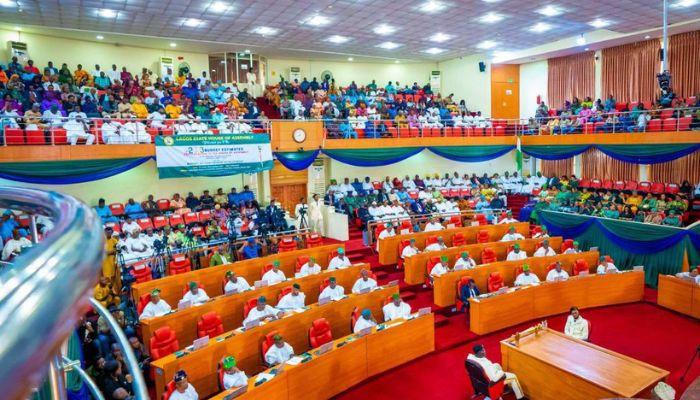
As Nigeria works to stabilise its economy, rebuild investor confidence, and revive its ailing manufacturing base, one legislative proposal is moving with unusual speed and insufficient scrutiny: the Customs, Excise and Tariff Amendment Bill (CETA). The bill seeks to replace the current flat N10 per litre excise duty on non-alcoholic beverages with a levy tied to retail price. On the surface, the objective appears straightforward: raise revenue and curb excessive sugar intake. But the pace and manner in which the bill is advancing reveal deep gaps in evidence, process, and alignment with the country’s fiscal direction. It is, therefore, important that lawmakers take a second and more careful look.
To begin with, policy changes of this magnitude should be grounded in strong local evidence, especially when public health arguments are being used as justification. At present, Nigeria has no comprehensive, up-to-date research that confirms higher Sugar-Sweetened Beverage (SSB) taxes will yield meaningful health benefits. Most of the studies cited in favour of steep tax hikes are drawn from countries with very different socio-economic dynamics (higher incomes, more formalised markets, and tighter regulation of food and beverage production).
“All of these issues point to a broader challenge: maintaining the integrity and predictability of Nigeria’s fiscal architecture.”
Nigeria’s reality is markedly different. When prices rise, consumers readily switch to cheaper informal beverages, many of which are unregulated and often contain higher sugar content. In such an ecosystem, a retail-price-based levy may do little to reduce sugar consumption while inadvertently encouraging a shift toward products that pose even greater health risks. A tax intended to save lives could, without local modelling and impact assessments, end up worsening the problem it claims to solve.
This absence of Nigeria-specific analysis underscores the need for broad consultation before any changes are made. Public health professionals, economists, academia, consumer associations, the organised private sector, and all relevant MDAs must be part of the discussion. Excise reforms, more than most fiscal interventions, sit at the intersection of revenue mobilisation, industrial policy, and public health. A one-dimensional approach based on assumptions from other countries cannot deliver balanced or sustainable outcomes.

Read also: Why lawmakers must take a second look at the proposed excise amendment bill
Equally troubling is that the proposed amendment seems to be progressing without proper coordination among Nigeria’s fiscal authorities. Key institutions (the Ministry of Finance, the Fiscal Policy and Tax Reform Committee, the Federation Account Allocation Committee (FAAC)) and others do not appear to have been fully engaged. This is not a trivial oversight, as Nigeria is currently implementing a multi-year tax reform effort designed to create a predictable, investment-friendly fiscal environment. President Bola Tinubu’s administration has emphasised stability and the elimination of abrupt tax changes that discourage investment and complicate business planning.
CETA, however, moves in the opposite direction. A levy tied to retail price introduces volatility on multiple fronts: fluctuating rates, unpredictable compliance burdens, complex valuation disputes, and a new layer of administrative enforcement. It also undermines the two-year moratorium on new taxes announced by the Federal Government to give businesses breathing space during ongoing reforms. Simply put, the amendment risks sending conflicting signals to investors at a time when Nigeria can least afford mixed messages.
The economic risks are difficult to ignore, as the beverage industry is one of Nigeria’s most integrated value chains. It supports an estimated 1.5 million jobs, from factory workers and MSMEs to sugar farmers, distributors, retailers, and logistics providers. It drives investments under the National Sugar Master Plan 2 and contributes about 45 percent of its gross revenues as taxes.
Yet, this same sector is under serious strain, as manufacturers face foreign exchange scarcity, high borrowing costs, inflationary pressures, and soaring energy prices. Imposing a retail-price-based levy that will disproportionately raise operating costs could force companies to cut production, reduce investments, or even shut down lines. Consumers, shouldering the burden of rising prices, will naturally reduce consumption or shift to informal, untaxed products. When demand weakens, capacity utilisation drops, and jobs, along with government revenue, are put at risk.

FAAC allocations could also take a hit; as the formal market contracts, so will VAT and CIT collections. States already struggling with limited fiscal space may find themselves with even fewer resources, defeating one of the bill’s purported goals – raising government revenue.
Beyond economic concerns, the proposal raises serious legal and administrative questions. As a member-sponsored bill, it is unclear whether the amendment underwent the fiscal analysis required under the Fiscal Responsibility Act. There is no public record of stakeholder consultations, impact studies, or alignment exercises to ensure the proposal complements the Medium-Term Expenditure Framework. Even the Ministry of Finance appears not to have been fully briefed on the bill’s potential implications.
All of these issues point to a broader challenge: maintaining the integrity and predictability of Nigeria’s fiscal architecture. An excise tax tied to retail prices is more volatile and administratively difficult to manage. It also opens the door to future earmarked taxes and policy fragmentation, complicating long-term fiscal planning.
Nigeria certainly needs tax reforms, but reforms must be sequenced, consultative, data-driven, and aligned with national economic strategy. Stability, transparency, and predictability must remain the guiding principles. A rushed and poorly coordinated exercise amendment risks undermining broader reform efforts, destabilising a key economic sector, and delivering unclear health outcomes.
Following the public hearing, lawmakers should slow down, demand proper research, invite contributions from all relevant institutions, and ensure that any excise reform is fully aligned with Nigeria’s long-term fiscal and economic objectives. Nigeria cannot afford the unintended consequences of a hurried amendment. A coordinated, evidence-based approach will better safeguard the economy, protect jobs, and uphold the integrity of fiscal policy for years to come.