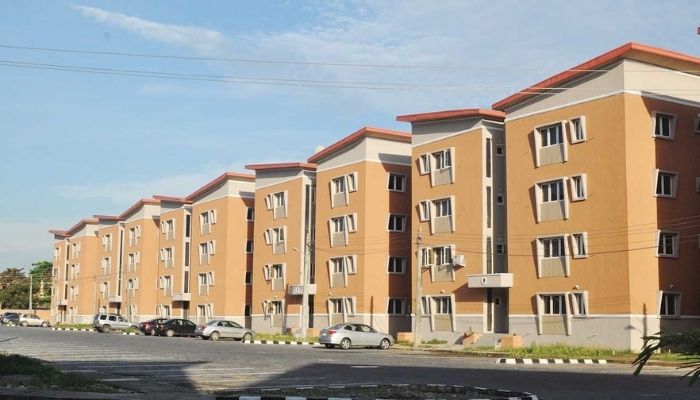
Every few months, headlines ring out a familiar statistic: Nigeria faces a housing deficit of over 20 million units. It is a staggering figure, often brandished to justify massive construction drives, multi-billion-naira funding pledges, and fresh government initiatives. But this narrative oversimplifies the problem. After more than a decade in real estate, managing, investing, and developing properties locally and abroad, I am convinced of one uncomfortable truth: Nigeria’s housing crisis is not simply a shortage; it is a misallocation.
Look closely and you’ll see an irony at play. Across Lagos, Abuja, Port Harcourt, and other cities, young families struggle to afford rent while their parents live alone in sprawling, near-empty homes built decades ago. In the South-East, gleaming mansions built with hard-earned remittances stand proudly in villages but remain unoccupied for most of the year, springing to life only during Christmas. In the North, once-bustling family compounds crumble, abandoned by younger generations who see no reason to renovate or repurpose them.
This is not just sentimentality or culture; it’s economics. Nigeria’s housing stock is being wasted. Instead of optimising what already exists, we’re trapped in a cycle of building new homes while letting old ones decay. The housing deficit, then, is not only about quantity; it is a reflection of poor urban planning, inadequate property management, and a cultural attachment to “legacy homes” that serve no one.
The hidden stock no one talks about
Globally, real estate markets have evolved beyond this inefficiency. In the UK, nearly 20 percent of older homeowners downsize to smaller homes or retirement communities, freeing up larger properties for families. In the US, housing cooperatives and assisted living facilities ensure every square metre is put to use. Nigeria, by contrast, is clinging to outdated models that glorify large, empty houses while younger Nigerians face an affordability crisis.

If every family audited its property portfolio, urban apartments, family homes, and village mansions, we would uncover millions of rooms sitting idle. Instead of seeing only deficits, we could start to see opportunities. Retrofitting older houses, subdividing unused spaces into apartments, and developing co-living models could significantly increase housing availability without building a single new structure.
Yet cultural pride and sentimentality make this a tough sell. A “family home” is often a monument, not an asset. A village mansion is a symbol of status, even if it stands empty eleven months of the year. This mindset is holding us back.
A shift in mindset and policy
The answer is not simply to pour more concrete. It is time to rethink how we use the spaces we already have. Urban policymakers should incentivise adaptive reuse, transforming large, ageing properties into multi-unit apartments. Communities should embrace shared housing models that prioritise function over sentiment. Financial institutions should develop instruments to encourage property renovation, not just new builds.
Government data already hints at this inefficiency. The Federal Mortgage Bank of Nigeria projects a ₦21 trillion investment requirement to close the housing gap, but without a change in usage, that investment risks creating the same problem in 20 years: underutilised properties alongside unmet demand.
We need to treat existing housing stock as a national resource, not an afterthought.

Technology as a game-changer
This is the philosophy behind Housmata, a one-stop housing ecosystem created by a collaboration of seasoned professionals:
Property Max – a real estate firm with over a decade of experience in management and investment,
Merk365 – a forward-thinking technology company,
Swift legal – a solicitor’s chamber ensuring transaction security,
Anchor – a financial institution providing trusted payment solutions.
Housmata enables landlords to rent out underutilised spaces confidently, connects tenants to affordable, verified housing options, and ensures artisans, electricians, plumbers, and carpenters are available for property upkeep. This is not just an app; it is a tech-driven ecosystem built to unlock Nigeria’s “hidden stock”, improve housing access, and restore trust in the real estate sector.
Building smarter, not just bigger
Nigeria’s housing deficit will not disappear overnight. But unless we change our cultural and economic approach to housing, billions of naira spent on construction will merely replicate inefficiency. It’s time to treat housing as a dynamic, managed asset, not a static monument.
The challenge ahead is twofold: policymakers must champion incentives for property optimisation, and citizens must rethink what “legacy” means. Legacy should not be defined by locked mansions in empty villages but by accessible, functional homes that serve generations.
If Nigerians start by asking one question: “How well are we using the space we already have?”, we can begin closing the housing gap without adding to urban sprawl or abandoning rural communities. The solution is not just to build more. It is to be used better.
About the author
Akinwunmi Awoyode is a seasoned real estate professional with over a decade of cross-border experience in Nigeria and the UK. He holds degrees in Physics and Mathematics (University of Ibadan), Real Estate Management and Investment (Edinburgh Napier University), and an MBA (University of South Wales). In 2015, he co-founded Property Max Results Ltd.