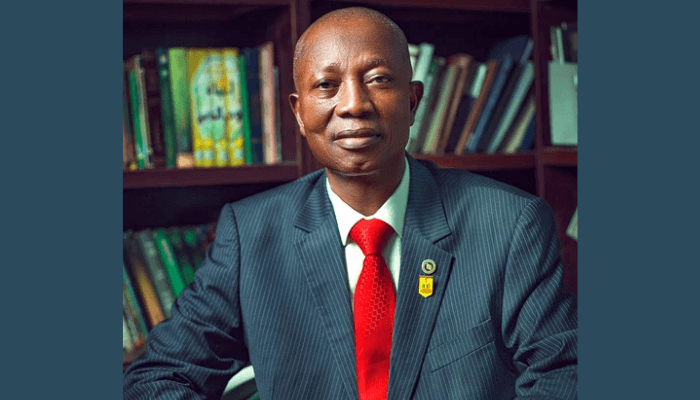
On September 23, 2025, BusinessDay published an article by Prof. Duro Oni, a member of the Yaba School of Thought (YSoT), titled “Commercialisation of Honorary Doctorate Degrees in Nigeria”. In it, Prof. Oni sounded an alarm: that Nigerian universities, in their reckless pursuit of prestige and patronage, have turned honorary doctorates into routine political favours. His warning is timely, but the problem may be deeper, and the way forward requires more than polite declarations.
The rise of recognition as a commodity
Honorary doctorates were originally designed as symbolic acknowledgements for individuals who, outside academia, had made extraordinary contributions to society. Globally, this is not unusual: Harvard, Oxford, and Cambridge award them to statesmen, scientists, writers, and philanthropists. In 2024, the University of Glasgow awarded Malala Yousafzai an honorary doctorate for her advocacy on girls’ education. The difference, however, is that such recipients rarely use the “Dr” prefix, and the awards are clearly framed as symbolic.
In Nigeria, the boundaries have collapsed. Many recipients casually adopt the “Dr” prefix, and universities often blur the distinction in their announcements. This creates a deception that confuses the public and undermines genuine scholarship. A 2012 survey by the Association of Vice-Chancellors of Nigerian Universities found that over 70 percent of honorary recipients styled themselves “Dr.” despite explicit academic convention.

Why the abuse persists
It is not enough to say universities are careless. Some see it as a survival strategy. With over 270 universities, many of them underfunded, institutions use honorary awards to cultivate powerful allies or attract donations. A vice-chancellor in northern Nigeria once admitted, off the record, that conferring an honorary doctorate on a governor was the only way to “secure a new faculty building”.
There is also a cultural dimension. Nigeria is a title-driven society. From “Chief” to “Honourable”, recognition often substitutes for achievement. In such a context, honorary degrees are not just academic tokens but cultural capital. To deny them is to reject a social language of respect.
Yet this pragmatism comes at a cost. When a senior government figure was recently styled “professor” by a federal university simply for financing buildings, the outrage was not just about vanity but about eroding the meaning of scholarship. In a country already battling fake degrees from “universities” in the Republic of Benin and Ghana, as well as online mills, this blurring between earned and purchased prestige makes it harder to defend legitimate academia.
The Keffi Declaration and its failure

In 2012, the “Keffi Declaration” tried to draw a line: no university without doctoral programmes should confer honorary degrees; no more than three awards annually; no awards to serving public officials; and recipients should never style themselves “Dr.” More than a decade later, these rules are honoured in the breach. In 2023 alone, 12 sitting governors were reported to have collected honorary doctorates from Nigerian universities. If each of Nigeria’s universities awarded even two annually, the country would mint over 500 new “Doctors” every year. Scarcity, the true currency of honour, has been squandered.
What needs to change
The question is not whether honorary degrees should exist; they are a global tradition, but whether they should remain credible. Four things are urgent:
Clarity of communication: Every university must state clearly in convocation booklets, press releases, and media interviews that honorary doctorates do not entitle recipients to use “Dr.” Anything less feeds deception.
Revive and enforce the Keffi Declaration: The National Universities Commission (NUC) must sanction institutions that flout agreed standards. To restore credibility, the first step is discipline within the academy itself.
Raise the merit threshold: Awards should be reserved for extraordinary contributions, think Chinua Achebe’s global literary influence or Ngozi Okonjo-Iweala’s reforms at the World Bank and WTO, not for building hostels or donating buses.
Cultural re-education: This is perhaps the hardest. Nigerian society must learn again that greatness is measured by substance, not titles. Our obsession with prefixes: Chief, Apostle, Honourable, Dr, will continue to cheapen honours unless citizens themselves demand rigour.
Between recognition and ruin
Prof Oni is correct: recognition without rigour is not honour at all. But the broader truth is that honorary degrees in Nigeria have become entangled with the same disease undermining governance, status without accountability, and prestige without substance.
When every convocation is turned into a political red carpet, universities trade their authority for applause. The consequence is grave: erosion of trust in academic institutions themselves. At a time when Nigerian graduates already face suspicion abroad due to fake certificates, the academy cannot afford to further compromise its credibility.
Honorary doctorates, when conferred with integrity, remind us that knowledge serves the public good and that service outside the classroom deserves celebration. But when abused, they are not honours; they are hustles. If Nigeria’s universities do not reclaim their standards, they risk turning their most sacred ceremonies into markets of vanity. And a society that buys its prestige will never command respect.