Forced between the devil and the deep blue sea, President Muhammadu Buhari chose the path of further lockdowns as a containment measure against COVID-19 in Nigeria on Monday, 13 April when he ordered an extension of the lockdown on three territories. With 71 percent of the infections, there is no doubt that Lagos and Abuja, FCT deserve the lockdown. The spread of infection has also grown to 19 states from 12 on March 29.
Nigeria chose the route of prevention of widespread of the coronavirus. The option would have been to open the economy ever so slightly to allow citizens to breathe and earn a living in a daily pay economy. The federal government made the hard choice of health over economics.
Further lockdown is borne out of evolving global best practice in the management of the pandemic. Nigeria followed examples across Africa and the rest of the world. The paradigm is that containment is the most effective measure to stop the spread of the coronavirus; it is more so for countries such as ours where the capacity of the healthcare system is doubtful.
Two weeks after the first 14-day lockdown, the incidence number has risen to 323 cases. Experts say the number does not tell even a quarter of the story as testing remains very low even against the standards of other African countries. Nigeria has tested slightly over 5, 000 persons, while Ghana has done more than 15, 000 with a smaller population.

On the face of it, Nigeria is looking good. There are 323 cases in 19 states. Nigeria has lost ten persons to the virus. NCDC says there are 228 active cases while our hospitals have discharged 85 cases. Nigeria has survived the first two weeks of WHO-recommended shutdowns with the numbers still looking good.
It is significant to note, however, that beyond these figures our incident numbers have followed the trajectory elsewhere. They have been increasing rapidly.
Hold it there, though. If Nigeria has done well thus far from the available figures, why do we need an extension of the lockdown given the huge cost?
President Muhammadu Buhari (PMB) admitted that the lockdown “will severely disrupt your livelihoods and bring undue hardship to you, your loved ones and your communities”. Knowing this, it is a surprise that the presidential address failed to acknowledge the evolving breakdown in the territories that he locked down. It was a significant lapse in the address.
The gains from the first 14 days? PMB said they include implementation of “comprehensive health measures that intensified our case identification, testing, isolation and contact tracing capabilities.” Nigeria “has identified 92 percent of all contacts while doubling the number of testing laboratories and raising testing capacity to 1, 500 tests a day”. The country has also trained “over 7,000” healthcare workers on infection prevention and control. NCDC has deployed to 19 states. Furthermore, Lagos and Abuja can “admit some 1,000 patients each across several treatment centres”.

PMB spoke of the palliative measures of the federal government involving “food distribution, cash transfers and loans repayment waivers” to ease the pains and assured that government would sustain them. That is good news.
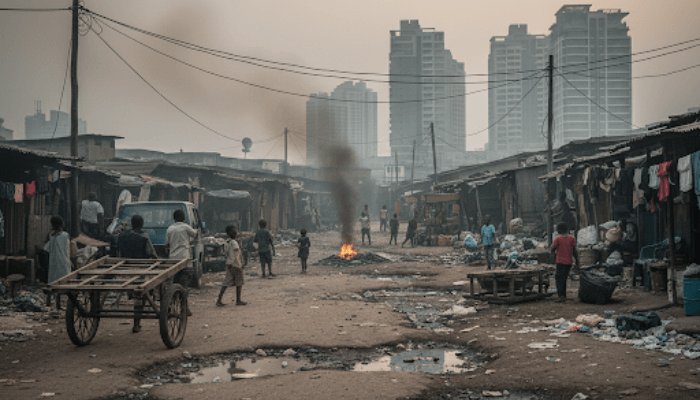
The bad news is that the measures have failed to count where it should do so the most. Very few citizens in the three territories of the lockdown have seen or benefitted from these measures. It is evident in the growing hunger-fuelled anger, robbery, protests and citizen defence activism in parts of Lagos and Ogun States.
BusinessDay called for this extension as a social responsibility informed by our monitoring and reportage of the COVID-19 pandemic. After listening to PMB, we now make these calls
The federal government must do more to reassure citizens in Lagos and Ogun States of their security and the ability of the government to protect them.
Rapidly increase the number of beneficiaries of the government’s welfare scheme. An increase by 1million from 2.6m to 3.6m does not even begin to scratch the surface.
Involve the private sector and coordinate efforts to extend assistance to the poorest of the poor.