…says Nigeria’s designation meant to spark dialogue, not push Abuja away
Members of a United States congressional delegation have stressed that the country’s security challenges are complex and require tailored, region-specific responses.
This was because they rejected narratives that frame all violence as either terrorism or religious persecution.
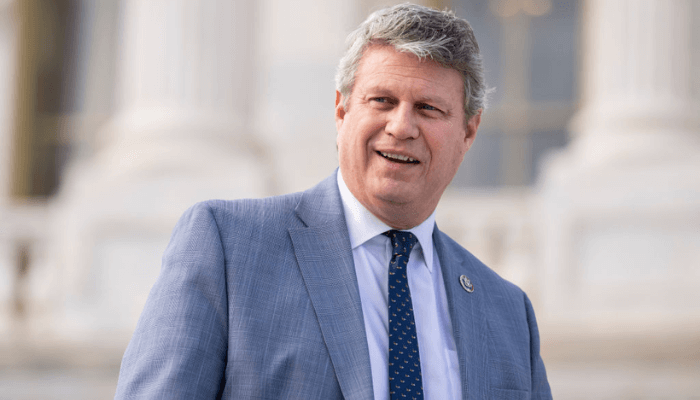
The delegation, led by Bill Huizenga of Michigan, concluded its visit to Nigeria with a press briefing on Sunday in Abuja, following meetings with senior government officials, religious leaders, civil society actors, and representatives from the private sector.

The visit came amid renewed debate in Washington following President Donald Trump’s decision to reinstate Nigeria on the CPC list.
Richard Mills, U.S. Ambassador to Nigeria, said the visit reflected strong bipartisan interest in sustaining a forward-looking U.S.–Nigeria relationship, even as difficult issues are confronted.
According to Mills, discussions during the visit focused on shared priorities, including strengthening democratic institutions, expanding economic and trade opportunities, and addressing the underlying concerns that informed the CPC designation.
“This visit reflects the bipartisan support in the U.S. Congress for a strong, forward-looking U.S.–Nigeria relationship, and an opportunity to address the concerns that underlie the designation,” the ambassador said, thanking Nigerian partners for engaging candidly with the delegation.
Huizenga, a senior member of the U.S. House Committees on Foreign Affairs and Financial Services, described the relationship between both countries as “critical” and said the delegation travelled to Nigeria to gain first-hand insight rather than rely solely on reports and political debate in Washington.

“We are here because the U.S.–Nigeria relationship is critical to both countries. With the redesignation as a country of particular concern and the discussions happening in Congress, it was important to come here, look people eye to eye, have frank conversations, and learn, he said.
He noted that although the trip was brief, it was effective, adding that the delegation met government officials, community leaders, business leaders and religious figures, many of whom made time despite the busy Christmas period.
Read also: Experts seek conservative revenue targets, asset reforms for 2026 budget
Huizenga argued that Nigeria’s stability is central not only to Africa’s progress but to global prosperity.
“The better Nigeria does, the better Africa does. And the better Africa does, the better the world will do,” he said.
Responding to questions on whether Nigeria deserved the CPC designation, Huizenga said he personally believed the designation was warranted, but emphasised that it should be seen as a tool to encourage change rather than a permanent label.
“The purpose was not simply to send messages, but also to receive information,” he said, adding that feedback from Nigerian officials suggested the designation had already triggered internal conversations within government.
On religious freedom, Huizenga said the United States was concerned about protecting all Nigerians, regardless of faith.
He acknowledged reports of violence affecting Christian communities in the Middle Belt, while also pointing to significant Muslim-on-Muslim violence in parts of the North-East and North-West.
“My encouragement to the Nigerian government is to take seriously the effort to protect all of their citizens,” he said, noting that the U.S. has both an interest and a strategic reason to support Nigeria in that effort.
Asked how U.S. authorities distinguish between terrorism-driven violence and religiously motivated persecution in Nigeria, Huizenga said both exist but require different responses.
He cited Boko Haram and other terrorist groups as operating largely in distinct regions from communal and religious conflicts in states such as Benue and Plateau.
“Dealing with Borno State could be very different from dealing with Benue or Plateau. Those are different regions with different circumstances, and the resources needed will be different, he said.
Keith Self, another Congressman, echoed similar views, saying the visit underscored the importance of open debate within Nigeria about the drivers of violence, while cautioning against simplistic narratives.
“Nigeria should have vigorous debates about what is happening in your country so you can get the data you need and understand the truth on the ground,” he said.
On his part, Michael Baumgartner, another member of the US House of Representatives, described Nigeria as indispensable to Africa’s success.
He said the CPC designation was viewed by some Nigerian officials as a positive step that elevated attention to long-standing security and religious freedom challenges.
“There was recognition that it is a serious issue and that there needs to be a concerted effort within Nigeria to deal with it,” he said, adding that the U.S.–Nigeria relationship would only grow in importance.
Jefferson Shreve, also a member of the delegation, rejected suggestions that the visit was purely investigative, saying it should be seen as an investment in Nigeria’s future.
“This trip has been about listening and learning..America will prosper if there are prosperous, stable democracies across the globe, and we want to see Nigeria succeed, he said.
The delegation also addressed public concern over reports of possible visa restrictions for Nigerians, as Mills clarified that a presidential proclamation on visa policy would take effect on January 1.
He outlined specific categories affected and noted that exceptions remain, including for diplomatic, official and certain religious visas.
He said the measures were part of efforts to ensure credible vetting processes and protect U.S. security, urging Nigerians to consult official information published by the U.S. Embassy.
On whether the designation could push Nigeria to seek alternative global partners, Huizenga dismissed the idea, saying true partnerships allow for difficult conversations.
“True friends don’t walk away from tough conversations,” he said, expressing hope that the designation would be seen as a step toward deeper engagement rather than disengagement.
Responding to questions about possible U.S. military involvement, Self said there was no appetite for deploying American troops to Nigeria, although they acknowledged that Nigeria may need support.
“Nigeria needs to deal with this within its own sphere of influence,” Self said, adding that external assistance should focus on resources, cooperation and capacity-building rather than “boots on the ground.”
Huizenga, however, said the CPC designation is subject to regular review and is not intended to be permanent.
He emphasised that its primary objective is to encourage tangible progress in curbing violence and ensuring the protection of all Nigerians, regardless of faith or region.
“This is not about punishing people. The focus is on government responsibility, and on encouraging real, measurable progress, he said.