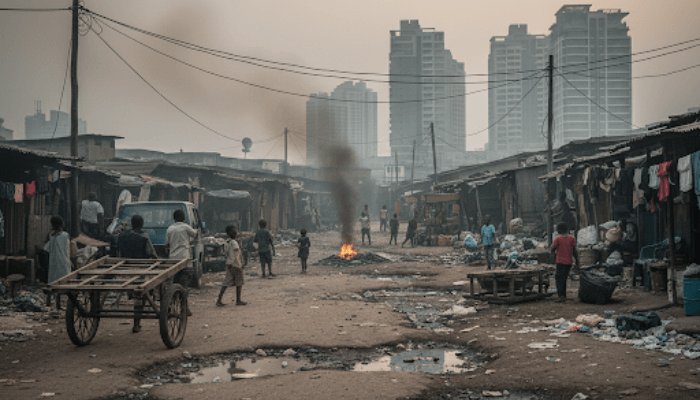
“With interest rates near 30 percent and the CRR immobilising half of bank deposits, recapitalisation is akin to asking banks to scale Everest with sandbags tied to their legs.”
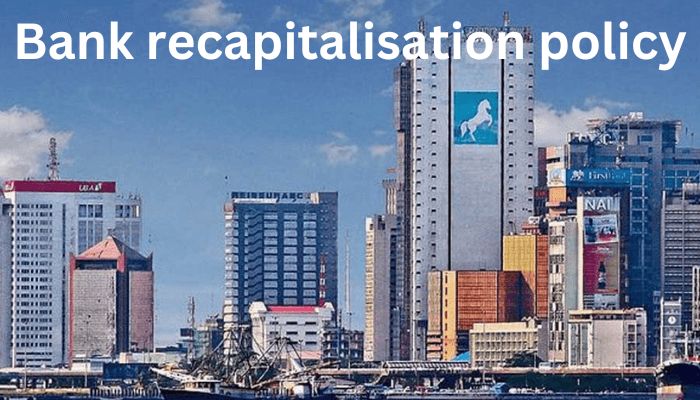
Nigeria’s banking industry is bracing for another wave of recapitalisation. The Central Bank of Nigeria (CBN) has set steep new thresholds, ₦500 billion for international banks, ₦200 billion for national, and ₦50 billion for regional banks, with a March 2026 deadline. The goal is to create a financial system robust enough to support a $1 trillion economy by 2030. But with an estimated ₦5 trillion shortfall, greater than the combined 2024 budgets for health and education, this ambitious push risks leaving Nigeria with fewer, safer banks that may be too risk-averse to fund the growth policymakers envision.
This is not the first time Nigeria’s banking sector has been shaken to its foundations. In 2004, Charles Soludo, then CBN governor, raised the minimum capital requirement from ₦2 billion to ₦25 billion. The move decimated Nigeria’s 89 banks, forcing a brutal round of mergers and acquisitions that left only 25 lenders standing. The survivors, Zenith, Access, UBA, and First Bank, emerged with deeper balance sheets and a more national footprint, and the system weathered the 2008 global financial crisis largely intact.
Read also: Shake-up at NNPCL: A welcome move, but reform must go deeper

But Soludo’s “shock therapy” played out in a radically different environment. Oil revenues were high, inflation hovered in single digits, the naira was relatively stable, and global investors were eager to finance Nigeria’s growth story. Today’s recapitalisation push is unfolding under a cloud of economic stress: inflation soared to 34.8 percent in December 2024 before easing to 21.9 percent in mid-2025, the naira has been devalued twice in two years, and interest rates are locked at 27.5 percent. Worse still, the CBN’s cash reserve ratio of 50 percent has frozen half of the deposits, draining liquidity and discouraging lending.
Governor Olayemi Cardoso has signalled that there will be no compromises: only paid-up share capital and share premiums will count toward the new thresholds, excluding other equity buffers like retained earnings. In June 2024, the CBN revoked Heritage Bank’s licence, proving its willingness to pull the plug on laggards. The message is clear: recapitalise or disappear.
Yet the parallels with Soludo’s revolution can mislead. Then, consolidation created stronger banks and spurred a stock market boom. Now, investors are skittish, and the government itself has imposed a punitive 70 percent windfall tax on foreign-exchange revaluation gains, depriving banks of a rare opportunity to self-finance growth. For mid-tier and regional lenders, options are stark: merge, downgrade licences, or risk extinction.
This raises an uncomfortable paradox: a recapitalisation that makes banks safer could also entrench a fortress mentality, where a handful of dominant institutions hoard capital but shun risk. Analysts warn that this scenario, stability without credit growth, could choke Nigeria’s hopes of building a vibrant, diversified economy. If large banks retreat into balance-sheet conservatism, SMEs and infrastructure projects, already starved of funding, will face even tighter credit conditions.
Read also: Nigeria’s market shake-up: P&G’s woes and lessons for success

The regulator’s counterargument is compelling: Nigeria’s ambition to become a $1 trillion economy cannot rest on thinly capitalised lenders. To finance big-ticket infrastructure, energy, and manufacturing projects, the banking system must be deeper and more resilient. From Kenya to South Africa, well-capitalised banks have proven vital to economic development, attracting foreign investment and reducing systemic risk. Cardoso’s strategy is rooted in this logic: consolidation is creative destruction, not a death knell.
Still, there are lessons from abroad that Nigeria risks ignoring. South Africa’s banking sector, dominated by a few large institutions, maintains capital adequacy but uses regulatory incentives, tiered capital requirements and preferential risk-weighting, to encourage lending to priority sectors. Kenya, which has also undergone consolidation, has paired tighter capital standards with innovation-friendly regulation, creating space for fintech partnerships and SME lending growth. Nigeria’s plan, by contrast, appears heavy on enforcement but light on vision.
The way forward requires more than capital raising. First, monetary policy must ease in tandem with recapitalisation. With interest rates near 30 percent and the CRR immobilising half of bank deposits, recapitalisation is akin to asking banks to scale Everest with sandbags tied to their legs. The CBN should explore phased reductions in the CRR and create a targeted liquidity window to support banks willing to fund priority sectors like agriculture, energy, and technology.
Second, the government should revisit the 70 percent windfall tax on forex revaluation gains. While designed to curb speculative behaviour, it has inadvertently stripped banks of a key internal funding source, pushing them to compete for scarce domestic capital. Offering temporary tax relief tied to capital raises or developmental lending commitments could unlock funding without eroding fiscal discipline.
Third, Nigeria must aggressively court diaspora investors and international private equity. Lagos and London listings by tier-1 banks like GTCO show there is appetite for Nigerian banking exposure, but smaller lenders will need innovative mechanisms, such as diaspora bonds or partial sovereign guarantees, to attract long-term capital. Without external inflows, recapitalisation becomes a zero-sum game among domestic investors, favouring only the largest banks.
Read also: CBN says BDC recapitalisation deadline remains June 2025, denies extension reports
Finally, regulators must signal that consolidation is not merely a numbers game. A post-2026 banking landscape dominated by five to six megabanks could create institutions too big to fail yet too cautious to lend. Policymakers should design incentives, like lower capital charges for SME loans or credit to export-oriented industries, that align bank profitability with national development goals.
Cardoso’s ambition is bold and arguably overdue. A fragmented, thinly capitalised banking sector cannot anchor a trillion-dollar economy. But Nigeria’s policymakers must remember that capital is not an end in itself. The Soludo-era consolidation gave Nigeria safer banks, but not necessarily a more inclusive financial system. This round offers a chance to correct that mistake, but only if recapitalisation is paired with reforms that incentivise real-economy lending and innovation.
If policymakers succeed, Nigeria’s banks could emerge not just as safer institutions but as engines of growth. If they fail, we risk repeating the worst of 2005: a cull that creates national champions but leaves the wider economy gasping for credit.