



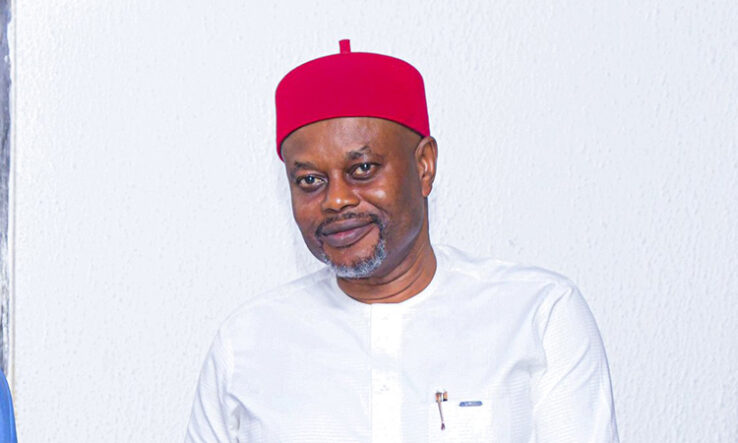
Public outcry has intensified across Nigeria as calls mount for the resignation of Uche Nnaji, the minister of science and technology, following revelations surrounding alleged discrepancies in his academic qualifications.
The controversy has also cast a shadow over the screening committee responsible for his vetting, with many Nigerians questioning the integrity and thoroughness of the process.
Nubi Achebo, director of academic planning at the Nigeria University of Technology and Management (NUTM), said the minister should not only be sacked but also handed over to law enforcement agencies for prosecution.
“He should be summarily fired from his minister job and handed to law enforcement authorities for prosecution. Forgery is still a crime under Nigerian laws,” he said.

Friday Erhabor, director of media and strategies at Marklenez Limited, emphasised that Nnaji should just voluntarily resign, and if he fails to do so, the president should fire him.
Read also: Forgery allegation: Nnaji’s aide cries “smear campaign”, UNN keeps mum
“It is not enough to admit. If he truly claimed to have a certificate from UNN and the claim turned out to be false, he should have just voluntarily resigned, and where he failed to do so, the president should fire him. He should also be made to refund every penny he has earned as a minister,” Erhabor emphasised.
Gift Osikoya, a teacher, said the minister’s scenario raises a serious ethical and institutional concern, especially when holding a public office.
“Leaders, especially those entrusted with portfolios such as science and technology minister, are expected to be models of integrity and credibility.

“When such controversies arise, they erode public trust, demoralize genuine graduates, and cast a shadow on the credibility of Nigeria’s education system,” she said.
Osikoya emphasised that certificate forgery has sadly become a recurring challenge in Nigeria, not only in politics but also in the civil service, education, and even the private sector.
“This trend thrives because of weak verification systems, a culture that often overlooks merit, and a lack of strict legal consequences for offenders,” she noted.
Isaiah Ogundele, an administrator, describes the development as very appalling, after the good job a journalist did recently, where an undercover reporter discovered certificate racketeering in some universities across Nigeria’s border.
“I thought that should have informed the authority to have done the right thing to curb and scrutinise the existing certificates from a particular year, probably from the year 2000 downward.
“It is a big shame for the committee that was involved in the screening for them not to have discovered this on time, and the minister is also disgracing the country before the world,” he said.
The way forward
:
Stakeholders pointing the way forward suggested strict verification, transparency, and institutional reform, among others.
Osikoya said there is a need that all appointments, from ministers to local officials, should go through an independent and digital certificate verification process, such as tertiary institutions and the NUC.
“There should be public access to the credentials of public officials should encourage accountability and build trust. Besides, the government should strengthen penalties for forgery and enforce them without bias or political influence.
“The government should encourage tertiary institutions to fully digitise students’ records and certificates, to make forgery nearly impossible,” she stressed.
Ogundele suggests that there should be newspaper publications for the intending public office holders showcasing their credentials in order for people to verify their true picture before giving them responsibility.
Besides, he said the Ministry of Education and everyone in the educational sector should rise up to the task.
“A state of emergency should be declared on education, and the government should weed out the bad eggs. Also, some schools that have been fingered should be investigated, and the culprits must not be spared,” he said.
For Ebuka Nnaji, an education consultant, the agencies in charge of document falsification should rise up to their duties, and tertiary institutions should make access for verification easier.
Recall that the minister of science and technology finally admitted that the University of Nigeria, Nsukka (UNN), never gave him a degree certificate, confirming earlier reports that he might have forged his academic credentials, according to a Premium Times report.
Erhabor suggests the DSS screens nominated ministers and authenticates all the claims.
Besides, he calls on the Senate to have a sub-committee on the verification of claims.
“Certificates of appointed government agencies and top political posts must have their certificates properly verified before they assume office. One day, somebody with a forged certificate can become our CBN governor,” he said.





