The Nigerian political elite are a special breed who, after contesting and winning elections, become affluent, influential and “honourable” members of the society. Armed with these sobriquets, they turn round as demi-gods among the masses, sneering and exhibiting unbridled arrogance and impunity.
In Nigeria, politics and political office is the easiest and surest highway to instant wealth. And the politicians generally make a mince-meat of opportunities deposited on their laps by poor folks.
From an irritatingly flamboyant lifestyle and nauseating arrogance fuelled by unexplained and inexplicable wealth, this class of Nigerians quickly graduate to crass materialism as shown in their exotic cars and luxury villas in choice locations around the world.
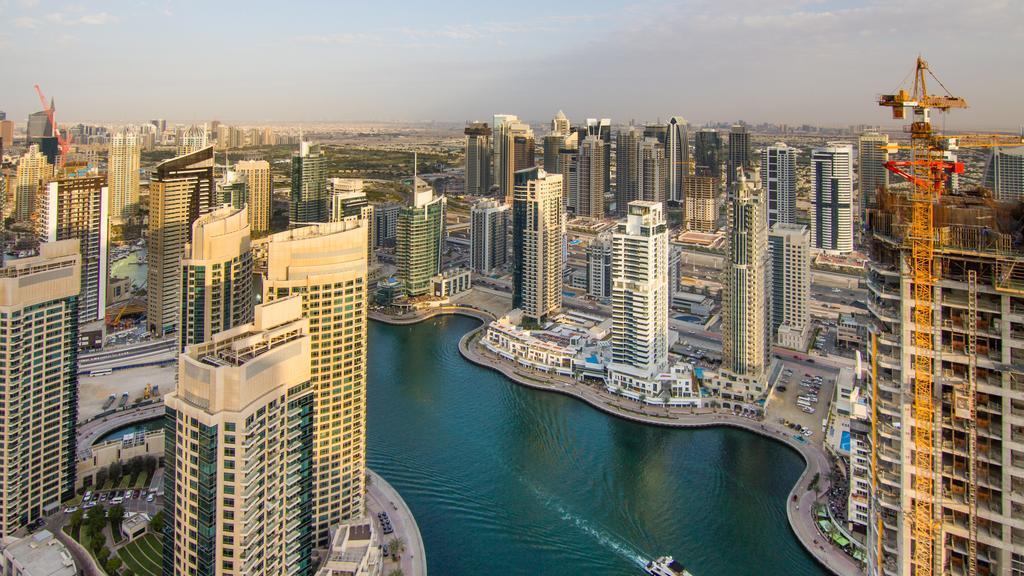
Dubai property market easily lends itself these ego-trippers. Over the last decade, Dubai has become “an oasis for Nigeria’s corrupt political elites.” The country remains one of the most spectacular destinations in the world and this is reflected in its iconic architecture, magnificent skylines, exclusive shopping and beautiful coastline.

This is where Nigerian PEPs buy and own homes. By the last check, 800 luxury properties in Dubai are linked to Nigerian politicians who have committed N146 billion to acquire those assets in a foreign land.
It is sad to note that until 2016, when the Center for Advanced Defense Studies (now known as C4ADS) acquired the data of a private database of Dubai real estate information (dubbed the ‘Sandcastles’ data), there had been a dearth of specific information about Nigerian PEPs’ properties in Dubai.
Read also: Play defence with these names amid market selloff
It is mind-boggling to note that just a handful of these PEPs are in the Sandcastles data and they fall into eight broad categories. A breakdown of the 800 properties linked to them shows that suspected PEP proxy has 226; known Nigerian law enforcement agency suspects, 216; PEP-linked businessperson, 91; security sector leader, 71, and governors, 69 properties.
Others are legislators who have 45 properties linked to them; Department/Agency head, 25; minister, 24; Nigerian National Petroleum Corporation official, 19; Presidency staff member has 13 while a judge has just 1. These properties are located in exclusive and expensive areas in Dubai including Palm Jumeirah Island, Dubai Marina, Jumeirah Golf Estate, among others. These areas are the equivalents of Banana Island in Lagos and Asokoro in Abuja.

Experts’ argument, which we share, is that if these 800 properties were built in Nigeria, besides the multiple jobs they would have created, the properties would have provided homes for close to 5000 persons, given an average of six persons per family. That would also have reduced the country’s ever-widening housing demand-supply gap appreciably.
It is pertinent for us to point out that the N146 billion ‘invested’ in the Dubai economy is as substantial as it is misguided and to make a sense of that huge sum is to place it side-by-side with allocations to critical sectors in Nigeria’s 2020 budget.
N146 billion is well over 50 percent of N262 billion allocated to the ministry of Works and Housing which got the highest sectoral allocation. This means that the money that have been illegally taken away and ‘invested’ in property in Dubai is more than the budget for housing separately.
It is also estimated that this money is equal to two-thirds of Nigeria Army’s annual budget and over three times the annual budget of the country’s Independent National Electoral Commission (INEC).
Furthermore, Aliko Dangote, President/CEO, Dangote Industries, is committing N73 billion to the reconstruction of the 35-kilometre Apapa-Oshodi Expressway in Lagos, meaning that the N146 billion politicians have ‘invested’ in property in foreign land can reconstruct 70 kilometres of roads in Nigeria.
But N146 billion is just part of the many outflows to overseas economies. A couple of reasons have made the outflow to Dubai property market possible. Besides the land reform in Dubai which allowed foreigners free-hold in property ownership, the Nigerian elite face few obstacles transferring large sums of money to Dubai.
Secondly, we learnt painfully that banks or other money transfer agents in both Nigeria and the UAE do not appear to be reporting large or otherwise suspicious transactions by PEPs to national authorities which is why the PEPs and their associates find Dubai a welcoming destination for unexplained wealth.
In unequivocal terms, we condemn this unwholesome trade/investment facilitated with our commonwealth. We call for continued monitoring by Nigerian and Emirati authorities.
The authorities, along with national and international actors, should step up their scrutiny on high-end property transactions involving Nigerian elites to ensure that these purchases are not being made with pilfered public funds.