Nigerian stocks rose to a more than six-month high on Wednesday, as news circulates of the imminent return of foreign portfolio investors (FPIs) who fled the market about two years ago, over concerns around the country’s foreign exchange policy.
Foreign portfolio managers who fled Nigeria are beginning to test the waters again, using the platform of the new investors window created by the Central Bank of Nigeria (CBN) and data now suggest that interest in Nigeria is gathering again, analysts said.
“Although near-term sustainable triggers seem to be scarce, bullish sentiments (following the launch of the CBN) Investors’ & Exporters’ FX window) seem to be driving bargain hunters to the market ahead of likely influx of foreign players”, said research analysts at United Capital in their recent note.
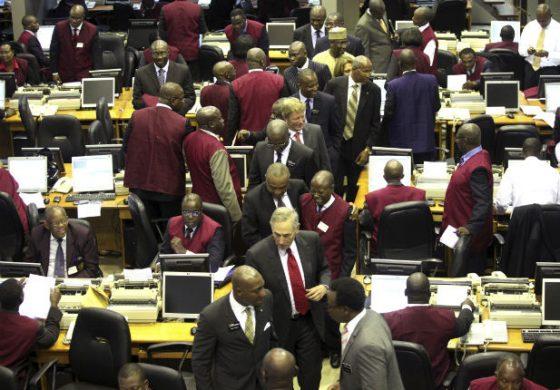
The year-to-date (YTD) return at the Nigerian Stock Exchange (NSE) returned to the positive region at 2.50percent Wednesday, as increased buy sentiment at the Lagos bourse pushed stocks value up by N806billion. The value of listed equities which stood at N8.716trillion on April 21 when the CBN launched the Investors’ & Exporters’ FX window, has risen to N9.522trillion Wednesday.

The stock price jump may also have received support from gains in the banking, cement and oil sectors, as dollar liquidity continued to improve on the currency market. Nigeria’s main index marked its third consecutive day of gains, closing up 2.95 percent at 27,546.68 points, a level last seen in October 2016.
Another factor behind the market rise was news that Moody’s had maintained a stable outlook for Nigeria’s banking sector, with the ratings agency noting that acute foreign-currency shortages were set to ease.
Market analysts also pointed to first-quarter (Q1) company results, which have come in better than market expectations, as a signal that Nigeria’s economy may be starting to recover but the strongest factor sighted is the fact that some foreign investors have begun to return.
Ibinabo Princewill, Head of Research at Lagos-based investment firm, Planet Capital Limited said, “The sentiment is that given the new rate, it is more reflective of the pricing of the naira. That may have given the investors some confidence. In addition, we must note that the first-quarter results started the rally. The announcement of the new FX window only sustained the rise”.
Christian Orajekwe, Head Research and Strategy, Cordros Capital said, “Four factors actually led to the rally you are seeing currently in the market. First factor is the new FX window; second factor is the good first-quarter results we have seen from the companies. The third contributing factor is that there is less apprehension for the macroeconomic environment. The fourth factor is the expectation that foreign investors will return to the market.

“That said, it is a mixed feeling for foreign investors. On one divide are those who are bullish on Nigeria. Aberdeen Asset Management, the biggest emerging market funds manager with up to $11 billion of emerging market assets, have shown interest and have already taken position in some Nigerian stocks. On the other divide are those who still feel that that the fragmentation of the FX market is a drawback. These investors are not comfortable and are waiting for the FX market to be harmonised before they come in,” Orajekwe said.
Funds including Chicago-based Frontaura Capital, South Africa’s Allan Gray Ltd. and Duet Asset Management Ltd. of London have bought and sold the naira recently as they test the waters ahead of a full return.
Frontaura, a hedge fund with $120 million of assets, was able to buy a few hundred thousand dollars last week, at rates of between 414 and 399 as it sought to repatriate dividends.
Cape Town-based Allan Gray, the largest manager of non-government investment funds in Africa, got a rate of around 405 for dollars it sold to buy Nigerian T-bills yielding as much as 22 percent.
“We’ve been pleasantly surprised at the levels we’ve managed to get,” said Nick Ndiritu, a money manager who helps oversee the $277 million Allan Gray Africa ex-SA Bond Fund.
The new market “has some kinks to work out,” said Tom Egbert, an analyst at Frontaura. “But at least you can trade naira for dollars. There’s a chance in the coming months that this new FX window leads to a properly functioning FX market.
“We’re talking to banks to re-initiate a small position in the local market,” Kevin Daly, a money manager at Aberdeen, said May 5. “I’m confident we could get an exchange rate around 400. It seems there is some semblance of a two-way market returning, albeit a small one.”
The introduction by the CBN of the FX window for investors has also tempted Aberdeen Asset Management Plc, which manages $11 billion of emerging-market assets from London, to buy naira bonds for the first time in about two years. The firm sold all its local-currency debt in 2015 when Nigeria tried to prevent the naira from weakening amid the crash in the price of oil, its main export.
Overseas money flowed out of Nigeria in mid-2014 when oil prices started to collapse. That fall tipped the country into its first recession in more than two decades, slashed government revenues and weakened its currency and financial markets.
Shares in oil firm Oando, which hit an 18-month high on Monday, surged for a second day and were up 10.13 percent, while Diamond Bank rose 9.52 percent and FCMB up 9 percent.
Dangote Cement stock, which accounts for a third of the market capitalisation on the Nigerian exchange, rose by 2.48 percent.
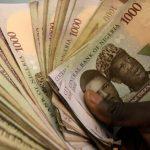
As a measure of the autonomy many investors sought for the FX market, the naira is falling to levels weaker than the black-market rate in a foreign-exchange window set up for international investors and hedge funds last month.
The exchange window for portfolio investors was set up by the central bank, April 24, to ease a crippling scarcity of hard currency by allowing the naira’s value to drop beyond its official rate.
Iheanyi Nwachukwu and Innocent Unah