Nigeria is set to avoid the turmoil in Emerging Markets (EM) currencies that has led to a sell-off in global stocks which erased $1.7 trillion in value as the nation’s central bank headed by Sanusi Lamido Sanusi is seen to be ahead of the inflation curve.
Central banks in emerging markets such as South Africa, Turkey and Brazil have recently tightened monetary policy to bolster their currencies as the markets presented a choice between rate hikes and a continued currency sell-off to central banks seen as behind the curve.
“The relative resilience of the naira (NGN) has been noticeable at times of pronounced stress in global markets in previous years, which reflects the policy-determined nature of the exchange rate in Nigeria,” said Samir Gadio, an emerging-markets strategist at Standard Bank Group, in London, in a response to BusinessDay questions.
“Nigeria and the NGN should muddle through…portfolio outflows are less likely to materialise as long as there is no decline in the oil price below the $100-95 pbl level.”

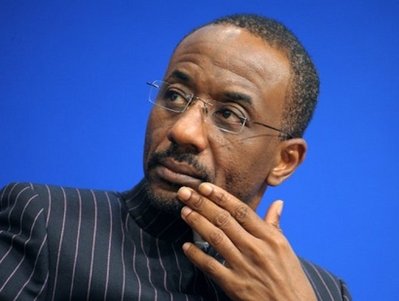 The naira has depreciated less aggressively than the currencies of most mainstream emerging markets in January.
It (NGN) has lost 1.8 percent against the dollar (USD) (USD/NGN at N162.9 on 29 Jan), compared with a 7.8 percent, 7.3 percent, 6.7 percent and 2.1 percent loss for the South African rand (ZAR), Russian ruble (RUB), Turkish lira (TRY) and Brazilian real (BRL).
The CBN under Sanusi gained the markets credibility by keeping interest rates at a record high to fight inflation and recently increased the cash reserve ratio (CRR) on government deposits to 75 percent from 50 percent, a move against excess liquidity in the system that it blames for naira weakness.
The year on year consumer price index (CPI) for December recently printed at 8 percent its twelfth consecutive month in single digits.
Inflation will be kept within a band of 6 percent to 9 percent this year, controlled mainly by monetary conditions, Sanusi said in a recent interview.

“It looks like frontier markets are again largely unaffected,” said Charles Robertson, global chief economist at Renaissance Capital, in a response to BusinessDay questions about the turmoil in Emerging Markets.
“There is not the same pessimism about frontier markets, as there is about emerging markets. EM countries are only growing at 2 percent a year while Nigeria, Kenya and others in the frontier world are growing at 5 percent or more. So investors seem happy to remain in frontier markets.”
Nigeria currently straddles the Emerging and Frontier markets, with its bonds included in the JPMorgan emerging market bond index (GBI-EM) and its equities in various Frontier market indexes including the MSCI, helping to attract investor interest from BlackRock-the world’s biggest asset manager- to Mark Mobius chairman of Templeton Emerging Markets Group.
Emerging Markets first started selling – off last year when the US Federal Reserve hinted that it will begin a roll-back of quantitative easing, that had flooded EM with cheap money.
The US Federal Open Market Committee said on Jan. 29 that it will cut monthly bond purchases by $10 billion to $65 billion.
Frontier markets are relatively immune to the short-term swings of global financial markets as institutional investors’ holdings there are about $20 billion, compared with approximately $1 trillion in emerging markets, said BlackRocks Sam Vecht and Emily Fletcher in a recent regulatory filing.
Nigerian stocks have however dropped 1.75 percent year to date (Jan. 30), as banks take a beating on concerns over the impact of tighter reserve requirements on profitability.
The Nigerian Banking index has lost 8.1 percent year to date (Jan. 30) led by declines in UBA (-12.92 percent), Zenith (-12.77 percent), Skye (-15.91 percent), and First Bank (-11.35 percent).
Nigeria will avoid the EM turmoil as the markets see a relatively stable exchange rate and single-digit inflation as CBN Governor Lamido Sanusi’s most critical achievements, which is likely to be defended, says Gadio.
“We do not see the CBN changing the FX stance and departing from its price stability mandate…this makes us even more confident that the currency regime will be preserved by the central bank in coming months,” said Gadio.
By: PATRICK ATUANYA