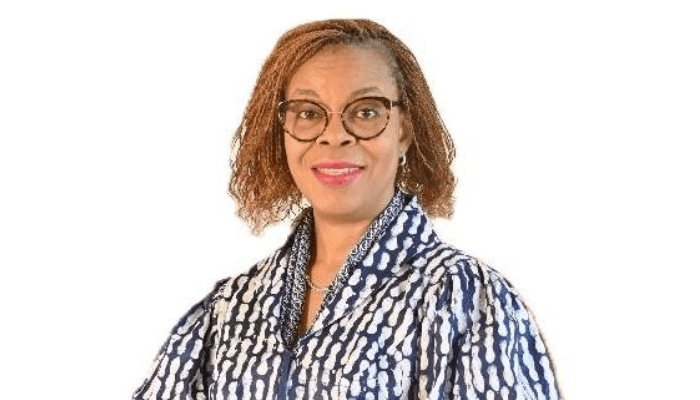
With about 75 percent of UTME students being denied admission yearly, amid ill-equipped and underfunded universities, Enase Okonedo, the first female vice-chancellor at Pan Atlantic University, in this interview with CHARLES OGWO, explains why Nigeria needs more universities and a rethink of dependence on government for universities’ funding. Excerpts:
Congratulations on your 2025 Harambee Award. What does this award mean to you and PAU as an institution?
I was humbled to receive the award, and I consider it a great honour to be recognised for it.
It makes me want to do more, not just because I’m going to get more awards, but because it will inspire other women to be deliberate about excelling in what they do.

I have spent my career over the last three decades trying to pave the road for more women to assume leadership positions, and it was more to ensure women are not discriminated against but are given equal opportunities with men.
Pan Atlantic University is known for promoting students’ entrepreneurship and career development. What informed this initiative?
I think it is the recognition of the ideals that have characterised the university and the Lagos Business School.
Our mission statement is all about ensuring that we develop competent professionals who will go on to serve with personal social responsibility and initiatives.
Many years ago, it was almost deemed automatic that once a student completed a university degree, he/she was going to get a job, but that is no longer obtainable today, hence the high rates of unemployment.

At Pan-Atlantic University, students are inculcated with the spirit of initiative and are prepared to take on jobs. Our admission statement is using education as a means to serve and to transform society. We develop people both for jobs and entrepreneurship.
As the first female dean of LBS and one of Nigeria’s female vice-chancellors, what are you doing to promote gender diversity in leadership roles?
As the first female dean of Lagos Business School and first female vice-chancellor of Pan-Atlantic University, I’m appreciative of the fact that the founders and the leadership didn’t discriminate in ensuring I was appointed; they looked beyond gender to appoint me.
This signals the need to ensure that women are in leadership positions and ensure there are policies to encourage women to remain in the workplace, regardless of their roles outside of the workplace, because women run families and nurture children; hence, there is a need to support them in the workplace to achieve their goals.
A lot of women in Nigeria feel that some positions are out of reach for them. When you look at the political space and the tiny percentage of women there and even the ones there, the way they are being treated leaves much to be desired.
I think for me, the first thing is for women to dream. Women shouldn’t think anything is stopping them. Dream, and work hard to achieve your dream.
We must promote gender diversity in leadership roles and get people to feel free by getting rid of impostor syndrome. Then rally support systems and structures for women in the workplace; at the university, we have various ways to support women with extended maternity leave, with crèches to help nursing mothers, besides giving them shorter working days.
I’m deliberate in ensuring that women are prepared for their roles in their workplace. Therefore, I do a lot of mentoring, encouraging women to reach for their dreams, guiding them to navigate the challenges they still face in the workplace today.
I encourage women to come into academia because there’s still an imbalance between the male and female genders.
“I believe if Nigeria can address those issues and promote adult literacy, the country will be able to make progress in ensuring that children are not only going to school but also remain in school.”
The number of female vice-chancellors surged recently. What is responsible for this?
Nigeria has over 200 universities and only about 32 female vice-chancellors; I’m not sure that should be considered a surge.
Yes, there has been an increase, but I can’t say why; I can only speculate. I believe these female vice chancellors got to those positions on competence and not because of their gender.
It means in the respective governing councils, the board of trustees, they are not looking at gender as a criterion for leadership positions.
According to a UNESCO report, 251 million children globally are out of school; Nigeria has about 20 million of the children. What do you think of this and the way forward?
I believe poverty and ignorance are fuelling this. Education is a fundamental human right, but if people are poor, they need their children to work at home or in their workplaces.
Ignorance is also a factor; if the parents themselves are not educated, they may not recognise the value of education; it’s like a vicious cycle.
I believe if Nigeria can address those issues and promote adult literacy, the country will be able to make progress in ensuring that children are not only going to school but also remain in school.
NELFUND is the federal government’s scheme to give Nigerians access to higher education. But the implementation doesn’t accommodate private university students. What is your take on this?
I think for fairness and justice, it should be open to all students, though the government gave their reasons for that.
The fact that students choose to go to private universities because they want quality education and to graduate on time should not remove them from being able to access student loans.
The rationale behind leaving it only for those in public universities leads one to assume it is only the indigent who go to public institutions. That is a fallacy; some students choose public universities because the courses they want are not available in private universities.
There are allegations that some private universities are giving out first-class degrees, and this is functional to the rising number of first-class graduates produced by the institutions. What is your take on this?
I don’t understand what is meant by giving out first-class degrees. I think all credible institutions that want to carve out a reputation for themselves will guard the quality of degrees they give out.
Universities cannot dash students’ degrees when they cannot defend that by the way they function in the workplace. That would be a disservice to the organisation.
I feel in private universities, the learning environments may be more conducive; there are fewer disruptions, and students may have access to more cutting-edge resources that enable them to be able to devote themselves more to their studies.
I believe the students who get first-class degrees are because they are deserving of that.
The federal government just approved the establishment of more universities amid ill-equipped and underfunded ones, especially the public institutions. Do you think Nigeria needs more universities or to upgrade and adequately fund existing ones?
I think Nigeria needs more universities and also needs to upgrade and adequately fund the existing ones.
Going by Nigeria’s population, there is a need for more universities to absorb JAMB applicants who fail to get admission each year.
Even if the existing ones are upgraded and funded, it won’t solve the problem. In a situation where some universities have 2,000 students in year one with one teacher, how can students learn?
We need to ensure the class sizes and student-teacher ratios are there, and given our population, we need more universities.
The public universities’ dependence on the government’s subsidies and grants is something I think the country should rethink.
We need to look at the laws and see how we can adjust to allow the state-owned universities to have some leeway to charge commensurate fees that can provide for quality education, fund research, and pay lecturers’ salaries.
Many Nigerian universities have been poorly ranked by international organisations over the years. What do you think is responsible for this?
First is to know how many Nigerian universities entered these rankings and what the indices are being looked at.
If the indices and metrics are globally applicable, then the question is, what is Nigeria going to do?
This comes back to the resources available to establish credible universities. Nigerian universities need the resources to fund research. We need to deploy the resources, and to achieve that, we need to look at the metrics. How applicable are the metrics to the Nigerian concept?