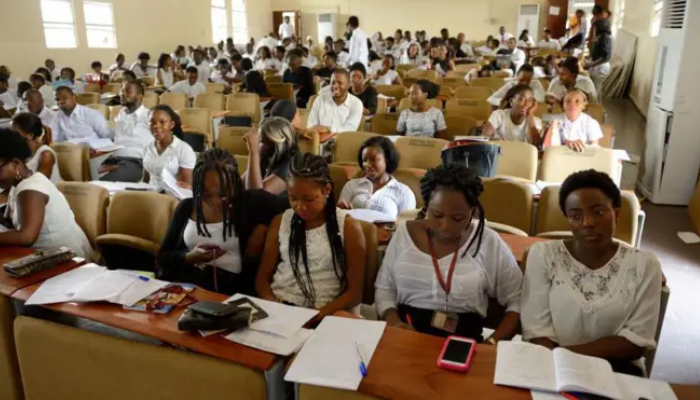
Across the world, universities have long served as reservoirs of knowledge, places where societies make sense of themselves and where future solutions quietly take shape. They sustain inquiry, debate, experimentation, and reflection, becoming repositories of insights that guide national development. Long before governments draft policies, it is in lecture rooms, laboratories, libraries, and research centres that the sparks of progress are ignited.
Universities act as both memory and compass, preserving what has been learned and illuminating what must come next. In Nigeria, however, this intellectual storehouse has become a largely unvisited archive. The knowledge exists but rarely travels beyond the university gates.
For decades, Nigerian scholars have examined the country’s most persistent challenges, including energy shortages, environmental degradation, food insecurity, urban planning, health systems, technology gaps, security threats, governance reforms, and economic diversification. Thousands of theses, publications, policy studies, and prototypes emerge every year.
Yet, much of this work ends up in repositories, rarely consulted or integrated into national decision-making. For a country facing complex developmental demands, this disconnect is both puzzling and expensive.

Inaugural lectures represent one of the clearest examples of this gap. Inaugural lectures are to inaugurate ascension to the professorial chair. Usually delivered within two years of being appointed a professor, they often contain policy frameworks, tested recommendations, and practical ideas directly relevant to Nigeria’s development.
From the early inaugural lectures at the University of Ibadan and the pioneering series at the University of Lagos – beginning with Professor Felix Dosekun in 1962 – to the recent 449th lecture at UNILAG and the 232nd at the University of Nigeria, Nsukka, these presentations offer deep analyses of infrastructure, environment, public health, engineering, education, and national management. Together, they form a long-running intellectual commentary on the country’s development trajectory. However, outside academia, they receive little engagement.
The issue is not that knowledge is lacking, but that Nigeria has not built the systems required to translate academic insight into policy action. In many ministries, the bridge between universities and government is informal at best. Research rarely shapes legislation, planning documents, industrial strategies, or development frameworks. While China, Singapore, South Korea, and Rwanda link research to national priorities, Nigeria lets much of its output fade into silence.
China, for instance, built its modernisation strategy on the expertise of scholars, integrating university research into five-year development plans and using the Chinese Academy of Sciences as a policy engine.
Singapore mapped its industrial transformation by aligning academia with its economic and technological ambitions. South Korea’s rise as a manufacturing and innovation hub was fuelled by disciplined collaboration between government, universities, and industry.

Rwanda’s governance reforms and environmental strategies draw directly from academic input and university-based think tanks. These examples demonstrate that nations become competitive not only by generating knowledge but by institutionalising mechanisms to use it.
Nigeria’s current model, however, leaves universities intellectually active but nationally under-engaged. Across the country, engineering departments in universities have produced frameworks for stronger infrastructure and flood control; agricultural faculties have developed solutions for food security; law faculties have proposed judicial reforms; energy researchers have outlined grid-improvement systems; security centres have analysed insurgency and banditry; and public-health scholars have mapped disease patterns. Still, few of these insights find their way into national or state planning.
This underutilisation has practical consequences. A country facing electricity shortfalls cannot afford to ignore decades of research on renewable energy and grid optimisation. A nation confronting insecurity cannot overlook studies that analyse conflict drivers, border vulnerabilities, or community resilience.
Governments seeking to boost industrial capacity need the insights of engineers, economists, and scientists who have spent their careers studying these very problems. When research is shelved rather than applied, development becomes slower, more expensive, and more fragile.
The situation persists partly because inaugural lectures and academic research are often viewed as ceremonial or theoretical exercises rather than as strategic assets. Another barrier is structural: ministries lack dedicated research-translation units; government officials rarely consult academic databases; and there are no obligatory mechanisms requiring policy makers to integrate scholarly evidence into national plans.
As a result, even the most relevant work, including policy-ready models and implementation blueprints, remains in archives rather than shaping the country’s future.
Nigeria does not need to reinvent the university. What it needs is a different mode of engagement with the knowledge that universities continuously produce. Institutions can package inaugural lectures and major research outputs into accessible policy briefs, thematic digests, and public-facing repositories.
Government ministries can establish review committees that examine new academic work and identify actionable recommendations. Legislators can request evidence from universities during lawmaking. Journalists, civil society organisations, and the private sector can amplify findings and advocate their adoption. These are practical steps, and none require structural overhaul, only sustained commitment.
For more than sixty years, Nigerian universities have documented the country’s struggles and possibilities with remarkable clarity. They have mapped what is broken, illuminated what is working, and proposed what could be built. The question now is whether this knowledge will continue to sit quietly in shelves and archives, or whether Nigeria will finally recognise it as one of its most strategic national resources. A nation that invests in knowledge but fails to use it risks stagnation. A nation that learns from its thinkers has a chance at renewal.