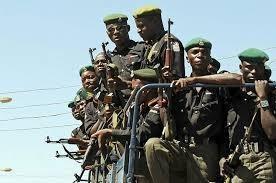
While Nigeria increased spending on the military to an average of $1.7 billion a year from 2011 to 2014 in response to the Boko Haram insurgency, “system-wide” corruption meant it didn’t become a better fighting force, the International Crisis group says.
“Dubious procurement practices, fraudulently bloated payrolls, poor financial management and weak auditing systems at the national security adviser’s office, the defense ministry and armed services headquarters often mean funds are diverted to private or non-military purposes,” the Brussels-based group said in a report released on Monday. “Inadequate funding, corrupt procurement and poor maintenance result in serious equipment and logistics deficits.”
President Muhammadu Buhari, a 73-year-old former general and military ruler, who won elections on an anti-corruption platform, began investigations into the mismanagement of as much as $5.5 billion of military funds under his predecessor Goodluck Jonathan. Top security and military officials in the former regime have been charged with allegations of theft and money laundering.
While Buhari has taken steps to stem the decline, resulting in major gains against Boko Haram insurgents, the armed forces remain inadequately staffed, with 120,000 personnel for a country of more than 170 million people faced with challenges that now include renewed militancy in the southern, oil-rich Niger River delta, according to ICG.