Nigeria’s ability to cushion the fiscal blow from lower oil prices through higher gas earnings is being threatened as Asian LNG prices collapse.
Nigeria LNG Ltd. (NLNG), Africa’s largest liquefied natural gas export terminal, had increasingly turned to Asian markets to sell its products due to lower European spot prices and surging output by United States shale producers.
However, spot LNG prices for delivery to Northeast Asia have slid 56 percent over the past year, according to data compiled by World Gas Intelligence.
“In 2014 the company’s corporate income tax amounted to about N220 billion ($1.1 billion), thus making NLNG by far the highest tax payer in Nigeria,” the firm said in a recent 2015 facts and figures report on its website.

NLNG also earns money for the Government through payments it makes to Joint Venture (JV) feed gas suppliers, of which about 55 – 60 percent goes to the Federal Government, and 49 percent share of dividends to shareholders that the FG receives.
NLNG, a joint venture between the Nigerian National Petroleum Corp. (49%), Royal Dutch Shell Plc (25.6%), Total SA (15%) and Eni SpA (10.4%), operates a 22 million metric tons a year plant that accounts for more than seven percent of global capacity.
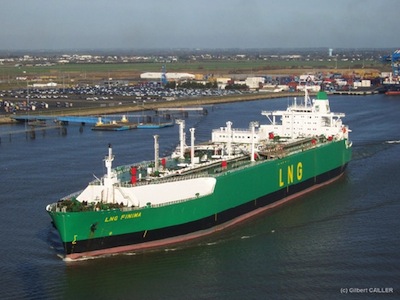
As Asian prices fall, it also squeezes NLNG margins, as it is more expensive to ship to the region.
It cost 74 cents a million Btu to ship LNG from West Africa to Spain in December 2014, compared with $2.16 to Japan, according to Poten & Partners Inc. data on Bloomberg.
Shipments to Japan will average $5.80 per million British thermal units in 2015, a 65 percent decline from 2013, according to Energy Aspects.

The prospect of lower prices, weaker demand and upcoming glut from new plants in Australia, also means NLNG may have to delay expansion plans.
Consulting firm IHS Inc. says only one in every 20 projects planned is actually necessary by 2025 as weakening Asia economies, cheap coal, the return of nuclear power in Japan and the ever-expanding glut of shale supply in North America, temper demand for the power-plant fuel, putting tens of billions of dollars worth of export projects at risk.
NLNG, which runs a six train plant has plans for an 8.4 mtpa Train 7 project which will raise the liquefaction capacity to 30.4mtpa, now waiting Final Investment Decision (FID).
“There is a very narrow window of opportunity for new projects that want to take final investment decision by 2020,” said James Taverner, an IHS analyst.
The number of LNG projects proposed to take a Final Investment Decision (FID) in 2015 and 2016 has not reduced significantly, in contrast to the 45 upstream oil and gas projects which have been postponed FID so far in 2015.
If there are no postponements, Wood Mackenzie in a September 3 report says the market could see an additional 100 million tonnes per annum of LNG sanctioned in the next 6-18 months, extending the likelihood of an oversupply of LNG in Asia to 2025.
“Development of even half of this proposed supply could prolong the Asian oversupply to 2025. Wood Mackenzie’s view is that the global LNG market does not need all this LNG at the pace proposed and as companies confront this reality, a raft of project postponements will follow,” Noel Tomnay, head of global gas and LNG research at Wood Mackenzie, said.
PATRICK ATUANYA