The Federal Government has expressed her determination to productive borrowing and committed to safeguarding the N1.8 trillion which the government planned to borrow to invest in priority areas that would uplift the lives of the citizens, says Kemi Adeosun, minister of finance.
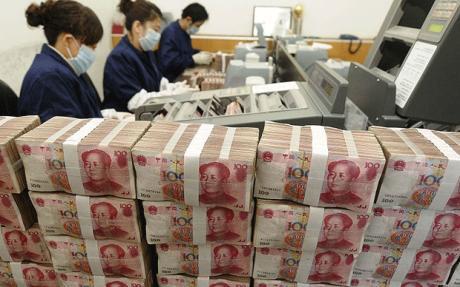
Adeosun further says the country is considering selling Chinese Panda bonds to help finance the 2016 budget, an option she considers as cheaper in her quest to raise funds for national development.
Adeosun further attest that the nation is also looking to sell Eurobonds, apart from loans from multilateral agencies, adding that “Initially we were looking simply at the Eurobond market but then we began to explore opportunities in the Renminbi market, so there is a possibility of issuing a Panda bond.”
The minister is categorical on the her expectation that Nigeria would continue to post budget deficits for the next two to three years. For 2016 the government expected a deficit of N2.2 trillion , she adds.

Adeosun says that the N1.8trn borrowing is to invest in such priorities areas as Transport, Roads, Housing, Power and Health. “We are committed to a countercyclical budget expenditure model. This has been a success in other nations, offsetting the risk of recession and creating an economy which is not based on either fragile consumer spending or over-reliance on oil.”
Consequently, she says that government is planning to reset Nigeria’s economy with structured borrowing, targeted investment and diversified growth.
She warns those thinking the borrowing would open the door to renewed fiscal indiscipline that she plans to continue her “aggressive programme of fiscal housekeeping”.
She was speaking to some of the country’s most influential captains of industry at a special event hosted by the Lagos Business School (LBS) at the weekend.
The minister says that her ministry is committed to government’s plan to reset Nigeria’s economy with “structured borrowing, targeted investment and diversified growth and says that the country inherited a set of conditions that require the redefinition of how we collectively work towards ushering in a new era in Nigeria.
“We must safeguard this borrowing, ensuring that the wastage within the existing systems is firmly addressed. We cannot mortgage our future based on a system that has failed us for generations. We must be careful in our borrowing and prudent in utilisation.”
She affirms that the ministry is committed to a countercyclical budget expenditure model. This has been a success in other nations, offsetting the risk of recession and creating an economy which is not based on either fragile consumer spending or over-reliance on oil.

Making a presentation at the event, the minister outlined the four pillars of the economic plan, including to stimulate economic growth to achieve a real GDP growth of 4.2% in 2017, reduce the cost of governance and strengthen institutions to combat corruption, extract efficiencies in public service, increase government expenditure on infrastructure and fund the budget deficit and negative trade balance cost effectively.
She said the targeted outcomes included, substantial increase in gross capital formation, acceleration of GDP growth, infrastructure development to unlock economic growth, diversification of the economy and growth of the non-oil sector, improvement in the overall business environment, improvement in key socio-economic indicators and jobs and wealth creation.
She said: “With courage, discipline and open minds, we begin our journey to build an economy whose resilience is not controlled by oil prices, but by our determination to reset the economy and finally give our people the chance they deserve.
“We have inherited a set of conditions that requires us to refine how we collectively work towards ushering in a new era in Nigeria,” she added.
Pointing to the impact of falling global oil prices on the economy, Adeosun said: “In the past, we had the means but not the will. Now we have the will but we no longer have the money to invest. The safety blanket of oil has been ripped away, laying the poverty of Nigeria’s institutions bare.”
She said: “We have spent too many years tinkering at the edges of our institutions, our infrastructure and our economy and the mistakes and misjudgements of the last 40 years have set our clocks back by decades.”
Hope Moses-Ashike & Lolade Akinmurele