The government of the Federal Republic of Nigeria has condemned the attempted seizure of power in the Republic of Benin after a group of soldiers briefly appeared on state television claiming to have overthrown President Patrice Talon. The authorities in Cotonou say loyalist forces have since restored control, describing the incident as a short-lived and unsuccessful bid to destabilise the country.
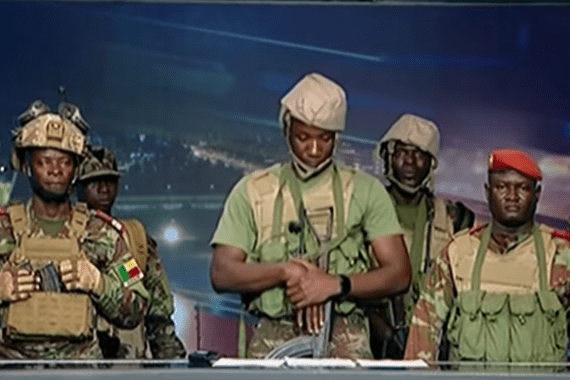
The attempted coup unfolded early on Sunday when soldiers led by Lieutenant Colonel Pascal Tigri appeared on Benin’s national broadcaster, describing themselves as the Military Committee for Refoundation. They claimed to have taken power and declared the country’s borders closed. Their broadcast lasted only a few minutes before the signal was cut.
Read also:Republic of Benin lawmakers approve extension of presidential term to seven years
Olushegun Adjadi Bakari, Benin’s foreign minister, played down the extent of the takeover. “They only took control of state TV, and the signal was cut after several minutes,” he told Reuters. “There is an attempt, but the situation is under control.”

Nigeria responded with a firm statement, saying it had received the news “with grave concern” and “unequivocally condemns in the strongest possible terms the attempted forcible seizure of power” in what it called its “friendly neighbour and brotherly nation.”
The statement, issued by spokesperson Kimiebi Imomotimi Ebenfa of the Ministry of Foreign Affairs, warned that any unconstitutional change of government is “an unacceptable and retrogressive step” that threatens democratic gains across West Africa.
Read also:Benin Republic foils apparent coup attempt, government says
Describing the events as “a direct assault on democracy, constitutional order and the collective will of the Beninese people,” the Nigerian government stressed that the people of Benin had long “demonstrated their commitment to peaceful political transitions.”
The statement praised the actions of Benin’s security forces, saying, “We commend the courage and professionalism of the Beninese security forces in defending the constitutional order and guaranteeing the safety of the President.” Nigerian officials added that the swift response meant “the unfortunate attempt to subvert democracy was decisively repelled.”

Nigeria reiterated its own position on the political stability of the region, noting that “unconstitutional changes of government are an unacceptable and retrogressive step that threaten the hard earned democratic gains and socio economic progress of our sub region.”
Read also:Benin thwarts military takeover after soldiers declare President Talon ousted
As a major voice within ECOWAS, Nigeria also urged a united regional response. “Nigeria calls on all member states and the international community to unite in condemning this act,” the statement said, adding that it was important to “reaffirm our shared commitment” to the African Union Charter on Democracy and the ECOWAS Protocol on Good Governance.
In an appeal for calm, Abuja encouraged political actors in Benin to avoid escalation. “We urge all parties in the Republic of Benin to remain calm, uphold the rule of law and continue to channel any political discourse through peaceful, constitutional and democratic means.”
The statement concluded with a reassurance of long standing partnership between the two countries. “The Federal Government of Nigeria reassures the Government of the Republic of Benin of its full support and continued cooperation as we work together, as brothers and partners, to deepen democracy and ensure lasting peace and prosperity for our peoples and the entire West African region.”
Benin has been viewed as one of West Africa’s more stable political systems, making the brief mutiny all the more surprising. Although the attempted coup was contained in minutes, it underscores the political tensions simmering across a region that has seen multiple military takeovers in recent years.
Authorities in Cotonou insist the situation is back to normal. But the incident is a stark reminder that even countries with strong democratic reputations are not immune to the ripple effects of instability sweeping parts of the continent.