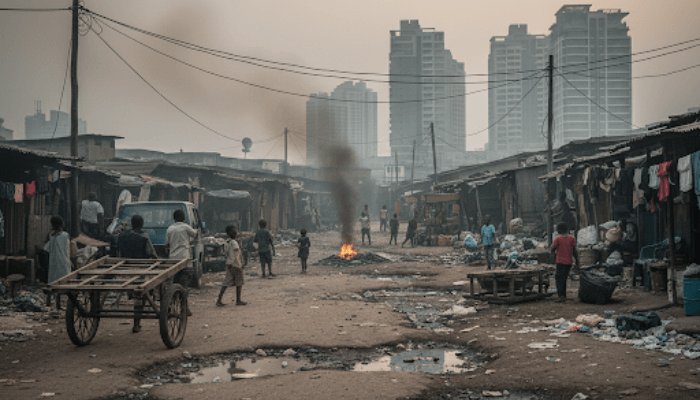
When a nation’s highest public officials shun the very institutions they are entrusted to govern, the symbolic and substantive damage runs deep. Nowhere is this more tragically evident than in Nigeria’s healthcare sector, where the political elite’s near-reflexive reliance on foreign hospitals has not only hollowed out public trust but also actively sabotaged domestic reform.
Former President Muhammadu Buhari’s recent death in a London hospital at the age of 81 has once again drawn attention to a morbidly persistent norm: Nigeria’s leaders routinely seek medical attention overseas, often for ailments that should, in principle, be treatable at home. In his eight years in office, Buhari spent more than 200 days on medical trips abroad, mostly in the United Kingdom. The financial cost of these excursions was never fully disclosed, nor was any serious effort made to improve the State House Medical Centre, which receives more than ₦1 billion annually in budget allocations but remains largely dysfunctional.
Read also: How Nigeria’s leaders betray merit and national unity
Nigeria is not a poor country, but it is profoundly mismanaged. Despite being Africa’s largest economy with a GDP of $477 billion (World Bank, 2023), the country spent just 4.7 percent of its national budget on health in 2024, far below the 15 percent target agreed in the 2001 Abuja Declaration. In contrast, Rwanda allocates over 10 percent, while South Africa spends nearly 9 percent. And unlike Nigeria, their heads of government are not routinely airlifted to Europe for treatment.

Medical tourism is not simply an embarrassing habit; it is a policy failure that has become institutionalised. Each year, Nigerians spend between $1.2 billion and $2 billion on medical care abroad, according to the Nigerian Medical Association and the Budget Office. This haemorrhage of capital deprives the country of funds that could be used to build the very centres of excellence that the political class claims are lacking.
What makes this particularly egregious is the duplicity. Politicians who campaign on promises to improve local hospitals often end up reinforcing public scepticism by avoiding them at all costs. In 2015, then-candidate Buhari vowed to end medical tourism; in practice, he entrenched it. His chief of staff, Abba Kyari, died in a Lagos hospital during the COVID-19 pandemic only because the global lockdown made escape impossible.
Such contradictions send a message that the healthcare system is not merely broken but unworthy of belief. And yet, the facts tell a more complex story. Nigeria has made some progress, particularly through public-private initiatives. The African Medical Centre of Excellence (AMCE), a 170-bed tertiary hospital in Abuja launched in partnership with Afreximbank and King’s College London, is one such bright spot. Another is the NSIA-LUTH Cancer Centre in Lagos, funded by the Nigeria Sovereign Investment Authority, which has treated over 7,000 patients since 2019 with international accreditation standards.
“It is therefore no surprise that Nigerian officials hedge their bets abroad. But this is no longer a private choice; it is a public scandal.”
These examples prove that high-quality care is achievable. The problem lies not only in investment but also in perception and trust. Nigeria suffers from one of the worst doctor-to-patient ratios globally, about 1 doctor to 5,000 people, compared with the WHO-recommended 1 to 600. The Nigerian Association of Resident Doctors reports that more than 2,000 medical professionals emigrate annually, largely to the UK, US, and Canada. The British General Medical Council registered over 1,200 Nigerian-trained doctors in 2023 alone.

This “brain drain” is driven by poor pay, substandard working conditions, and political neglect. It is not uncommon for teaching hospitals in Nigeria to operate without basic amenities like oxygen, uninterrupted power, or critical drugs. In February 2023, a power failure at Lagos University Teaching Hospital (LUTH) allegedly caused the deaths of two neonatal patients. Insecurity, strikes, and corruption make even routine care a gamble.
It is therefore no surprise that Nigerian officials hedge their bets abroad. But this is no longer a private choice; it is a public scandal. Unlike in the United States, where Walter Reed Medical Centre or Mayo Clinic serve as symbols of national pride, or the United Kingdom, where the NHS treated Prime Minister Boris Johnson during his life-threatening bout with COVID-19, Nigerian leaders demonstrate no such confidence in their own institutions. The result is a deepening legitimacy crisis.
Reversing this trend requires more than technocratic reforms. It demands political courage and ethical leadership. First, Nigeria must legislate a phased ban on foreign medical trips for public officials, enforceable once a threshold of local capacity is met. This policy was first mooted in 2016 but never enforced. Second, the government must commit to funding and accrediting at least one fully equipped tertiary hospital in each of the six geopolitical zones. Third, diaspora engagement should be institutionalised: Nigerian-trained doctors abroad should be incentivised to return periodically, with accelerated licensing and research opportunities.
Read also: Healthcare Choices of Nigerian Leaders – a need for Change
Perhaps most crucially, leadership must be by example. Let the president and governors receive their routine medical checks in local hospitals. Let budget allocations for the State House Medical Centre be made public and tied to performance metrics. Let performance audits be enforced across teaching hospitals. And let the media, civil society, and citizens ask every official who flies abroad for care: what are you running from and why should we trust what you do not?
Trust, once broken, is difficult to restore. But it can be rebuilt. Nigeria already has the talent. It must now create the infrastructure and accountability mechanisms to match. For too long, this country has operated on the illusion that its problems can be exported and solved offshore. But no nation can outsource its healing.
Until Nigeria’s leaders face this reality, the country will remain a patient on life support, stabilised occasionally by hope, but always at risk of relapse.