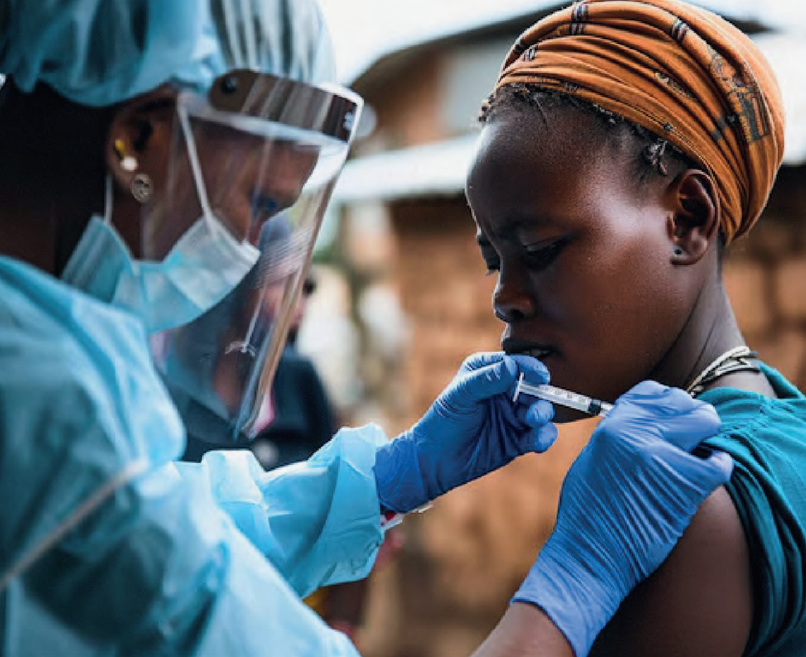
Fresh reports of the recurrence of Ebola in some parts of Africa have prompted Nigeria’s health agencies to begin sharing information about the deadly virus and the disease it causes, and how to prevent them. For Nigerians, this immediately brings up the touching memories of 2014 and of Dr. Ameyo Stella Adadevoh, who is fondly remembered for the decisive role she played in stopping the spread of Ebola in Nigeria. Her courage saved countless lives and stands as one of the finest moments in Nigeria’s public health history.
The 2014 West African Ebola epidemic was described as the most unprecedented in the history of the disease. Nigeria reported its first case in July of that year and by the time the outbreak was contained, 20 people had been infected, eight of whom lost their lives. West African countries like Guinea, Liberia, and Sierra Leone were devastated by the scourge, losing more than 11,000 lives, but Nigeria managed to hold the line, largely because of swift medical action, strong coordination, and the bravery of individuals who refused to look away.
The Nigeria Centre for Disease Control and Prevention (NCDC) recently released a new directive following the announcement of the outbreak in the Democratic Republic of Congo. Although no case has been reported in Nigeria, the NCDC urged citizens to maintain strict hygiene, frequent handwashing, avoiding bushmeat, ensuring that animal products are well cooked, and steering clear of individuals displaying symptoms such as fever, vomiting, diarrhoea, or unexplained bleeding. These reminders are necessary. Yet the deeper concern is Nigeria’s reactive posture to situations requiring red-alert level attention. Our public health agencies seem only to rise to national attention when danger is at the doorstep. Preventing such occurrences cannot be reduced to seasonal alerts triggered by foreign headlines.
It is safe to say that Nigeria has been Ebola-free since 2014. But like many things Nigerian, we tend to forget to keep doing the right things that would stop bad things from recurring. We only scramble when the threat is at our door. That complacency is risky.
Back in 2014, Nigeria’s quick success was not an accident. The country still had enough qualified medical personnel, working laboratories, and a strong culture of contact tracing. Resources were mobilised quickly. The federal government, the public, and international partners such as the United States Centre for Disease Control and Prevention, Médecins Sans Frontières, and the Red Cross worked hand in hand. There was energy and urgency. But in 2025, the situation is different. Thousands of Nigerian doctors, nurses and other medical personnel have left in the “Japa” wave. Many of the international collaborations have weakened. Global priorities have shifted. Even if another Ebola outbreak were to occur, can we be sure Nigeria still has the personnel, enthusiasm, and partnerships to fight back as effectively as before?
Porous borders remain another danger. In many border towns, people simply cross from neighbouring countries without proper vetting. Herdsmen and traders cross without checks. At airports and seaports, surveillance is weak and facilities are overstretched. With just one infected person slipping through, a chain reaction could be triggered.
Meanwhile, Nigeria’s health financing is still far from adequate. The 2025 federal health budget is N2.48 trillion, just 5.18% of the total national budget which is far below the 15% benchmark recommended by the Abuja Declaration. Although N402 billion has been allocated to infrastructure and N282.65 billion to the Basic Health Care Provision Fund, these figures are inadequate compared to what is needed. Chronic underinvestment leaves us with fragile hospitals, patchy logistics, and weak risk communication systems.
Nigeria cannot afford another Ebola epidemic. A serious outbreak will not only claim lives but also cripple the economy. Revenues would drop, projects would be stalled, investments would dry up, and jobs would vanish. In a country already burdened with poverty and inflation, the shock would be unbearable.
What then must be done? Nigeria must go beyond seasonal advisories and make prevention a culture rather than a panic reflex. The Ministry of Health and the NCDC must build resilience through trained personnel, reliable diagnostic centres, steady supply chains, and effective risk communication. Collaboration with international partners should be strengthened and not allowed to weaken. Borders and entry points must be secured. Most importantly, public trust must be rebuilt – citizens must have confidence in the system, or they will ignore warnings when it matters most.
The country has learned from past experiences by strengthening early warning systems and rapid response capabilities. The concern now is whether that capacity still exists and whether citizens, many of whom are weighed down by poverty, are positioned to build on previous gains. Continued investment in public health, alongside territory-specific, evidence-based plans for prevention and treatment, is essential for resource allocation and mitigation. Central to this is mutual confidence between medical personnel and government. A situation where both sides appear to be working at cross-purposes, with disagreements over unpaid allowances and other remuneration that have resulted in strike actions by doctors, as seen in recent years, will place Nigeria at serious risk if another outbreak of Ebola or any other deadly virus occurs.