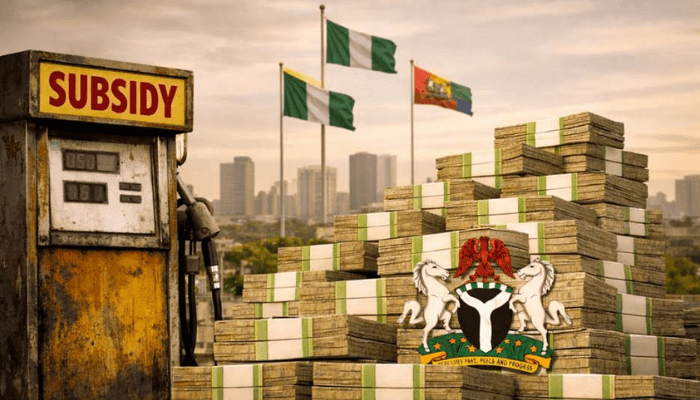
As Nigeria closes out the first half of 2025, the economic outlook is a mix of optimism, uncertainty, and a deepening sense of déjà vu. Macro-stability has returned in part due to bold reforms — subsidy removal, FX convergence, and tighter monetary policy — but the dividends of these actions remain unequally distributed and structurally fragile. The country stands at a complex inflection point where the momentum of reform risks being stalled by the inertia of politics, bureaucracy, and shallow implementation.
Inflation has fallen — on paper. A rebasing of the Consumer Price Index (CPI) now places headline inflation at 24.3 percent as of May 15, 2025 (Investing), down from the dizzying heights earlier this year. But much of this disinflation is statistical rather than substantive. The average Nigerian still faces surging food costs, rent hikes, and irregular electricity tariffs. Behind the technical metrics, the street-level economy is bruised, fragile, and angry. The Central Bank of Nigeria (CBN) has resisted political pressure to cut rates, maintaining the Monetary Policy Rate (MPR) at a record 27.5 percent as of May 20, 2025 (Investing) and the Cash Reserve Ratio (CRR) at 50 percent (CBN). These levels may please investors and ratings agencies, but they are strangling credit access for MSMEs and the real economy.
Read also: FX reforms fuel inflows to six-year high as naira, inflation stabilises
Fiscal policy, meanwhile, walks a tightrope between ambition and realism. The proposed 2025 budget of ₦59.9 trillion, backed by optimistic oil projections (2.2 million bpd at $75/barrel), is already fraying at the seams. Nigeria is currently pumping closer to 1.4 million bpd, and oil prices have remained subdued at around $64 per barrel. This growing gap will likely be plugged by new borrowing requests — over $21 billion planned for 2025–2026. Yet only 24 percent of the 2024 budget has been implemented so far. The implications are stark: the fiscal ship is adrift, and no one is steering with credible data or real-time course correction.

Worse still, there is no official publication of 2024 fiscal data. Analysts are forced to triangulate using CBN figures, which the Finance Ministry does not fully endorse. This data vacuum erodes confidence, clouds policymaking, and leaves citizens in the dark. Transparency is no longer a governance virtue — it is an economic imperative.
Insecurity also looms large. Banditry, terrorism, and farmer-herder conflicts have crippled food supply chains and contributed to stubborn food inflation. Defence spending has surged to ₦7.2 trillion, far outpacing allocations to education and healthcare. While security imperatives must be addressed, the imbalance is concerning. Leaky budgets, opaque constituency projects, and unmonitored defence contracts mean that much of this spending may not even reach the frontlines. Nigeria is arming itself for stability but neglecting the very foundations of a modern state.
“The history of reform reversals around election cycles in Nigeria is well documented. The challenge for this administration is to break that pattern.”
Structural reforms – in power, agriculture, and digital infrastructure – are progressing, but at a sluggish pace. The decentralisation of the power sector and a move toward cost-reflective tariffs are steps in the right direction. But corruption, legacy debts, and regulatory turf wars have stalled progress. The promise of a $20 billion annual FX buffer from the Dangote Refinery remains theoretical. Agricultural policy remains fragmented and often undermined by insecurity and climate vulnerability. Meanwhile, the potential of climate-smart farming, agri-processing, and local industrialisation remains underexploited.
The political economy is perhaps the most dangerous variable. With the 2026 elections on the horizon, fiscal discipline may falter. Already, political considerations have muddled clear policy signals — from the misalignment between the CBN and Finance Ministry to resistance to interest rate cuts despite disinflation trends. The history of reform reversals around election cycles in Nigeria is well documented. The challenge for this administration is to break that pattern.

What, then, should be done?
First, Nigeria must urgently modernise its public finance architecture. This includes publishing real-time budget implementation reports, digitising procurement, and building a national database that links taxpayer identity, social protection, and fiscal expenditure. Without reliable data, there can be no fiscal credibility.
Second, Nigeria needs a rebalancing of monetary and fiscal coordination. Rate hikes alone will not cure inflation in a supply-constrained economy. More creative tools — inflation-targeting bands, sector-specific credit expansion, and FX stability frameworks — are needed. The CBN must not operate as an island, nor should it be held hostage by fiscal mismanagement.
Third, growth must be broadened and deepened. Current GDP growth of 3.84% (Trading Economics) is concentrated in sectors like finance and telecoms, which are not labour-intensive. Manufacturing, agriculture, and logistics must become the new growth engines. But this requires infrastructure, energy reliability, and above all — security.
Read also: Power instability, inflation, currency volatility still our biggest challenges — MD Tsebo Nigeria
Fourth, Nigeria must pursue a digital leap. A national digital identity system would enable tax compliance, targeted subsidies, healthcare delivery, and financial inclusion. This is not a tech project — it is the infrastructure of a functioning state.
Finally, Nigeria must look outward. The global shift toward green technologies and the China+1 manufacturing pivot offer a once-in-a-generation opportunity. Nigeria has rare earths, abundant labour, and a strategic location. But these advantages must be backed by policy, not just geography.
The good news is that Nigeria still has a window — perhaps 12 to 18 months — to consolidate reforms, strengthen institutions, and deliver inclusive growth. The bad news is that windows don’t stay open forever.
The Tinubu administration has taken bold steps. But the road ahead demands more than headline reforms. It requires coordination, consistency, and clarity of purpose. Most of all, it demands that the Nigerian state finally become what it has long claimed to be: a platform for opportunity, not an obstacle to it.
Dr. Oluyemi Adeosun, Chief Economist, BusinessDay Media