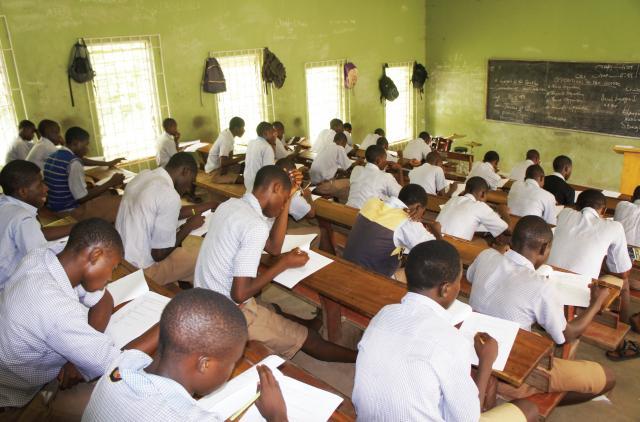
Stakeholders in the education sector have expressed concerns that as a country, Nigeria has struggled to attain her optimum level of development in education, when compared to her huge potential in term of both human and material resources.
While Nigeria may be celebrating her 59th independence anniversary, industry watchers are however sad to note that an important sector like education continue to suffer from under-funding, policy gaps among other issues that hinders the progress of the sector.
Analysts observe that the whole education system without gain saying the fact lacks adequate funding especially the citadel of higher learning for research and innovative ideas, they lacks good planning and management, teaching materials and quality teachers at all levels, owing to poor governance and infrastructure.
It is equally important to add that apart from the challenge of poor funding bedeviling the sector, there is the problem of lack of quality work force to propel the economy as a result of low moral for teachers a situation that have held back the nation’s educational system from performing its basic objectives.

There is also the large scale teacher migration, poor working conditions, lack of professional recognition of teachers by other professions and the wider society.
As we celebrate Independence Day, it sad to see a pivotal sector like education lacking in key policy implementation to stem the tide of the crippling education sector.
While issues around out of school children, poor teacher quality, infrastructure shortfall still persist, industry watchers insist the Federal Government need to do more to revived the sector from its current state, seeing that education is a vehicle for social mobility
Peter Okebukola, former executive secretary, National Universities Commission (NUC) believes that it is necessary and possible to position Nigerian universities to stimulate economic growth through a deliberate agenda of Production of Entrepreneurial Graduates, Focus on high-value programmes for rapidly growing the economy, increased emphasis on research and development.
Okebukola further said Nigeria has to change her value system and invest on education, which is the intellectual laboratory of any nation and the engine that propels the economy. In his word, “It has been noted that ‘without a formidable intellectual base’ it is not likely that any society would move forward”.

Tolu Odugbemi, former vice chancellor, University of Lagos, Akoka maintains that Education is the business of all stakeholders of the Project Nigeria adding that our future and survival depends on it.
KELECHI EWUZIE