It is a known fact that the successive government has good intentions to develop the Niger Delta region for the people and by the people. This, however, necessitated the setting up of intervention agencies with the aim of meeting such objectives. The Niger Delta Development Commission (NDDC) was established in 2000 as a vehicle to drive such initiatives, but unfortunately, the agency is an avenue to steal, to plunder and to promote corruption, indolence, ineptitude and other related infractions in all ramifications. The rot in the agencies is a recurring decimal while the people believe it is a right to “chop” their money by their people without any accountability and reprisal. And what a misconceptional impunity of squandering their commonwealth to spite their face before our eyes and without any regret.
The challenges of resources endowment
The Niger Delta region is the most prolific of the seven sedimentary basins of hydrocarbon resources in Nigeria. It is the world’s third largest wetland, accounting for 12.10 per cent of Nigeria’s landmass, with an estimated population of about 22.30 million people comprising over 40 different ethnic groups speaking 250 different dialects across 3000 communities.
A summary of the peculiar terrain and characteristics of the area covers dry land, seasonal flooded land, galloping swamp, shallow waters, offshore, deep offshore, ultra-deep offshore, coastline 560 km (two-thirds of Nigeria’s coastline), area 70,000 sq. km, sandy coastal ridge/barriers, fresh water mangrove forest, large numbers of rivers, streams, etc. There are 9 states in the Niger Delta region richly endowed with crude oil and gas reserves. The estimated percentage of the contribution of each of the states to the nation’s oil revenue is:

● Delta: 30.00%,
● Akwa Ibom: 21.95%,
● Bayelsa: 18.20%,
● Rivers: 18.00%,
● Ondo: 7.00%,

● Imo: 2.40%,
● Abia: 1.40%,
● Edo: 1.00%,
● Cross River: 0.05%.
Furthermore, the beauty of the Niger Delta is further amplified with the rich endowment of the offshore hydrocarbon reserves. The interpretation of the ownership of the reserve has led to a fierce controversy between the federal government and the oil-producing states in the area. The onshore/offshore dichotomy, however, needs a political solution rather than a legal interpretation. Constitutional amendments in line with the universal principle in estate management, which state that land transcends the three states of nature – land in its solid form, land in its liquid form and land in its gaseous form – should be applicable in Nigeria. Also by the law of the sea convention, any state or nation is entitled to 200 nautical miles of exclusive economic zone. Consequently, all littoral states in Nigeria have their boundaries extending within that range into the Atlantic Ocean. These fundamental issues must be revisited by signing the appropriate amendment bill into law by the federal government in order to give the affected areas of the country a sense of belonging based on their accident of location, fairness, equity and justice.
“When the last tree dies, the last man dies and let’s hope and pray that when the last barrel of crude oil is exhausted, Nigeria…what.?” …Kayode Sote
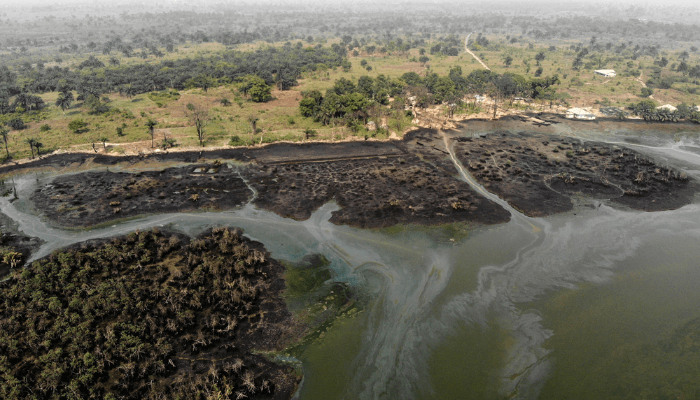
However, it is important to restate the known fact that the peculiarity of the Niger Delta region has been a disadvantage to the people and communities despite the fact that the area lays the golden egg of the nation’s wealth, fragile unity and economic survival. Specifically, the area lacks basic amenities and infrastructures and is subjected to abject poverty, social neglect, and environmental and ecological degradation of immense proportion relative to other parts of the country. The near-total neglect of the area has led to a recurring spate of youth militancy resulting in the disruption of oil and gas operations, pipeline vandalisation, crude oil theft and bunkering, economic sabotage, kidnapping and armed insurgency over time. Nevertheless, the successive governments of Nigeria, from the colonial administration to military and civilian regimes, recognised the need for special development alternatives for the area by setting up intervention agencies over the years. The most recent of such agencies are the Niger Delta Development Commission (NDDC) and the Ministry of Niger Delta, established to coordinate all development programmes of the area, while the state development commission, as a subsidiary, coordinates the social, economic and infrastructural development of their respective oil-bearing communities. In summary, the mandate of the successive agencies is to facilitate “the rapid, even and sustainable development of the Niger Delta into a region that is economically prosperous, socially stable, ecologically regenerative and politically peaceful”. However, in line with the mandate, a master plan was packaged as a strategic and regional roadmap to take the Niger Delta of today to the ‘promised land’ in terms of Millennium Development Goals (MDGs), attainment of the dreams and aspirations of the indigenes in order to transform the region from abject poverty to that of permanent prosperity. In addition, the federal government also granted 10 percent of its equity in the joint venture companies to the host communities in order to give the indigenes a renewed sense of hope, ownership and belonging in their natural endowment of hydrocarbon reserves.
Nevertheless, despite all these efforts, the oil wealth has not really translated to equitable and meaningful development of the region, largely due to the squandering of riches without any scintilla of prudence, bad leadership and corruption of the leaders and also poor followership of the people in the region. It is high time a more proactive and tripartite strategy involving the federal government, oil companies and the people in the Niger Delta was developed to implement the laudable objectives of the intervention agency so as to prevent the region from that of a total ruin on the way to perdition and extinction. Nigeria without the Niger Delta is a disfigured and failed nation cloned from a mere geographical expression akin to a cup of tea without honey! There is no gainsaying the fact that the unity, survival, social, economic and technological development of the nation should be of paramount importance to both the government and the indigenes of the Niger Delta. The destruction of life, properties, and investments in oil and gas facilities is indeed a case of cutting off your nose to spite your face in a crude and violent manner and also an extreme case of economic sabotage, harassment and threat to the continued peaceful existence of Nigeria. The present politics of petroleum as being played by both the leaders at the federal and the Niger Delta levels are counterproductive and diversionary to the development of Nigeria. It is high time the challenges and complex issues facing the area be resolved amicably in order to bring the much-desired development and peace to the area and Nigeria as a nation. The world is watching and taking stock of the action, inaction and reaction of the leaders’ inability to transform the area into an Eldorado with the revenue generated from the hydrocarbon reserves when it still matters in today’s global energy mix.
Furthermore, the persistent agitation for a 100 percent resource control by the indigenes of the Niger Delta is ridiculous, unrealistic and inappropriate, but a meaningful negotiation to increase the current 13 percent derivation and contribution to NDDC funds for the overall development of the areas is achievable. The oil-producing states should, as a matter of urgency, stem the recurring social unrest, youth resistivity, pipeline vandalisation, environmental havoc and community-induced crimes resulting in the mission of mass destruction of the future of the area. The over-dramatisation of perceived marginalisation, misrepresentation and misinterpretation of government policies in the oil and gas industry by the militants and the complacency of the elders, community and opinion leaders in the area are indeed a pointer that all is not well with the nation. It is my considered opinion that an urgent political solution rather than military might is needed to resolve the issue before it leads to total economic distress and fatigue of unquantifiable dimension. The state government in the area should refocus on deliberate enlightenment campaigns, human capital development and capacity building of the youths and empowerment to prepare them for gainful employment opportunities in the oil, gas and environmental industries. Investment opportunities thrive in a peaceful terrain and not in a hostile and turbulent environment where life, property and security are not guaranteed no matter the quantum of the natural endowment in the area. In the spirit of the immutable words of the sage, Chief Obafemi Awolowo: “Violence never settles anything right: apart from injuring your own soul, it injures the best cause. It lingers on long after the object of hate has disappeared from the scene to plague the lives of those who have employed it against their foes.”
A word is enough for the wise…!
Extract from the publication titled: Petroleum Business in Nigeria
Engr Kayode Sote, FNSE