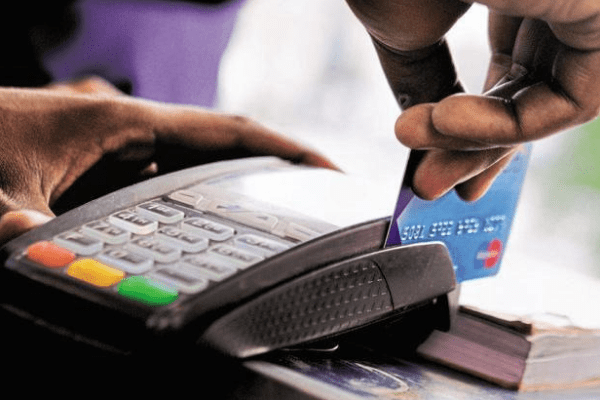
Customers who are finding it difficult to use their debit cards for electronic payment transactions or have fallen victim of failed transactions can now enjoy a hitch-free transactions as the Nigeria Inter-Bank Settlement System (NIBSS), the Deposit Money Banks (DMBs), payment service providers and other stakeholders are engaging to bring normalcy to the system failure.
The electronic payment industry has had some service issues on the PoS since December 2018.
Niyi Ajao, acting managing director of NIBSS explained that NIBSS has been working to enhance capacity in order to take care of the growing volume of transactions since last year, hence the system problem.
Niyi Ajao, acting managing director of NIBSS explained that NIBSS has been working to enhance capacity in order to take care of the growing volume of transactions since last year, hence the system problem.
Ajao noted that NIBSS recorded 285 million volume of PoS transactions in 2018 and it’s expected to double this number this year. Some of the remedial measures taken to address the problem include fixing of platform application issues in February 21, 2019, Network remediation carried out with concerned Processor, implementation of a secondary process whereby all reversals for any business day are re-transmitted between 10pm and 12 mid-night to return credit back to cardholders through their banks/Processors. The effective date for this is March 22, 2019.
Also, implementation of real-time reversal by POS terminals directly. This would require that banks are available to receive such online real-time. This would take effect by or before end of April 2019.
Also, implementation of real-time reversal by POS terminals directly. This would require that banks are available to receive such online real-time. This would take effect by or before end of April 2019.
Speaking at a media briefing in lagos, Niyi Ajao, acting managing director of NIBSS said, “We are aware of all the trouble people are going through and we are working very hard to restore normalcy since that December when it started. We have been working with all stakeholders. There are five different parties”.
He explained that transaction timeout is the total turn-around-time (TAT) for a POS transaction cycle from the time it is received from a POS to the time a response is sent back to the terminal.
“This TAT had been configured at 15 seconds in agreement with banks and processors. However, delayed responses from Issuers after this timeout in recent times could cause authorised debits not to return to the terminal before the set TAT, hence the adjustment to 45 seconds”.
He explained that transaction timeout is the total turn-around-time (TAT) for a POS transaction cycle from the time it is received from a POS to the time a response is sent back to the terminal.
“This TAT had been configured at 15 seconds in agreement with banks and processors. However, delayed responses from Issuers after this timeout in recent times could cause authorised debits not to return to the terminal before the set TAT, hence the adjustment to 45 seconds”.
He said the reversals for failed transactions is one area that NIBSS will henceforth, pay more attention to, so as to strengthen e-payment users confidence in the system.
“Whenever there is a transaction decline the system is supposed to reverse the transaction such that a debited cardholder would receive a reversal credit. Delays on reversal could be caused by platform downtime, network issues at processor level or delayed responses and Issuer/Switch Inoperative – Processor or bank is not available to receive the reversal even when it’s transmitted by NIBSS,” Ajao said