In Africa’s biggest oil producing country, some indigenous upstream operators are managing risks through crude shipping operations, gas monetization and rigless interventions to navigate industry headwinds
In this exclusive interview, Sodje Victor, Asset Manager at Newcross Exploration and Production Limited (NewcrossEP), discussed how the company has stabilised production, restored legacy assets, and embedded ESG and host community engagement into operations, preparing for sustainable growth beyond 2025. Dipo Oladehinde brings excerpts:
What measures are being prioritised to address historic risks, like crude theft, insecurity, and pipeline downtime, to secure these gains?
NewcrossEP continues to work closely with host communities, security agencies, and midstream partners to minimise losses.

Our most innovative approach to addressing the historic risks we’ve previously faced within our asset has been the crude shipping operations. We have virtually eliminated crude related losses which was the most significant source of value erosion on the asset.
The crude shipping architecture has evolved since inception as we continue to apply process improvements and learnings. Our focus going forward is sustainability and ensuring we can continue to deliver value with our crude shipping architecture at significantly lower cost.
Currently, NewcrossEP/NNPCL JV is utilising the crude oil shipping to the Export Terminal as an alternative evacuation strategy. This system has replaced the pipeline transportation system that is usually fraught with crude theft, vandalism, sabotage, and other nefarious interference activities.
What enabled Newcross EP to achieve the 2025 production uplift despite sector challenges hurdles?
The sector has gone through a lot recently. It has been challenging for the oil and gas business in Nigeria; however, it is all about risk-taking. High risk – high reward; low risk – low reward; no risk – no reward initiatives. NewcrossEP leverages on the wealth of experience and creativity its staff and key management possess.

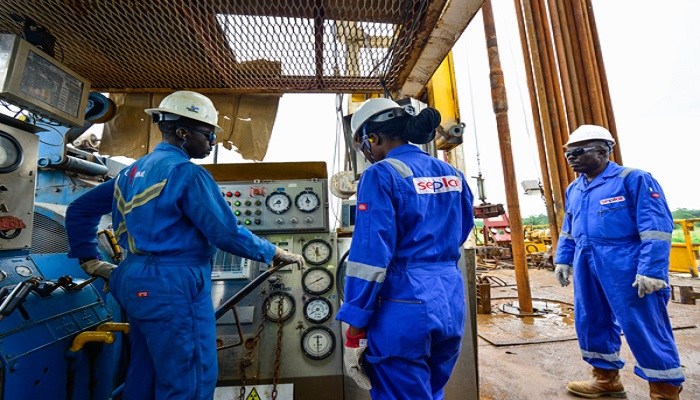
The working-over of Ekulama-12 well was indeed very challenging. It could have gone south. The tubulars were very old (over 51 years), lethal and dilapidated with lots of punched holes. However, resilience got us moving and at the end of the operations, we were successful.
The Awoba NW-3 has its own challenges. Recall this is a new drill, and NewcrossEP has not drilled for over six years since 2019. There were issues during the top-hole drilling that made us sidetrack the well and was successfully completed.
The successful delivery of Eku-12 and Awoba NW 3 serve as prime examples of delivering value with no significant incident.
What lessons did the Ekulama-12 workover provide for future interventions?
The Ekulama-12 reactivation demonstrated that shut-in wells could deliver strong production when backed by rigorous diagnostics and engineering. Last produced in 2003, the well was successfully restored through detailed integrity checks, wellbore cleanout, completion repairs, and new flowline tie-ins. Key lessons include: Integrated well reviews and pre-workover diagnostics; early location preparation and facility readiness and Data-driven, and integrated re-entry planning.
Our asset was originally put on stream in the late 1970’s. There are more than 50 wells that have been drilled. Ekulama-12 provides a blueprint for revitalizing aged wells. We now have a greater understanding of the potential challenges vis-a-viz well integrity and can now prescribe a more efficient means of execution.
Proper planning, the use of right technology, critical stakeholder support, funding, and contractors are critical success factors.
How do these new volumes reshape your portfolio contribution, cash flow, and margin outlook by year-end?
These new volumes from Ekulama-12 and Awoba NW-3ST have increased our revenue generation by some margin. Overall, these new volumes are shaping our portfolio contribution, cash flow and margin outlook.
We are projected to increase our production by more than 33 percent by year-end. This will positively impact cash flow and serve as a key enabler in funding the continuation of our drilling campaign and other critical initiatives.
Read also: LNG key to oil firms’ transition to clean energy – NewcrossEP Boss
How are you balancing low-cost rigless interventions against new drilling campaigns in today’s tight investment climate?
In the spirit of cost ownership and best value delivery, we have been able to restore and enhance some wells in our field with rig-less interventions. Rig-less interventions provide a low-cost, quick win to ensuring at a minimum we can guard against the impact of natural production decline. Our production enhancement drive always consists of a mix of rig and rig-less opportunities. Although, a rig-less intervention cannot generate the same long-term value as drilling or working over a well, it still provides a cost-effective approach to incremental returns. We embark on project economic evaluation to guide capital allocation decisions, in which projects with high risk-adjusted returns are prioritized for funding.
How are ESG commitments, especially host community engagement, being embedded into operations and tracked for international investors?
NewcrossEP has integrated ESG KPIs into corporate performance metrics evaluation, covering emissions reduction, local content participation, and community impact. Host community engagement has been formalised through PIA-compliant Host Community Development Trusts (HCDTs), ensuring transparency, shared accountability, and measurable outcomes.
NewcrossEP was one of the first indigenous operators to comply with the PIA mandate to establish Host Community Development Trust (HCDT) Fund across our asset. The success of this initiative leveraged upon the already existing strong partnership we had with our various host communities. This is evident in the fact that we have recorded zero incidence of community interference in our operations. We continue to prioritize our relationship with our communities and ensure equitable distribution of opportunities and benefits
On the environmental front, NewcrossEP is actively implementing a flare-out project to capture low-pressure associated gas, supported by the installation of booster compressors and a robust plan for the Awoba Non-Associated Gas (NAG) development. These initiatives demonstrate our commitment to emissions reduction, energy efficiency, and long-term gas monetisation.
Our reporting frameworks align with International Financial Reporting Standard S2 (IFRS S2) and Task Force on Climate-related Financial Disclosures (TCFD) standards, ensuring that our ESG disclosures meet the expectations of international investors and stakeholders seeking transparency and sustainability performance assurance.
Looking beyond 2025, what should the industry expect in terms of sustainable growth, new field developments, or regional diversification for Newcross EP and Pan Ocean?
Beyond 2025, the focus is on sustainable growth through Awoba NW field development, infill drilling, STOG opportunities, and gas commercialisation.
With the recent trend of divestments and the directive of the Federal Government to increase production by 1mmbopd, NewcrossEP and Pan Ocean are positioning itself to be a key player within the Nigeria energy space. In 2025, we commenced our drilling campaign across all our operated assets with the objective of achieving 100,000 bopd within the next 5 – 7 years. In addition, we are prioritising a complete flare out across all facilities to comply with global net zero standards. We recognise the critical role natural gas plays in the global energy mix and will be making considerable investment in gas development and commercialization opportunities.
We are continuing our drilling campaign across the assets, to ensure we increase our revenue generation capacity, which will enhance our ability to finance energy investment diversification program.
How are host community agreements evolving in light of PIA requirements?
Post-PIA, NewcrossEP has transitioned from ad-hoc community MoUs to structured HCDTs, giving communities ownership and management roles in development priorities. This shift enhances transparency, reduces conflict, and aligns community initiatives with operational planning. The company has also institutionalized stakeholder reviews to ensure commitments are met and value delivery is visible.
Our post-PIA HCDT implementations include:Prompt implementation of HCDT projects; HCDTs are adequately funded and Effective sensitization of OML 24 rig impacted host to ensure zero disruption to rig activities.
The advent of the PIA and the Host Community Development Trust (HCDT) has changed the dynamics of the relationship between Operator and Community. The community are now greater empowered to drive their social and economic aspirations and meet the critical needs of the indigenes. With the HCDT, it ensures that there is a equitable distribution of opportunities and benefits, which means a more harmonious operating environment.
All the HCDTFs have been set up and are being funded.
In a volatile oil & gas market, how do you prioritise short-term gains versus long-term asset sustainability?
At NewcrossEP we operate a balanced portfolio philosophy—targeting short-term production optimization while reinvesting part of the incremental cash flow on long-term projects.
Each intervention is assessed through both NPV and Sustainability Potential, ensuring that production gains do not compromise reservoir dynamics, or long term ESG goals.
Oil and gas industry is prone to significant volatility. As an organization, we are constantly analysing market forces and trends and weighing this against the impact on our long-term objectives. Short-term gains are only prioritized where value can be generated in a safe and sustainable manner, with no impact on our operating environment.
We employ strategies around project prioritization, dynamic strategic management, and flexible budgeting to ensure that the projects, activities, and programs align with changing business priorities and external business environments.
How do you see Nigeria’s upstream sector evolving over the next decade, and what does that mean for Newcross EP?
The next decade is very strategic in Nigeria’s energy transition journey. Nigeria’s upstream will evolve towards more efficient, indigenous-led operations focused on oil and gas development, decarbonization and digital transformation. For NewcrossEP, this represents an opportunity to lead the transition—leveraging its agility, Well Reservoir and Facility Management (WRFM) best practices, and data-driven asset management to unlock potential while advancing cleaner energy solutions. Strategic alignment with government gas policies and carbon initiatives will also secure our position in a changing energy landscape.
With recent trends in the industry which include the privatization of NNPC, Federal Government 1mmbopd initiative, and divestments by IOCs, Nigeria upstream sector is undergoing a transformational phase which will yield greater dividends for the Country as a whole. There is a renewed focus to pursue new frontiers, gas monetization, and renewables. This translates to a positive outlook for the upstream sector and ensure that there is an enabling environment for NewcrossEP to derive value and grow.
The industry reform through the PIA has opened a lot of opportunities and prospects for the industry in terms of regulatory certainty, governance effectiveness, strategic deregulation, and fiscal incentives, which are enablers for investments. Nigeria has a lot of oil and gas reserves, which when invested in can unlock more value for the country. NewcrossEP is positioning itself for a long play in the sector, as one of the leading local oil producers.