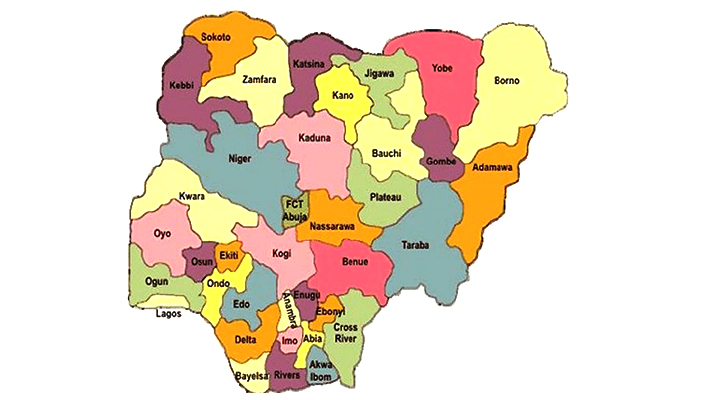
Between 2024 and 2025, the Federal Government established Regional Development Commissions (RDCs) for five Nigerian geopolitical zones, bringing the total to six. This followed the Northeast Development Commission (NEDC), created in 2017 to oversee a ‘Marshall Plan’ for the region recovering from Boko Haram violence. The new RDCs are tasked with planning and implementing key programmes – infrastructure, industrial and social development, and ecological recovery – using funds from dedicated federal contributions.
The RDC model represents decentralisation without devolution – remitting development programmes to the regions while retaining federal institutional control. These peculiar agencies should excite curiosity the way a new-found organism excites ecologists, with initial glee quickly giving way to searching questions: What kind of ‘animal’ is this – native or invasive? What does it portend for the ecosystem?
The RDCs raise critical questions for development planning in an era of growing appetite for regional autonomy: How will RDC agendas align with local priorities? What relationship will they have with existing institutions of regional integration? The RDCs have clear benefits. They can redress imbalances – real or perceived – in the allocation of federal projects, a perennial issue that has previously inspired odd panaceas. Consider the zonal intervention projects (constituency projects), an ad hoc method introduced in 1999 to allow federal legislators nominate projects for their constituencies. This anomaly was naturally exploited for political benefit – satisfying the perception of “bringing home the goods.”
A 2021 BudgIT report shows it has breached the central planning role of the Ministries. The outcome is dispersed costs borne by the populace through institutional distortions in project implementation, and, often, outright corruption. The RDC model offers a coherent policy basis for equitable project distribution.

Another advantage is the efficiency gains of preference matching – placing planning closer to the point of need. The “long titles” of the RDCs’ establishing laws already spotlight peculiar regional challenges: overwhelmed infrastructure in the Southwest, civil war devastations in the Southeast, and diverse security and ecological crises in other zones. Recent deepening of fiscal decentralisation has seen states and local governments receiving 61.39% of distributions from the federation account in the last three years, compared to 47.31% previously. Federal funding commitments to the RDCs – equivalent to 15% of state allocations – now provide additional locally-focused resources. Success, therefore, hinges on addressing relevant regional challenges while tapping into unique local opportunities. How may the commissions achieve these?
The opening agenda of the RDCs should mirror the urgency expressed in their statutes by articulating plans that address critical obstacles to long-term development. Like the NEDC whose Marshall Plan has a 10-year sunset horizon, the new commissions’ initial plans should have a time-bound focus that prioritises the most pressing matters within their broad mandates.
For instance, the three northern zones urgently require investments to transform agriculture and land management, including modern livestock systems that mitigate conflicts. Coordinated regional programmes to close human development gaps can similarly help states effectively implement federal-assisted programmes like Universal Basic Education in regions responsible for 86% of Nigeria’s out-of-school children.
The RDCs could model as a species of interstate compact for federal-regional partnerships, thus maximising the inherent benefits of their regional structure. The most transformative infrastructure projects demand scale that only regional coordination can deliver. Developing wide metropolitan corridors – supported with transportation infrastructure linking industrial, commercial, residential and leisure zones – could renew informal conurbations and create new ones across the country. Reviving the stagnated Lagos-Ogun joint development pact – possibly expanding it to coastal Ondo – would correct unplanned development pressures around Lagos.
Similar projects are possible on inter-regional bases: an Aba-Port Harcourt metropolitan belt connecting industrial hubs to expanded or greenfield port developments; an Asaba-Onitsha-Nnewi economic triangle that capitalises on the distinctive strengths of those cities. Models exist globally, with an example in the tri-state infrastructure compacts that service the $1.1trillion Washington Metropolitan Area economy. To orchestrate such initiatives, the RDCs can leverage mechanisms already written into their laws: Advisory Committees that include each region’s state governors, and Monitoring Committees drawn from state and federal agencies.

Existing institutions of regional integration are invaluable repositories of data on local priorities and sources of political legitimacy. The RDCs could benefit from their partnership. The DAWN Commission is an outstanding example, having produced a detailed strategic roadmap for integrated economic development in the Southwest, a knowhow it has shared with sister bodies across the country. Investment groups such as O’odua Investment Company and Northern Nigerian Investment Limited are primed partners for exploring commercial opportunities and attracting private-sector capital – especially important since federal seed funding is intended to catalyse larger resource flows into RDC programmes.
Recent increase in federal redistribution should ordinarily close development gaps. It seems, rather, to be breeding fiscal illusion, with some states treating it as a windfall that relieves them of the rigours of planning and efficient resource allocation. There are also capacity disparities. The RDCs could work with states to plug these efficiency gaps. The RDC model could shift Nigeria from a landscape of lopsided development to one of diversified yet coordinated progress that ultimately translates into tangible improvements in lives of the people. The hope is that the ‘Nigerian factor’ does not undermine the goals that motivated the establishment of the commissions.