…Subscribers continue protest over poor services
Analysts see telecom operators improving in their services after an investment of more than N824.7 billion into network expansion.
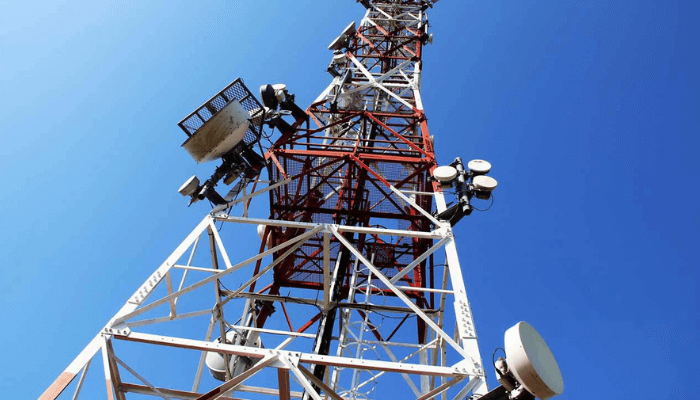
MTN and Airtel, leading telecom operators, poured over N824.7 billion into network expansion and infrastructure development in half year (H1) of 2025, marking one of the most aggressive investment phases in the nation’s telecom history.
MTN Nigeria led the spending spree with a 288.4 percent year-on-year increase in capital expenditure (excluding right-of-use assets), rising to N565.7 billion in H1 2025, up from N145.7 billion in the same period last year.

Read also: NIMC begins migration of telcos to NINAuth for identity verification
This investment supported the deployment of 240 additional 4G sites, expanded fibre-to-the-home (FTTH) broadband reach, and enabled the launch of the Tier III Dabengwa Data Centre, part of a $240 million initiative to build the largest data infrastructure footprint in West Africa.
For Airtel Nigeria, based on the financial results for the year ended March 2025, the company’s operation’s capital expenditure for the year was $168 million (about N259 billion using the N1,542/$ exchange rate reported by the company).
“I know people aren’t getting value for their money now, but I think things will begin to look up in 2026/2027,” said Ike Ibeabuchi, an emerging markets analyst.
“When the infrastructure is fixed, services will improve after a period of time. This year is for investment and next year and the next could be for better services.”

Tony Emoekpere, president of the Association of Telecommunications Companies of Nigeria (ATCON), confirmed that the sector is recording renewed investments.
“Investments are beginning to pick up. However, upgrading infrastructure takes time, especially when the equipment needed is being imported.”
Ironically, this surge in capital spending coincides with record-breaking revenue performance for both operators. In the first half of 2025, MTN and Airtel collectively earned N2.532 trillion from voice and data services, an impressive leap from N1.68 trillion during the same period last year.
MTN accounted for the bulk of the revenue, generating approximately N2.12 trillion. Of this, N1.23 trillion came from data, a 69.2 percent year-on-year increase, while voice services brought in N887 billion, up 40.3 percent.
Airtel followed with a combined $298 million (N412.4 billion), with data contributing $164 million (N227 billion) and voice $134 million (N185 billion), reflecting steady gains.
Poor network services persist
Yet for many subscribers, the quality of service has remained subpar.
“I spent nearly N18,000 on data in July alone, yet I could barely stream a 10-minute video without buffering. Sometimes, my phone shows full bars, but nothing loads. It is like we are paying premium prices for invisible services,” Christy Ebong, a student at Yabatech, stated.
Iye Tunde, a Lagos-based small business owner, shared a similar frustration. “What is the point of all the investment if I still have to walk to the main road to make a call? I can’t even get one bar inside my shop,” she said.
Tosin Agbaje, Software engineer, was even more blunt, stating that, “They report trillions in revenue and say they are spending billions. But our data still vanishes, and calls still drop. I just want to make a simple WhatsApp call without glitching.”
The Nigerian Communications Commission (NCC) approved tariff adjustment in January 2025, the first in over a decade. The floor price for voice calls jumped from N6.40 to N9.60 per minute, SMS from N4 to N6, and 1GB of data from N287.50 to N431.25.
The goal was to help telcos absorb rising operational costs, but consumers say the higher prices haven’t come with better service.
Chief Deolu Ogunbanjo, president of the National Association of Telecoms Subscribers (NATCOMS), argued that Nigerians deserve better. “It is disturbing that even after a N2.5 trillion windfall, subscribers are still battling basic issues like dropped calls and unexplained data depletion,” he said.
Ogunbanjo urged the NCC to intensify oversight. “We welcome infrastructure investments, but there must be strong monitoring to ensure these investments improve user experience, not just operator balance sheets.”
Read also: Airtel bets on network innovation to power Nigeria’s urban digital demand
Jide Awe, a telecom analyst, added: “Yes, N824.7 billion in spending is commendable. But are the right investments being made in the right locations?” he asked, stressing the need for transparency in infrastructure rollout.
Awe warned that mounting dissatisfaction could fuel regulatory backlash. “Operators are growing richer while subscribers are getting angrier. This is a dangerous imbalance that could trigger deeper regulatory action or even consumer activism.”
In response to the growing criticism, the NCC has identified three urgent problem areas: poor network quality, rapid data depletion, and failed airtime top-ups. These, according to Aminu Maida, executive vice chairman, NCC, are the top pain points based on 2024 complaint logs.
To address them, the NCC has updated its quality of service (QoS) regulations, mandating accountability across the service delivery chain, from telcos to infrastructure providers.