 The Nigerian Electricity Regulatory Commission (NERC) at the weekend approved a nationwide increase in energy charges in a new and long awaited electricity tariff regime.
However, the new tariff plan also provides that all electricity consumers, residential and commercial, will no longer pay fixed charges, meaning that their total bills will now depend solely on energy actually consumed.
Fixed charge is that component of the tariff that commits electricity consumers to paying an approved amount of money, not minding whether or not electricity is consumed during the billing period.
Sam Amadi, the chairman of NERC sees abolishing the fixed charge as “good news for Nigerian electricity consumers who have long asked for a more just and fair pricing of electricity.”

For instance, residential customers classification (R2) supplied by the Abuja Electricity Distribution Company (AEDC) will no longer pay N702 fixed charge every month, but their energy charge will increase by N9.60.
Also, residential or R2 customers within the Eko and Ikeja Electricity Distribution service areas will no longer pay N750 fixed charges. Instead, they will be getting N10 and N8 increase respectively in their energy charges.
Similarly, the burden of N800 and N750 fixed charges would be lifted off the shoulders of Kaduna and Benin electricity consumers. These consumers, on their part, will see an increase of N11.05 and N9.26 respectively, in their energy charges.
NERC also says the new tariff is good news for commercial consumers. For example, commercial customers’ classification C2 in Ibadan and Enugu will no longer pay the fixed charges of N17, 010 and N22, 141, but their energy charge will increase by N12.08 and N13.35 respectively.
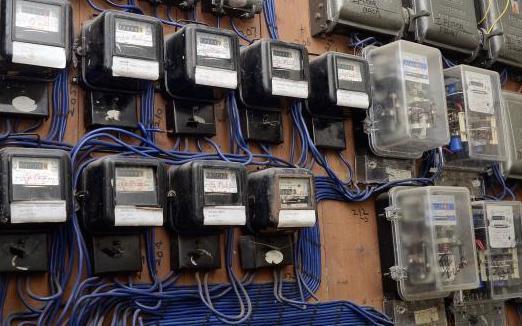
The Commission, after these reviews of energy costs, has directed every Disco to meter all its customers, as the metering policy will be strictly enforced.

For those willing electricity customers who paid for meters under the Cash Advance Payment Metering Initiative (CAPMI) but are yet to be metered within the allowable 60 days, NERC says they would no longer be allowed to be billed by any Disco under the new tariff regime, and that the Discos will ot disconnect them either.
“There is zero tolerance for overbilling of customers, as an unmetered customer who disputes his or her estimated bill would not be expected to pay the disputed bill. Instead, the last undisputed bill would be paid, while the contested bill goes through the dispute resolution process,” the Commission further emphasised.
This is a departure from the old practice which prescribes that customers should first settle the bill while dispute resolution is in process.
Meanwhile, no electricity distribution company is allowed to connect new customers without first metering the customers.
This is to close the wide metering gap of over 50 per cent and reduce high incidence of collection losses in the Nigeria Electricity Supply Industry (NESI).