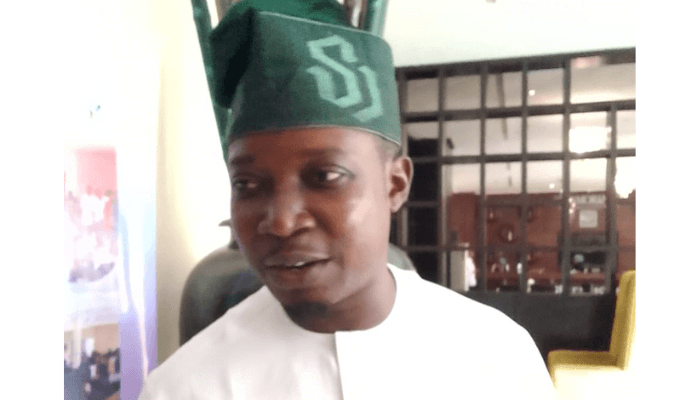
The Deputy Chairman of the House Committee on Petroleum Resources (Upstream) in the House of Representatives, Sesi Oluwaseun Whingan has said that the Bill to amend the Petroleum Industrial Act (PIA) was at the Second Reading stage at the House of Representatives to amend the current 3% for the Host Community Development Trust to 10%.
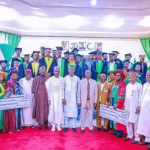
Whingan dropped the hint at a dialogue meeting between Oil Companies, HCDT, CSO’s and Stakeholders organised by Statekeholder Democracy Network (SDN), in Port Harcourt, the Rivers State capital.
Whingan, who represents Badagry federal constituency Lagos State, was the Keynote Speaker.
He explained during an interview with journalists that the current 3% in the PIA was no longer sufficient to take care of the developmental needs of the people of the oil communities who have hitherto lost their livelihoods due to oil exploration and exploitation over the years and that the National Assembly would do the needful to alleviate the long time suffering of the people.

“Considering the pattern and the approach of this administration, we believe that government should start at the community level and considering the damage done to the communities where so many resources have been taken by the extractive industries, we think that given back 10% is not too much for their own development and progress,” he said.
When asked if there are monitoring and evaluation mechanism or committee to monitor the level of funds within the HCDT, the Representative assured that certainly there are committee in place to oversight the project to ensure transparency and accountability but that his committee was to increase the funds. He noted that the communities can oversight their project for the right thing to be done.
On partnership with Civil Society Organisations, he maintained that the National Assembly would collaborate with SDN and other groups on the issue of fostering development at the community level especially on the development process of the HCDT.
In his contribution, Prof. Barineme Fakae, former Vice Chancellor of the Rivers State University and a consultant to UNEP on the Ogoni clean up, said that the dialogue was critical to the understanding of the working of the PIA and how communities can also know the process because it needed a lot of education.
Fakae commended SDN and her partners in putting the dialogue together, while stating that the news for the increase in the fund of the HCDT was a good one “if only they can manage it and know that it is our own thing, because of culture, some communities may do well, while others may not.”
On his part, the Resource Person and a peace builder Austin Onuoha lamented that over the years development has been shifted to the communities since government at all levels is shying away from her responsibility and that that was why the HCDT was filling the gap of under-development by government over the years.

“Government is for the provision for the welfare and the security of the people, but government is out-sourcing development to the communities and the companies and that is irresponsibility on the side of government,” he said.
Onuoha stressed that the Federal, the State and local governments must stand up and develop Nigeria, saying that the government at all levels are collecting different taxes from oil companies and individuals. He called on the government at all levels, NDDC and the new Commissions to come together so that in five years time the region can develop. He blamed those who caused the spill in the Niger Delta, saying that the clean up money is not actually development.
Earlier, the Country Director of SDN, Florence Ibok-Abasi said the purpose of the dialogue was to see how government at all levels can be involved in the HCDT and that it was a platform to support and assist the host communities and to see how there will be no interference at the communities, while they will collaborate with all stakeholders to make the process work since it is a new concept in Nigeria and that the role of government in supporting the HCDT is critical.
She said that the PIA excluded the specific functions of government and how they can help the process, hence the dialogue.
One of the members of HCDT from Tubu in Andoni local government area, Lovinah Enyekit-Itan said that stakeholders should only approve projects that are within the scope of the HCDT so that the projects would not be abandoned due to lack of funds.
Otobo Bamekpar, a stakeholder from Kolo Creek, said that some of the challenges of HCDT were high expectations from the communities as everyone wants to benefit immediately even if there was needs assessment conducted before embarking on the projects.