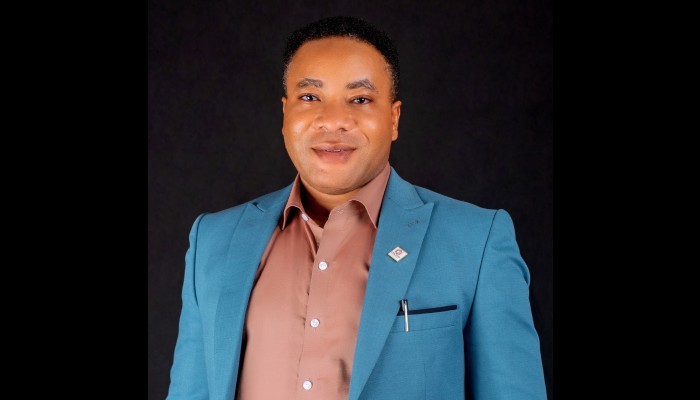
Oluseun Onigbinde, the Chief Executive Officer of BudgIT Nigeria creatively presents data by making the varied dynamics of facts and figures easier to understand for corporate entities and citizens across board. At present, his services are highly sought after by the World Bank and the Department For International Development among others and in this interview he shared with Rita Ohai on how he has been able to grow the annual turnover of his company from scratch to over a million dollars in just three years.
Setting up a company that strictly addresses budgetary issues is unusual in our clime, what inspired this idea?
It started in 2011. I was working in the First Bank and at a point I felt that I wanted to do something different and I met the guys who own the Co-Creation Hub and they offered me a place where I can have infrastructures like generators, internet access as well as get access to mentorship and this was invaluable. For a business that was still trying to figure out its operational and revenue models, who the user base was going to be and the level of engagement, we needed that support strongly.
You just talked about your target market. For a company that is offering strictly budgetary services can you define this user base?

We have three main focuses. One is driven through social media for the digitally literate Nigerians to get them to understand the national budget, the other is for international institutions who we handle infographic projects for like the Department For International Development (DFID) and the World Bank and the media, some of whom we already have partnerships with.
As part of our Corporate Social Responsibility initiatives, we run grassroot projects for citizen and the aim is to get them to understand what is being done with their and get them to rise up and put their government officials to task.
Since starting your company, what are some of the hurdles you have had to scale?
At the early stage, finance was an issue we had to figure out. Also we had to find people with the right skill set especially those with strong technological backgrounds and then another challenge was in being able to source the kind of data driven technology that we needed.
Another thing we encountered was creating visibility for the brand.

Why do you think there is a dearth in terms of skill set among the Nigerian workforce?
I think our educational system needs to be re-wired. The challenge with graduates is that most of them enter the workforce with too little to offer because the educational system is not wired to prepare them for the work place. So for them basic things like sending e-mails or using Microsoft Office packages seems like a challenge.
Eventually these things backfire on organizations like mine where we would have to bear the cost of training and re-training these people and with time, these people get better. This is also a reason why we are very selective when it comes to hiring.

You have gathered some experience in the banking sector and so you understand how that industry works. Now that you are on the other side of the divide, why do you think accessing funds in terms of loans for financial institutions is difficult?
I think the issue is with understanding how the MSME sector works and sincerely it is tied to our risk capital base.
If they invest in small businesses, they need to accept that it is possible that [businesses] are going to fail but if they accept that they have an obligation to help in building the society through assisting systems that create jobs, it changes their mindset.
At that level that [the banks] function, it is not about giving people money so that they can run away. It is about creating a mentorship structure; they need to engage the entrepreneur in such a way that they can decipher how they can guarantee cash flow. It’s almost like providing business advisory services. But the banks do not do this, they simply ask you to bring all sorts of documents, when you meet the requirements, they hand you the money and wait for you to return it. When you do not, they blacklist that person or industry and subsequently increase their interest rates because they want to mitigate risks – this should not be the case and it’s brutally capitalist.
You have studied the Nigerian budgetary system for 3 years, have you noticed any disparities with the way it is drawn in our clime as compared with our Western counterparts?
One major thing is with the audited report of the national budget; nobody sees that here. A budget that is not audited is not completed. An independent organization needs to review the financial statement and say that it has fulfilled all righteousness.
BudgIT has tried to reach out to the Auditor General of the Federation but the problem is that the National Assembly has never approved the audited account since 1999. These are budgets that they have been functioning with without sending to the Public Accounts committee of the National Assemble so that anybody who commits and infarction is prosecuted. But what we find is that when you get to the Assembly, everything stops working and nobody hears anything anymore; maybe it is locked in political battles.
Another institution we need is the Congressional Budget Office just like we have in the United States. It has to be institutionalized here strongly. This is a case where the Standard Organisation of Nigeria presents that budget in an unpartisan and objective manner, stating the implications of the all the expenses of the Federal Government.
If we can make these changes and align with global best practices, we should be able to make some progress in the right direction.
Your kind of business is not common in our part of the world. In fact from our research, we found out that you are the first to start this as a proper business in Western Africa. If you were to assess your company, what do you think are the viable prospects for growth and what strategies have you adopted to help you meet your five-year targets?
The tilt is towards international partnerships such that we are to mine data for indigenous businesses. We have projects that are on-going which are strictly targeted at corporate entities. Getting revenues from non-governmental agencies in terms of grants are not sustainable so we are focused on generating capital from the corporate market.
So far we have done increasingly well for a company that is just 3 years old. Last year alone we had a turnover of N66.4 million and this is the third quarter of the year and already we have raised $1.2 million (N199.2 million) with over $600,000 in commitments.
It’s a huge risk leaving paid employment to set-up a company in an emerging market where most businesses have a five-year lifespan. What inspired you to take the plunge?
What pushed me to do this were guts, God and the hunt for glory. I to do something that was self-fulfilling. Along the line, I got some support from the Ashoka Foundation, an organization which I have now become a fellow.
I’m a social-minded person and one of things that give me joy is in being able to put a stop to unemployment in the country. I hope to be here I the next ten years and so since the life of a business does not always conform to existing manuals, we would have to tweak as we go along the way.
What upsets you the most about your country?
What upsets me is how government sees accountability as a tool of opposition. When you ask the officials to give you information so that you can improve or provide more efficient services, they feel that you are tool to bring them down – that upsets me strongly because that means we do not understand the whole concept of democracy. It makes me weary.
It not about the money for us rather it is more about us getting more impact because [impact] is what will guarantee us getting more revenue and when government responds to issues, it also drives engagement.
Can you run us through your educational background?
Most of my primary and secondary school was done in Ibadan. I graduated from Loyola College in 2001. After leaving the University, I worked with Access Bank and then First Bank. I then went to Stanford University for some executive programmes.
What are the five core principles you live by?
The first is excellence. I always try to do my best at all times especially in delivering service to my customers and general client base.
The second is creativity. I always try to put in something different in all that I do and that means I disobey the rules sometimes.
Another I value is transparency. I let everybody I work and live with know that I will not compromise my standards.
Fourth is passion. My staff has been infected with it. I tell them to take our jobs as God’s calling so we may need to put our lives on the line for this period in doing what we have to do.
And finally, I worried a lot about sustainability and how to make this a going concern. Now that we have gotten to a certain level, we will keep improving on what we have as we try to spin-off other businesses from what we have in existence.