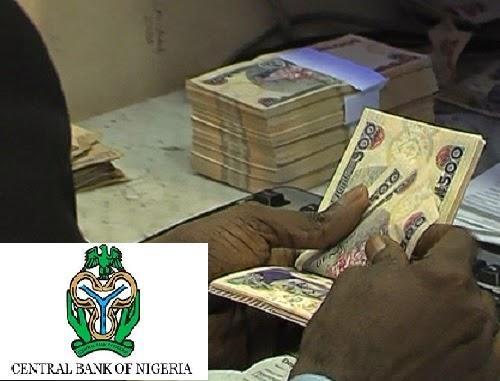
The pressure on the naira/dollar exchange rate is expected to resurface this week on increased demand as business activities resume after the Christmas and New Year break.
Last week, dollar supply outweighed demand, causing the naira to strengthen against the dollar.
Week-on-week, the local currency gained 1.89 percent, relative to the greenback, to close at N260/USD from N265/USD in the preceding week, at the Bureau De Change market segment.
Similarly, the naira appreciated by 1.85 percent of its value, relative to the USD at the parallel market segment, to close at N265/USD from N270/USD in the previous week. However, the CBN clearing rate and interbank rate closed at N197/USD and N199.1/USD respectively.

Also, the spot rate implied slight appreciation of the naira, relative to the dollar- N198.87 exchanged for 1USD as against N199.24 exchanged for 1 USD in the previous week. Meanwhile, the apex bank re-iterated its backing for deposit money banks which banned the use of naira denominated cards overseas, as from January 2016.
A report by Cowry Asset Management limited indicated that the decision to rationalise the allocation of foreign exchange is against the backdrop of a 15.48 percent year-to-date decline in foreign exchange reserves to USD29.13 billion, as at Tuesday, 29 December 2015, which is partly responsible for the depreciation in the value the naira against the U.S. dollar, resulting in an increase in the spread between the official exchange rate and parallel market exchange rate from 13.69 percent as at the end of December 2014 (when the parallel market forex rate was N191/USD) to a 37.06 percent as at December 22, 2015 (when the parallel market forex rate was N270/USD).
Also, as market activities resume this week, the Nigeria Inter-Bank Offered Rates (NIBOR) is expected to rise due to expected demand for liquidity.
Meanwhile treasury bills worth N200.74 billion were auctioned via OMO, viz: 310-day bills worth N138.79 billion and 183-day bills worth N61.95 billion.
Furthermore, treasury bills worth N178.80 billion matured via Open Market Operation (OMO) repayments, 171-day bills worth N88.93 billion and 181-day bills worth N89.87 billion.

The overnight three-month and six-months NIBOR fell to 1.00 percent (from 1.01%), 10.67 percent (from 10.80%) and 12.76 percent (from 12.94%). However, the one month tenor rose to 9.33% (from 9.09%). At the secondary market for treasury bills, the Nigerian Interbank Treasury bills True Yields mostly moved northwards: yields on the 3 months, 6 months and 12 months yield rose to 3.54 percent (from 3.30%), 7.02 percent (from 5.57%) and 7.72 percent (from 8.65%) respectively. However, 1 month yield fell to 1.49 percent (from 1.17%).