The National Bureau of Statistics (NBS) has reported a significant easing of inflationary pressures in Nigeria, with the headline inflation rate dropping by 210 basis points to 18.02 percent in September 2025 from 20.12 percent in August.
This marks the sixth consecutive month of decline since April 2025, driven by improvements in food supply, currency stability, and tighter monetary conditions.
According to the NBS September 2025 Consumer Price Index (CPI) Report, the CPI value rose to 127.7 points, even as inflation eased across key categories.
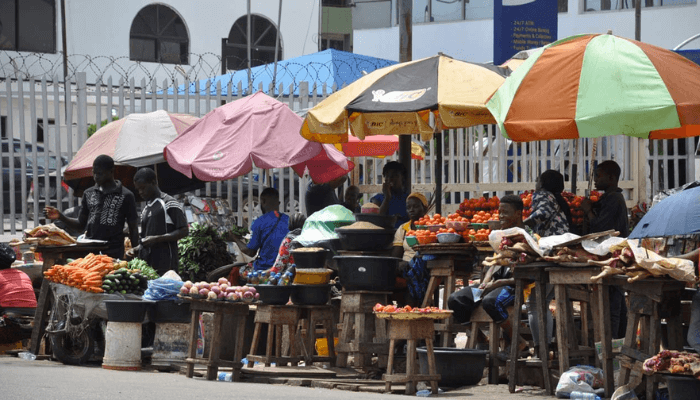
The most notable decline was recorded in food inflation, which fell sharply by 500 basis points, from 21.87 percent in August to 16.87 percent in September. The bureau attributed this trend to “broad improvements in prices, particularly in major food items,” reflecting lower costs of staples such as maize, beans, rice, and tomatoes.

Economists say the decline in food prices and overall inflation coincide with the steady appreciation of the naira against the United States dollar, as well as increased local production during the harvest season.
Daniel Onyejiuwa, head, Economics Department at Glorious Vision University, Edo State, told BusinessDay that the appreciation of the naira was the result of deliberate policies by the federal government and the Central Bank of Nigeria (CBN) to stabilise the foreign exchange market through a unified exchange rate policy.
“Nigeria depends largely on imported goods — up to 80 percent of what we consume is imported. When the naira appreciates, the cost of purchasing these goods from abroad becomes cheaper. This will gradually reflect in lower domestic prices of goods and services,” he explained.
He noted that the current marginal appreciation of the naira is already having a ripple effect on inflation trends. “We are seeing inflation rates begin to moderate compared to last year due to reduced import costs and greater market stability,” he said.
Onyejiuwa noted that the impact of a stronger naira would extend beyond food prices to other critical sectors such as petroleum and transportation.

Read also: Food inflation drops to 16.87% in September on maize, grains decline
“When foreign exchange improves, the landing cost of petroleum products drops. Consequently, we expect lower pump prices, which in turn reduce transportation costs — a major driver of food inflation,” he said.
CBN Governor Olayemi Cardoso also reaffirmed this outlook, noting that the apex bank’s monetary tightening and foreign exchange reforms are beginning to yield results.
“We expect inflation to continue to trend downward in the near term. This is supported by tight monetary conditions, a stable Naira, and increased food supply,” he stated during a recent policy briefing in Abuja.
Cardoso further observed that the unification of the exchange rate and improved transparency in the FX market have helped to reduce imported inflation.
“The naira has stabilised in recent months following reforms that enhanced price discovery. This stabilisation has helped reduce imported inflation,” he said.
However, Onyejiuwa cautioned that while the stronger Naira benefits consumers, it could have short-term implications for government revenue and exports.
“If the dollar depreciates against the naira, the value of oil sales in naira terms declines, potentially affecting government earnings and budget implementation,” he explained. He added that an appreciating currency might also make Nigerian exports less competitive internationally.
Despite these concerns, both analysts and policymakers agree that the overall effect remains positive for households and the broader economy.
“With food inflation down to 16.87 percent and the headline rate easing for the sixth straight month, Nigeria is seeing early signs of economic recovery.
The combination of currency stability, improved agricultural output, and targeted fiscal measures are finally helping to ease the cost of living,” said a market analyst.
According to the NBS, this trend represents the strongest disinflationary movement in more than three years — a sign that Nigeria’s coordinated policy actions are beginning to take hold.
Meanwhile, Aliyu Abdullahi Sabi, minister of state for Agriculture and Food Security, has attributed the recent drop in food prices across the country to increased local production, improved government interventions, and the onset of the harvest season.
Sabi explained that the ongoing price reduction is a direct outcome of large-scale agricultural investments initiated since 2023 under the National Agricultural Growth Scheme (NAGS) Agro-Pocket programme.
“From 2023, we went into massive production through the NAGS Agro-Pocket programme. We injected almost 500,000 metric tons or more of wheat, including maize, cassava, and other commodities we promoted. This ramped-up production is what’s responsible for the drop in food prices,” the minister said.