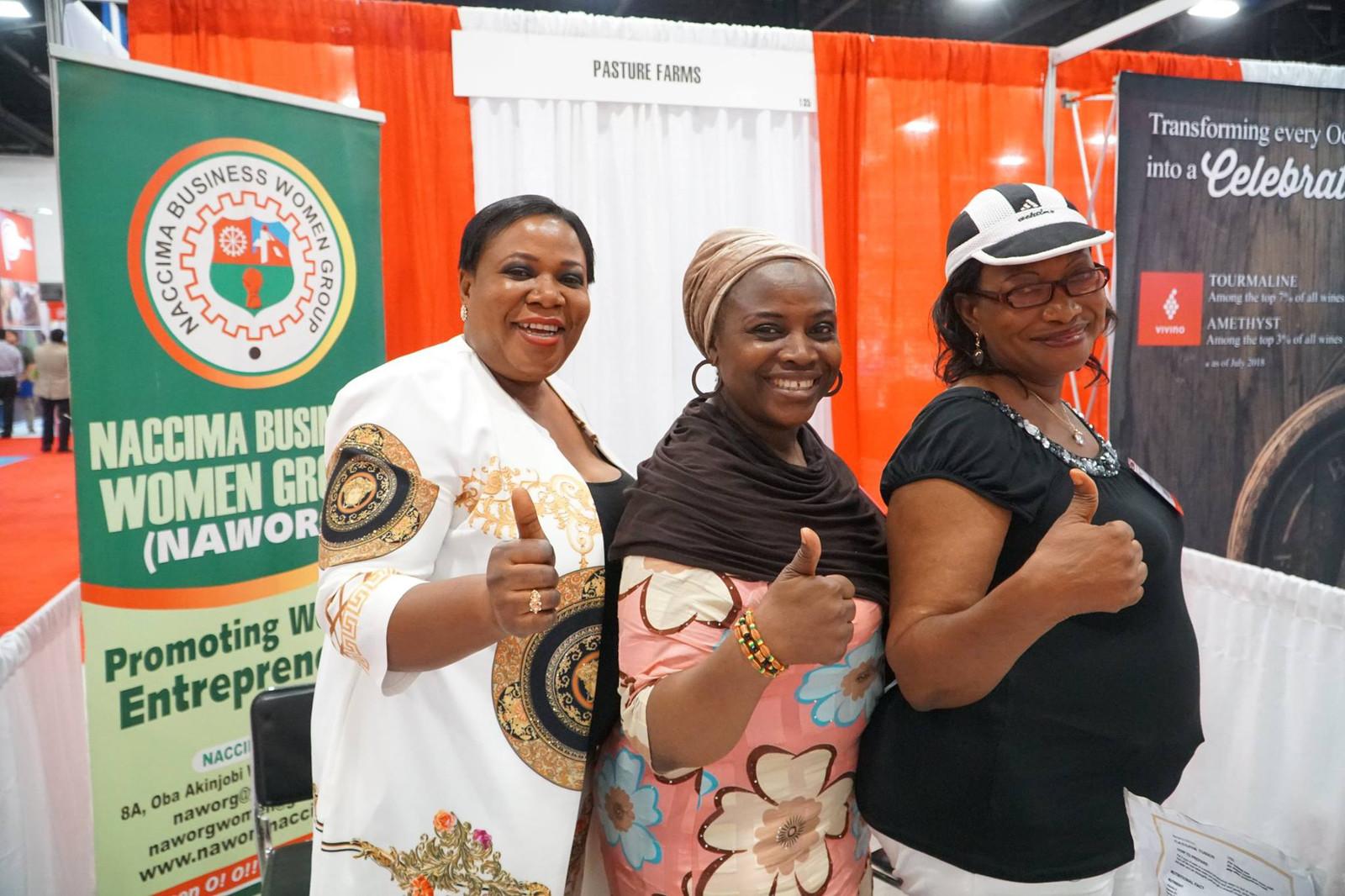
Nigerian Association of Chambers of Commerce, Industry, Mines and Agriculture (NACCIMA) has called on the Federal Government to legalise and formalise illegal miners to enable them steer the economy.
Dele Oye, second deputy president of NACCIMA, said Nigerians must take a cue from Ghana to encourage small-scale mining among citizens.
According to Oye, power is partly responsible for the poor competitiveness of locally produced goods, as it is necessary for the government to establish boards that will include private stakeholders and various chambers to ensure unadulterated decision-making.
Saratu Iya Aliyu, national president of NACCIMA, who spoke on the backdrop of the Federal Government’s proposed restriction on food items, advised that there should be plans and procedures in place before restricting food items that cannot be sufficiently produced at the moment.

Speaking during a courtesy visit to BusinessDay head office in Lagos, Aliyu, who was also the former president of the Kaduna Chamber Of Commerce and Industry (KCCI), said Nigerian firms and foreign investors were pumping money into the mining sector.
She urged the government to pay adequate attention to the sector, adding that efforts were ongoing, including partnership with the World Bank, to encourage and boost local mining in line with global best practises.
Aliyu was joined by Ayoola Olukanni, NACCIMA director-general; Dele Oye, and Chinaza Ezeoke, NACCIMA brand manager. According to Aliyu, Businessday has continued to play the role of information disseminator for the public, providing the citizenry with unbiased information that has formed the basis of the partnership, as the media are the tools through which organisations are being heard.
The new NACCIMA president promised that the administration would focus on positioning agriculture as the preferred business, specifically targeting the youth as well as fostering a strategic partnership with institutes, such as the International Institute of Tropical Agriculture (IITA), to develop and implement innovative solutions across the agric value chain.
Olukanni said the mining sector was projected to increase its contribution to GDP growth by 2025, adding that it was a big asset and a thriving business in the future, and urged the government to create an enabling environment for it to thrive locally.

Frank Aigbogun, publisher of BusinessDay, who was excited at the proposed partnership between NACCIMA and Businessday, expressed his delight and looked forward to having an interesting relationship that would be valuable to both parties.
Selling health insurance scheme successfully to citizens may need to move beyond coverage of familiar infectious diseases to coming to terms with the reality presented by emerging chronic illnesses, which treatment requires continuous payment.
Laudable as the Lagos Health Insurance Scheme (LHIS) is, the impression among some stakeholders and healthcare providers who spoke with Businessday is that residents will be more attracted to the scheme if it extends coverage to non-communicable diseases that have become the nightmare of some Nigerians.
The LHIS caters for family planning and counselling, adolescent reproductive healthcare, health education, emergency health services, antenatal and postnatal care. It also covers normal delivery and caesarean section, prevention of mother to child transmission of HIV, immunisation, growth monitoring and promotion and management of childhood illnesses. These areas constitute 63 percent of mortality factors, which receives the most inflow of out-of pocket health expenditure.
But emerging challenges including cancer, diabetes, hypertension, chronic kidney disease, chronic liver disease, cardiovascular and certain types of dental problems and surgeries are not covered. The World Health Organisation (WHO) in 2018 estimated that they account for 29 percent of all deaths. These diseases have been found to have an increasing impact on the health status in populations, with higher rates in developing countries, and constitute the leading cause of mortality worldwide.
“Part of the major challenge is that most of the services that are being provided are services that people can somehow pay for without having to buy insurance,” Oluwajimi Sodipo, the vice-president, Medical Guild, said. “If you are just going to treat yourself once, it is possible to still be able to pay for it. People that have chronic medical illnesses definitely find it difficult to pay for those services. They have to ensure that the coverage of services that they provide attract these people to the scheme.”
The LHIS is a mandatory programme that targets all registered residents of Lagos under a N3,850 monthly plan per family of six and N8,500 yearly for single persons. To guarantee operational funding for the Lagos State Health Management Agency (LASHMA) in including all stakeholders in the formal and informal sector, it became a law.
The law created equity fund that is a minimum of 1 percent of the consolidated revenue of the state to take care of the very poor people. According to sources in the state government, the agency used some fund in the first of 2019 to enroll people confirmed by an assessment to be poor slum dwellers.