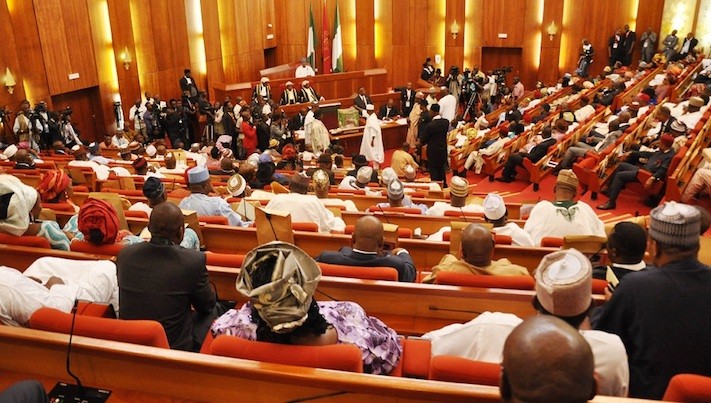
The National Assembly’s proposed creation of more than 200 new universities in Nigeria amid a surging lecturers’ shortage and other numerous challenges beclouding the ivory tower leaves much to be desired.
According to the National Universities Commission (NUC) report, Nigeria currently has 278 universities: 64 federal, 67 state, and 147 private.
The commission, however, emphasises that Nigeria needs more universities to meet the demand for higher education because the current number of universities is inadequate for the country’s over 200 million population.
Indonesia, for instance, which also has a population of over 200 million like Nigeria, has about 2,000 universities, not to mention Russia, Brazil, and India with hundreds of thousands of universities.

The United Kingdom, as a matter of fact, which has a smaller population than Nigeria, has about 130 universities with over 2.8 million students, whereas the Nigerian 278 universities could only cater to about 2 million students.
Read also: Emergency rule: Critics slam rubber stamp National Assembly, Obi, Yesufu others condemn voice vote
Meanwhile, as of today, Nigerian universities do not have the capacity to enrol more students due to poor infrastructure and lecturers’ dearth. Most of the universities in Nigeria have less than 1,000 undergraduate students, especially the private ones, and this is simply because the facilities are not there to accommodate more students when more than 1.5 million candidates apply for admission every year.
Against the United Nations’ recommendation, Nigeria’s 2025 budget for the education sector is N3.52 trillion. This allocation constitutes only 7.3 per cent of the overall 2025 budget.
A few years ago, the Academic Staff Union of Universities (ASUU) expressed concern about the increasing number of lecturers leaving the country due to poor working conditions.

The Federal University, Gusau, Zamfara, for example, was reported to be in need of about 1,000 lecturers. The University of Lagos saw 27 lecturers leave two faculties, while 100 workers at the University of Uyo travelled out of the country.
“Most of the universities in Nigeria have less than 1,000 undergraduate students, especially the private ones, and this is simply because the facilities are not there to accommodate more students when more than 1.5 million candidates apply for admission every year.”
Many lecturers find themselves overburdened, juggling an increasing number of courses due to the scarcity of academic staff. Little wonder most Nigerian universities lag behind in the world’s university rankings.
Today, a look at the entire enrolment process shows that the private universities account for just 7.5 per cent of total undergraduate enrolment. The total number of undergraduate enrolments is just about 875,000, which is, at least, fairly low.
In the face of this disturbing development, Nigerians would have expected the lawmakers to be more interested in strengthening the capacities of the existing universities for optimal utilisation instead of pushing for the establishment of more inadequately equipped universities.
No doubt, what Nigeria needs now is to mobilise more resources to develop infrastructure, build engineering workshops, equip libraries, and build laboratories in the existing universities.
Besides, there is a need to recruit international standard teachers so that the country can begin to get these universities to develop to deliver high-quality education that will attract foreign students and possibly earn foreign exchange through higher education export.
Many Nigerian universities are faced with a severe shortage of lecturers due to factors such as brain drain, inadequate funding, and poor working conditions, leading to concerns about the quality of education and the future of the nation’s workforce.
Hence, establishing more universities without fixing these challenges would escalate the problems and leave the country bleeding from poor learning outcomes at the tertiary education level.
Many universities are struggling with insufficient funding, making it difficult to attract and retain qualified staff; hence, a lot of these lecturers are leaving the country to seek better opportunities and living conditions abroad.
Not long ago, President Bola Tinubu assented to two separate bills establishing the Federal University of Agriculture and Development Studies, Iragbiji, Osun State, and the Federal University of Technology and Environmental Sciences, Iyin Ekiti, Ekiti State.
Read also: What will happen if Tinubu fails to get National Assembly approval for Rivers emergency rule
On February 3, the president also approved the establishment of the Federal University of Environment and Technology (FUET) in the Ogoni town of Tai, Rivers State. The president had earlier assented to the takeover and conversion of the forfeited privately owned NOK University, Kachia, in Southern Kaduna, to Federal University of Applied Sciences, Kachia, among others.
Also within the time under review, the federal government approved the establishment of 11 private universities.
It is a universal truth that no country develops without adequate and appropriate investment in education because it is the most important instrument of change in any modern nation-state.
Countries that are now regarded as having knowledge-based economies are essentially those that have paid remarkable attention to providing, especially at the tertiary level, educational opportunities to their citizens, through which researched knowledge is taught and reproduced.
Regrettably, the Nigerian university education has suffered neglect, has been chronically underfunded, and has been engulfed in crisis, among others.
We believe the National Assembly should first have advocated for the government to significantly increase funding for higher education, particularly for infrastructure, research, and faculty development.
To curb the instances of establishing ‘mushroom’ universities in Nigeria, the government should allocate a larger portion of the national budget to education to address infrastructure deficiencies.