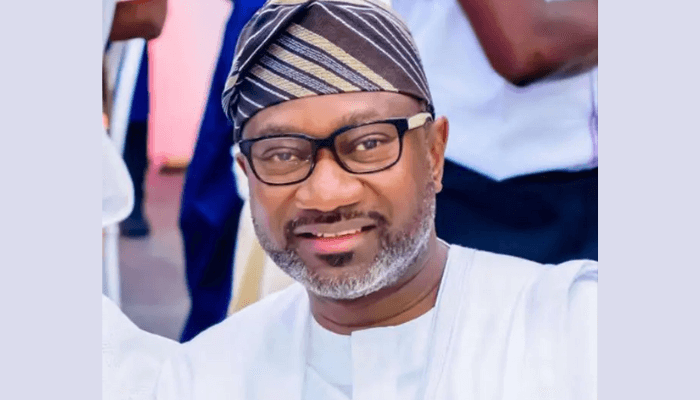
Nigerian billionaire Femi Otedola has revealed that he never obtained a university degree, despite long-held public belief and even past reports suggesting otherwise. In his new memoir, “Making It Big”, Otedola disclosed that his business journey, rather than formal academics, provided the education that shaped his rise to the top.
The revelation may surprise many admirers who assumed the oil magnate was a graduate of the University of Lagos, as once indicated on his Wikipedia page. Instead, Otedola explained that his truest classroom was the business floor, where he learned by observing his late father, Sir Michael Otedola, a former governor of Lagos State, and by trusting his instincts through both failures and triumphs.
For years, rumors about Otedola’s academic credentials persisted. His perceived ties to the University of Lagos became part of his public identity, cited in biographies and profiles across media. But in his book, Otedola puts the record straight. “I never attended the University of Lagos. I never sat in a lecture hall to earn a degree,” he writes. “My education was watching my father manage people, reading situations quickly, and learning from my own mistakes in business.”
By acknowledging this, Otedola challenges the assumption that formal schooling is the sole pathway to success. Instead, he emphasizes resilience, intuition, and experiential learning as cornerstones of his entrepreneurial growth.

Otedola’s career was far from a straight path. After experimenting with smaller ventures, including supplying diesel to small businesses, he eventually built one of Nigeria’s largest downstream oil companies, Zenon Petroleum and Gas. At its height, Zenon controlled a significant share of the diesel market, powering factories, telecommunications infrastructure, and transport fleets.
But fortunes shifted. In 2008, Otedola faced a dramatic downturn during Nigeria’s banking crisis. Heavy exposure to oil price volatility and debt nearly brought his empire to collapse. It was a humbling moment for a man once celebrated as one of Africa’s richest. Yet Otedola did not retreat. He reinvented himself, divesting from oil and investing in power generation through Geregu Power Plc. Today, Geregu stands as a key player in Nigeria’s energy sector, listed on the Nigerian Exchange, with Otedola as chairman. In his memoir, he frames these highs and lows as the real syllabus of his life more instructive than any degree.
A recurring theme in Making It Big is the influence of his father, Sir Michael Otedola. The elder Otedola, a disciplined journalist and later a governor, provided early exposure to leadership, negotiation, and the value of reputation. “From my father I learned that integrity outlives ambition,” Otedola recalls. “He taught me that even when you lose money, never lose your name.” This grounding, Otedola suggests, gave him the moral compass to navigate turbulent markets and business rivalries.
Otedola’s disclosure also taps into a broader debate in Nigeria: the link between higher education and professional achievement. In a country where millions aspire to university degrees as a ticket to upward mobility, his story underscores alternative routes to success. Nigeria’s youth unemployment rate, worsened by underfunded universities and limited job opportunities, has left many questioning whether degrees guarantee prosperity. Otedola’s rise without one adds weight to the idea that practical skills, mentorship, and innovation can rival academic credentials.
Still, he is careful not to dismiss formal education entirely. “I respect education greatly. It opens doors for many people,” he notes. “But it is not the only way. Passion, persistence, and the ability to seize opportunities are just as important.”

One of Otedola’s recurring arguments in the book is the role of instinct in entrepreneurship. He describes moments where decisions made “from the gut” proved more valuable than detailed analysis. Whether buying distressed assets, investing in shipping, or pivoting into power, he credits his instincts as central to his wealth creation. Of course, not all instincts paid off. He candidly admits to failed ventures and costly miscalculations. Yet, he insists those failures offered sharper lessons than success ever could. “Failure is tuition you pay to the school of life,” he writes.
The memoir also forces a reassessment of Otedola’s public image. Known for his flamboyant generosity such as gifting millions to charities and buying luxury cars for his daughters he is also a figure often accused of benefiting from political connections. By telling his story in his own words, he attempts to reclaim the narrative: a businessman who made mistakes, learned from them, and adapted. Observers say the revelation about his lack of a degree may humanize him further. “In a society obsessed with certificates, Otedola’s honesty is refreshing,” said Dr. Akinyemi Adeoye, a business historian. “It sends a message that success is about grit, not just grades.”
As Geregu Power expands and explores regional opportunities, Otedola positions himself not just as a businessman, but as a mentor for Africa’s next generation of entrepreneurs. His memoir ends with a challenge to young Nigerians: to be bold, creative, and unafraid of failure. “Your university may not have walls,” he concludes, “but if you keep learning from life, you are already in class.”