MTN Nigeria Communications made the biggest gain on Tuesday a day after the federal government announced a 50 percent tariff hike.
This is as telcos set their sights on a N6.6 trillion windfall from the tariff increase this year.
Shares of MTNN moved up the most on Tuesday by 10 percent, helping to strengthen the Lagos bourse movement upwards.
MTNN, which opened for trading on Tuesday at N233 per share, rose to N256.30, after adding N23.30 at the close of trading.

Investors traded N1.631billion shares of MTNN on Tuesday. The stock has risen this year by 28.15 percent.
MTNN sees the 50 percent hike in tariff as a significant milestone in ensuring the long-term sustainability of the telecoms industry, supporting the country’s critical infrastructure and services while empowering millions of people and businesses and contributing to the country’s overall economic development.
In another boost to investors’ appetite for MTNN shares, the NCC approved the renewal of its first 800MHz spectrum band licence (Channel 1) for an additional 10 years, effective January 1, 2025 to December 31, 2034.
The NCC has also approved the extension of the second 800MHz spectrum band licence (Channel 2), which expires on December 31, 2030, for additional four years, with a new end date of December 31, 2034.
The extension aims to harmonise the tenure of the company’s 800MHz spectrum licences so that they jointly expire on December 31, 2034, for ease of subsequent renewals.

Recently, Lagos-based Meristem analysts asked investors to buy shares of MTNN and Airtel. Airtel Africa Plc, through Barclays Capital Securities Limited (Barclays), is however currently doing share buy-back in newest move to return $100 million to its shareholders.
“The outlook for the telecommunications sector in 2025 remains positive, supported by strong prospects for sustained revenue expansion. This growth is expected to be driven by initiatives aimed at scaling data traffic, expanding network coverage, and accelerating the adoption of 4G and 5G technologies,” Meristem analysts said.
“These efforts could be further supported by rising consumer demand for digital services and increasing internet penetration in key markets. Additionally, a likely approval by telecom regulators to implement tariff adjustments for operators could boost both data and voice revenue in 2025,” the analysts further noted.
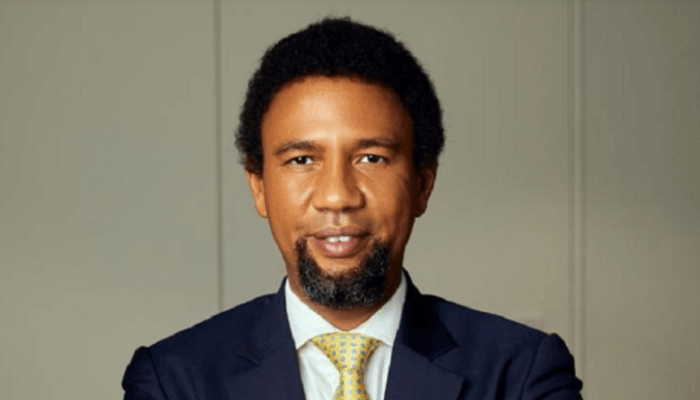
Karl Toriola, CEO, MTN Nigeria, said: “We deeply appreciate the federal government of Nigeria, the Honourable Minister of Communications, Innovation and Digital Economy, the NCC and our industry bodies for their continued support in ensuring the telecoms sector remains sustainable.”
He further said, “This tariff adjustment represents an important step towards addressing the impacts of the prevailing economic challenges on our business and industry. It will enable us to maintain the critical investments required to deliver reliable, high-quality services to Nigerians. We remain committed to supporting Nigeria’s digital transformation agenda and driving inclusive growth for all stakeholders.”
Also, commenting on the renewal of the first 800MHz spectrum band licence transactions, Toriola said: “We are pleased with the successful renewal and harmonisation of our 800MHz spectrum licences, which lay a solid foundation for the ongoing delivery of 4G services to our customers.
“This enables us to continue to meet the demand for data and is integral to our broader strategy for enhancing connectivity.”
Read also: MTNN rallies most on tariff hike
Telcos to unlock N6.59tn windfall
As stated earlier, telecommunication companies will unlock at least N6.59 trillion in revenue following the approval of a 50 percent tariff hike by the Nigerian Communications Commission (NCC).
After months of anticipation, the NCC has allowed telcos to raise the costs of calls, SMS, and data by 50 percent. “The adjustment, capped at a maximum of 50 percent of current tariffs, though lower than the over 100 percent requested by some network operators, was arrived at taking into account ongoing industry reforms that will positively influence sustainability,” NCC said.
This hike, the first in a decade, raises the floor price (minimum acceptable price) of calls to N9.6 per minute from N6.40, the cost of SMS to N6 from N4, and the cost of 1GB of data to N431.25 from N287.5. The average price of calls will rise to N16.5 per minute from N11.
This increase is expected to boost revenue for telcos, whose operating costs have risen by about 300 percent in recent years. “The approved adjustment is aimed at addressing the significant gap between operational costs and current tariffs while ensuring that the delivery of services to consumers is not compromised,” the NCC noted.
Projected Revenue Growth
The projected increase in revenue represents a 50.10 percent rise from the at least N4.39 trillion made by telcos from calls, SMS, and data in 2023, according to the NCC’s most recent data. Since there is no available data yet for 2024, this analysis is based on the available data for 2023, which might vary for 2025.
About 205.29 billion minutes of outgoing national calls were made in 2023. At an average price of N11 per minute, telcos generated at least N2.26 trillion in revenue. With a 50 percent increase in tariff to N16.5 per minute, this revenue is projected to rise to at least N3.39 trillion in 2025, assuming call volumes remain constant.
Similarly, telcos earned N44.71 billion from 11.18 billion SMS sent at N4 per SMS in 2023. With the new rate of N6 per SMS, revenue is expected to rise to N67.06 billion. In 2023, total data usage stood at 7,272,020.24 terabytes (i.e., 7,272,020,240 gigabytes), equating to N2.09 trillion in revenue at the old rate of N287.5/GB. With the new tariff of N431.25/GB, data revenue could increase to at least N3.14 trillion in 2025.
Combined, telcos’ calls, SMS, and data revenues are expected to rise from N4.39 trillion to N6.59 trillion. Actual revenues may be even higher due to year-on-year increases in voice and data usage. For instance, MTNN’s voice revenue grew from N834 billion in the first nine months of 2023 to N949.43 billion in the same period of 2024, while data revenue surged by 52.33 percent to N1.14 trillion.
Much of telcos’ expected revenue growth is likely from increased data demand, with usage surging by 595.49 percent to 870,398.28 terabytes (TB) in October 2024 from December 2019.
“The demand for data in Nigeria is exceptional and will continue to grow,” Karl Toriola, chief executive officer of MTNN, recently said.
This increase in revenue is expected to help telcos weather record losses and declining investments. “Worst appears to be over for MTN with major headwinds potentially normalising in other markets,” according to Stanbic IBTC. It noted that the hike will help reverse the fortunes of MTNN, which declared a profit after tax of N514.93 billion for the nine months ended September 2024, with negative equity position within two to three years.
“This is a sector that is responsible for driving growth in our country,” said Bosun Tijani, minister of Communications, Innovation, and Digital Economy, explaining the rationale for the increase.
The tariff hike is also expected to help telcos fund infrastructure upgrades they have not been able to afford. Between January and September 2024, MTNN’s core capital expenditure (capex) dropped 27.79 percent to N217.64 billion, while Airtel’s capex fell 36.59 percent to $149 million.
“These adjustments will support the ability of operators to continue investing in infrastructure and innovation, ultimately benefiting consumers through improved services and connectivity, including better network quality, enhanced customer service, and greater coverage,” the NCC explained.
Criticism of the hike
Despite the anticipated benefits for the telecom industry, the tariff hike has drawn criticism from subscribers grappling with a record high inflation rate of 34.8 percent as of December 2024. The National Association of Telecoms Subscribers (NATCOMS) argues that the tariff hike represents additional costs in the face of harsh economic realities.
“This, undoubtedly, is against the public interest, contrary to the false narrative of NCC that described the recent adjustments as pro-public interest,” the body stated while threatening legal action against the NCC.
However, according to the NCC, there is a need to balance consumer protection and industry sustainability.
“The NCC recognises the financial pressures faced by Nigerian households and businesses and remains deeply empathetic to the impact of tariff adjustments. To this end, the Commission has mandated that operators implement these adjustments transparently and in a manner that is fair to consumers,” it added.