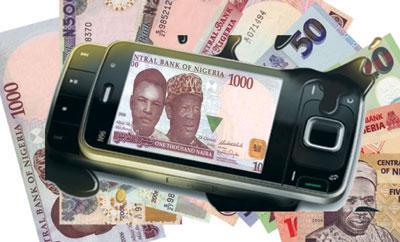
In spite of the challenges confronting the electronic banking sector of the economy, the value of mobile payments in Nigeria has grown to N815 billion as of September 2015, according to the Central Bank of Nigeria (CBN).
Consequently, the volume of mobile payment transactions has increased to over 76 million as of the same period, while the industry has recorded over 24 million subscribers.
Meanwhile, the CBN has fully licensed a total of 21 Mobile Money Operators (MMO) who are currently carrying out commercial operations, while eight others are at various stages of pilot run.

Dipo Fatokun, director, banking and payments system department, CBN, gave this breakdown in Ilorin, Kwara Stste, at the ongoing three-day workshop for business editors and Finance Correspondents Association of Nigeria (FICAN) organised by the Nigeria Deposit Insurance Corporation (NDIC).
Represented by Sola Agboola, assistant director, banking and payments system department, CBN, he disclosed that the apex bank would soon grant operating licence to three leading telecoms firms that have applied for super agents licence.
Making a presentation on ‘enhancing the Capacity of Micro, Small and Medium Enterprises (MSMEs) for Job Creation through Mobile Payments System,’ Fatokun emphasised the need to leverage existing business network infrastructure as a practical and well thought out strategy for driving financial inclusion of the unbanked in Nigeria.
He listed some challenges affecting the MSMEs in the process of job creation through mobile payments system to include epileptic power supply, poor telecommunication connectivity, lack of synergy between mobile money operators and telcos, need for enhanced customer awareness and lack of awareness of the various policies and products.
However, he said efforts were being put in place by the CBN in collaboration with various stakeholders towards surmounting the challenges.

According to him, one of the cardinal objectives for introducing mobile money in Nigeria is to stimulate financial inclusion that enables underserved people and communities to have access to financial services in a way that will enhance their economic opportunities, boost productivity in various sectors and contribute to economic development.
Other impacts of mobile payment are to enhance national economic growth, employment generation, efficiency in the payment system, facilitation of domestic and international remittances and faster payroll system.
“There is a huge untapped potential for financial services at the micro level of the Nigerian economy. The CBN and other stakeholders are putting in efforts to fill the identified gaps,” he said.
He noted that tremendous growth had been recorded by the CBN in terms of encouraging individuals to be gainfully employed outside the normal public/private sectors rush, saying the regulator required the co-operation of all stakeholders to achieve its vision 20: 2020 project.