The recent acquisition of 18 percent equity stake in Diamond Bank by the Carlyle Group, an American private-equity firm, engendered rousing reviews in the media mainly because it signposted further confidence in the Nigerian economy, which has lately been buffeted by dwindling oil revenues and depreciating currency. The investment, via a rights issue, brought in a hefty $147 million into Diamond Bank, providing significant capital to strengthen the lender’s growth projections.
A major incentive for the Carlyle Group’s acquisition was the projected sustainable growth in Diamond Bank’s profitability and customer acquisition, driven by some deft activities in the market. Chief among these was the bank’s collaboration with Nigeria’s leading telecoms company, MTN, to launch, four months ago, the Diamond Y’ello Account (DYA), a hybrid account that offers MTN’s almost 60 million subscribers a fusion of financial services and telecoms incentives. The Diamond Y’ello Account, which is available to every MTN subscriber, comes with a long list of benefits that include easy access to open and operate a bank account through the subscriber’s mobile phone or agent network, full bank services with interest payments on account balances and fund transfer services to any bank account in Nigeria.
According to Uzoma Dozie, Diamond Bank’s chief executive, since the Y’ello account was introduced, the lender has acquired over 600,000 mobile banking customers, significantly boosting the goal of having five million mobile banking users, a doubling of its existing customer base by December 2015.
Highlighting the role of technology in actualising business objectives, CEO of MTN Nigeria, Mike Ikpoki, disclosed that the partnership with Diamond Bank evolved from a commitment to leverage technology to make life easier for people. “Technology is a tool that should make life easier for people. This product is simple and accessible to all customers on our network,” he stated.
The collaboration, apart from enhancing financial inclusion in Nigeria, reinforces the growing influence of mobile phones and mobile banking in financial intermediation and economic empowerment. In less than two decades, mobile phones have evolved from being symbols of status for the rich and famous to tools of empowerment for people in the lower reaches of the socio-economic demographics. These phones more than make up for inadequate infrastructure such as poor road networks and high cost of mobility that characterise developing economies like Nigeria’s; the phones and networks allow information to flow freely, making markets more efficient, creating job opportunities and platform for entrepreneurship. Not surprisingly, the impact of this evolution has had a direct effect on global economic growth, and more significantly on Nigeria.
According to Enhancing Financial Innovation & Access (EFInA), an organisation committed to deepening financial inclusion in Nigeria, only one in five Nigerian adults has a bank account, with approximately one bank branch and one ATM for every 10,000 people. This situation, the report hinted, is indicative of a population that is highly marginalised in the area of access to financial services. On the other hand, one in every two Nigerians has a mobile phone. With phones now so commonplace, a new opportunity for access to financial services for the unbanked beckoned, with mobile money, for instance, enabling cash to travel as quickly as a text message.
The opportunities offered by mobile money and mobile banking are endless. Through mobile money services, small vendors now act somewhat like bank branches by sending money to mobile money accounts. The account holder can then transfer money (again, via text message) to other registered users, who can withdraw it by visiting their own local corner shops. Funds can even be transferred to people who are not registered users via a simple process where they receive a text message with a code that can be redeemed for cash.
Successful examples of mobile money implementations in Africa have been recorded by financial service providers such as Standard Bank of South Africa. The bank, in partnership with MTN, Africa’s biggest mobile network operator, launched a highly successful mobile-money service in Uganda, which has been extended to other countries such as Ghana, South Africa, Kenya and Nigeria. Stanbic IBTC Bank, Standard Bank’s Nigerian subsidiary, in partnership with the major telecom operators, launched the Stanbic IBTC MobileMoney solution some years ago, enabling customers to open a bank account and conduct financial transactions using just their mobile telephones.
The concept of performing real-time mobile financial transactions has become widely accepted in Africa. In fact, there is a growing demand for mobile money services in developing countries where financial infrastructure is not readily accessible, bringing with it new opportunities for employment and entrepreneurship. The ability to transfer funds via a mobile phone in ‘under-banked’ communities also translates into time and money savings by helping people avoid many hours of travel in order to make payments or cash withdrawals, while facilitating financial inclusion.
Across Nigeria, corner shops have become a defining feature of most cities. Airtime vending, from roadside sellers to major dealers, is now a major income generation opportunity. Airtime reselling has extended the dealer networks of operators to smaller population centres by allowing any subscriber to become an airtime reseller. An airtime reseller purchases airtime from the operator distribution network at a discounted price via SMS on his mobile handset. He then sells airtime, once again via SMS, to end users at the full price, keeping the mark up and thereby earning an income. In addition to creating an entrepreneurial framework, the telco benefits from reduced overhead and distribution costs, as well as the elimination of theft and fraud associated with distributing physical vouchers.
Web developers have also benefitted from mobile money as more and more websites are upgrading to accommodate the conduct of mobile financial transactions. Software engineers and developers have equally been tapping into the mobile money growth to expand their businesses. Mobile apps for financial transactions have continued to drive the software industry growth, even as new app developers establish businesses to take advantage of the growing demand.
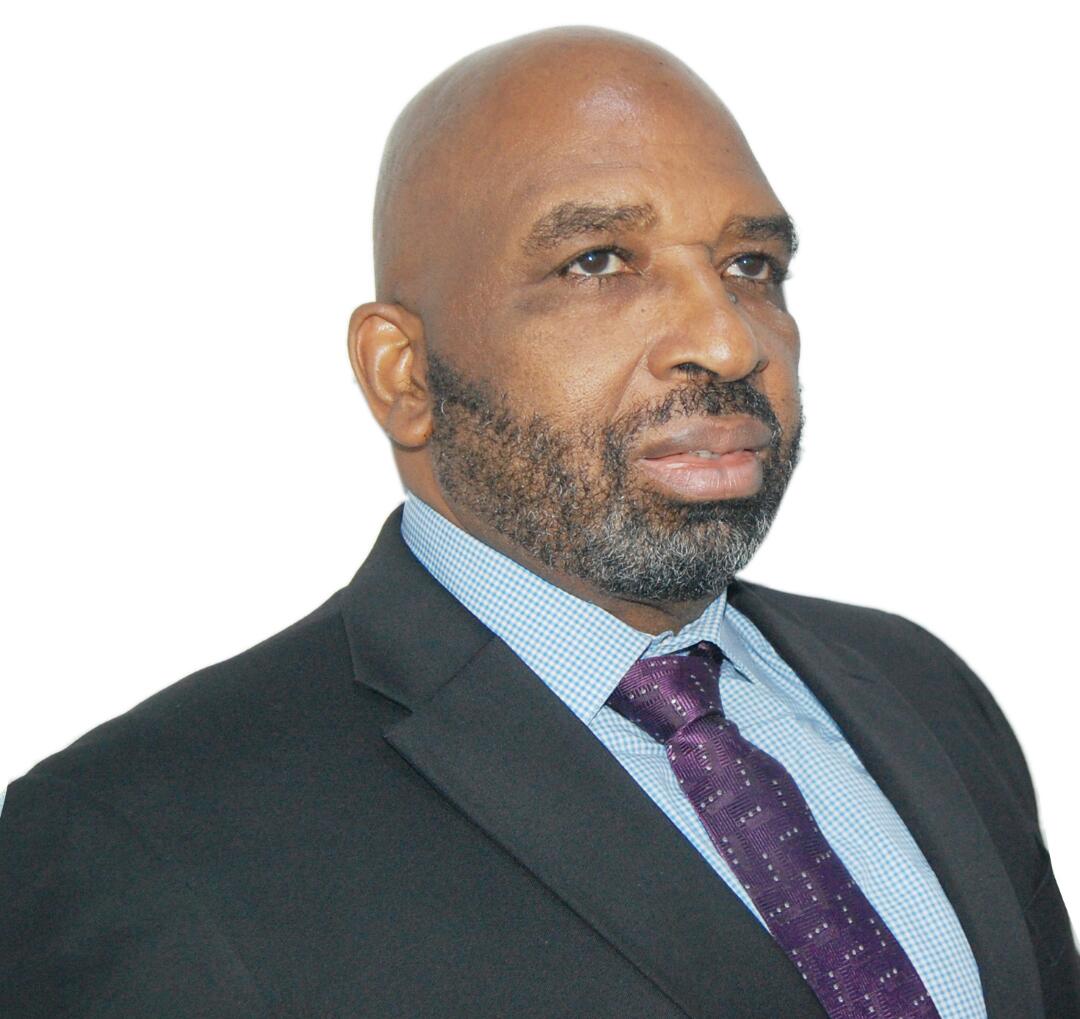
•Nwachukwu is a Lagos-based communications management consultant with XLR8 Ltd
Mobile money as leverage for growth



Kano DisCo workers suspend strike after deal with management
The management of Kano Electricity Distribution Company says its workers have suspended the ongoing industrial action following what it called…

Access Bank Lagos City Marathon holds April 10
The 2021 edition of the Access Bank Lagos City Marathon has been moved from February 13, 2021, to April 10,…

Nigeria, South Africa, two others exit EU–FATF high-risk list
Nigeria, South Africa, Burkina Faso and Mozambique have been removed from the European Union’s list of “High-Risk Third Country Jurisdictions”…

1000x Incoming? Zero Knowledge Proof Could Be the Only Presale That Matters While IPO Genie and Blazpay Fall Flat
Crypto markets have stayed active in January, with the total market cap sitting near $3.2 trillion and steady liquidity keeping…

Court dismisses FG’s criminal case against Natasha Akpoti-Uduaghan
An Abuja High Court has dismissed the criminal charges brought by the Federal Government against Natasha Akpoti-Uduaghan, who represents Kogi…

Spartans.com Stuns the World With a One-of-a-Kind MANSORY Koenigsegg Jesko Giveaway
Spartans.com, a cryptocurrency gaming platform known for rejecting traditional bonus systems, has launched a global giveaway campaign featuring a one-of-a-kind…