Donald
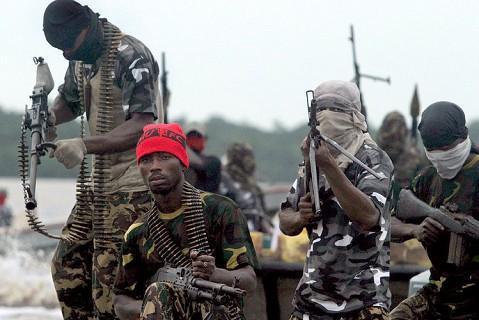
There was tension in Bayelsa State for several days this month. The Governor had decided to stop the N100m monthly allowance to militants and they had sworn to cause trouble. The questions of who the militants are, who registers or certifies them-so as to qualify for the largesse- who manages the disbursements and how it is accounted for should be left pending for now.
A former Managing Director of the Nigerian National Petroleum Corporation (NNPC) had claimed to have paid $12m to militants to facilitate the repairs of Charnomi Pipeline in Delta State. The pipeline is suspected to have been damaged by these same militants and should have ordinarily cost about $1m to repair. Julius Berger spent N450m to secure its men and equipments in the East-West road project for which they had received N11.9bn [ 3.8% of project turnover!]. While the Niger Delta struggle is justified, its criminalization and the emergence of a class of conflict entrepreneurs benefiting from the crises economy have complicated the matter. Individuals and groups living big as kidnappers, ransom consultants, certified militant representatives, negotiation facilitators, conference organizers and participants, creek security experts, suppliers of operational goods and services, and the big one, oil bunkering, cannot be eager for normalcy to return to the Niger Delta.
Several federal committees and interventions have been set up to tackle the problem starting from the Willinks Minority Commission [1957] to the Mittee Technical Committee[2008]; the OMPADEC and the NDDC[2000] and recently the Ministry of the Niger Delta [MOND]. The Niger Deltans, have also been genuinely concerned over the state of affairs but the strategies for expressing these concerns have varied over the years. The first major uprising-and this was more political- was led by Isaac Adaka Boro while the most coordinated and comprehensive expression of discontent was led by Ken Saro Wiwa and the MOSSOP. The judicial murder of Saro Wiwa by the Abacha regime and the subsequent repression led to violent resistance and after the experience of Dokuboh, the struggle finally went underground. Several unknown groups came on board and before long, kidnapping for ransom became their weapon. So, how does the government achieve its objectives through MOND when MEND group of militants is already on the ground, threatening, giving counter orders and at times acting like alternative government?
Read Also: EndSARS, NNPC; Nigerian leaders: Beware the ides of March!

The problem of Niger Delta has been complicated by years of neglect by all tiers of Government[Federal, State and Local] and our tendency to use commissions, conferences and committees to obfuscate issues, evade responsibility and buy time. As that was going on, things were getting worse and the demands, expectations, and reactions of the people were becoming more complicated. The political and financial cost of tackling them are also escalating. It all boils down to resource control, provision of infrastructure, youth employment generation, environmental protection and equitable representation and voice in national affairs. While these problems are awaiting attention, the impact of the crisis is getting glaringly harmful.
Creating the MOND per se will not solve the problem because of the usual bureaucratic entanglements and uninspiring budgetary allocations. A comparative analysis indicates that for critical infrastructure in 2009 the FG allocated N2,470 per Niger Deltan as against N34,657 per FCT resident! Even then, the NDDC that is supposed to be less bureaucratic has not achieved much despite the trillions allocated to it.
The government must invest in massive infrastructural development in that region and this will need serious and coordinated funding. But economic governance issues should first of all be properly addressed. There must be transparent utilization of resources and value for money budgeting. Using funds allocated for development to service political patronage and keep the big boys happy, will not solve the problem.
The federal government should lead the way but this is not solely a federal government affair. The state and local governments must also be involved. The argument of some Niger Deltans that what their governors did or did not do with state allocations was not anybody’s business does not hold water. The Niger Delta governors and LG chairmen have received intimidating sums of money on behalf of their people. This money must be used for the benefit of the people and not for employing spiritual consultants, acquiring houses overseas or indulging in other excesses. These tiers of government must show what they had done with their allocations. There should also be proper coordination between the various tiers of government.
The narrow issue of derivation and the wider matter of resource control should also be revisited. Those who feel that 50% derivation is oppressive should remember that we have had something higher than that before and that the sources of national revenue will continue to vary. It cannot be oil forever.