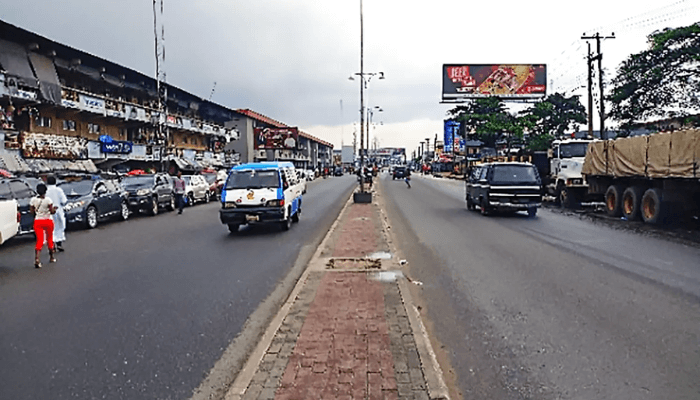
In Port Harcourt’s Mile 1 Diobu, life unfolds with a restless energy that fills the day. From the early hours of morning until late afternoon, the stretch of road where the Business Day newspaper house is located becomes a melting pot of trade, movement, and survival.
At first glance on a walk with Kelechi Nwaocha, a senior journalist, the scene looks ordinary a marketplace like many others across Nigeria. But a closer walk reveals the layers of a city bursting at its seams. Traders set up their tables side by side, often selling the very same items.
Fruit baskets and student’s school materials compete for buyers’ attention, each seller convinced that their voice will rise above the chorus.
Others spread their wares directly on pedestrian walkways, narrowing the space for passersby who must dodge both goods and oncoming vehicles.

The road itself is a constant drama. Hawkers snake through the gridlock, drivers honk and shout for passengers, while pedestrians push against the tide of noise and movement. In the rush, safety is often an afterthought. On one side of the road, a group of schoolchildren stand hesitantly, waiting for the chance to cross. With no traffic lights, no zebra crossings, and no one to guide them, each step forward feels like a gamble.
Read also: Fubara cries out, says Port Harcourt ports poor utilisation causing economic setback
For drivers, too, the risks are visible. Reckless overtaking, sudden stops, and the ever-present fear of brake failure hang over a road already made narrow by traders spilling into the street. Accidents here are not just possible—they are almost predictable.
And yet, amid the chaos, life continues to find a way. Incomplete and abandoned buildings that line the area have become shelters. Inside them, families and individuals create homes out of scraps, covering windows with zinc sheets and nylon to keep out the wind. These improvised shelters may be fragile, but they provide something far greater than walls: the dignity of having a place to belong.
Still, Mile 1 Diobu is not only about hardship. It is also about accessibility. On this single stretch, one can find almost everything needed for daily life: a bustling market, churches like the nearby Anglican church, banks, filling stations, and even the newspaper office itself. For residents, convenience is never far away.

Mile 1 Diobu is a paradox crowded yet vibrant, chaotic yet indispensable. It is a place where survival is played out every day on a stage shared by traders, schoolchildren, drivers, and worshippers. For anyone who pauses to watch, the street tells its own story: of struggle, resilience, and the unending rhythm of life in Port Harcourt.