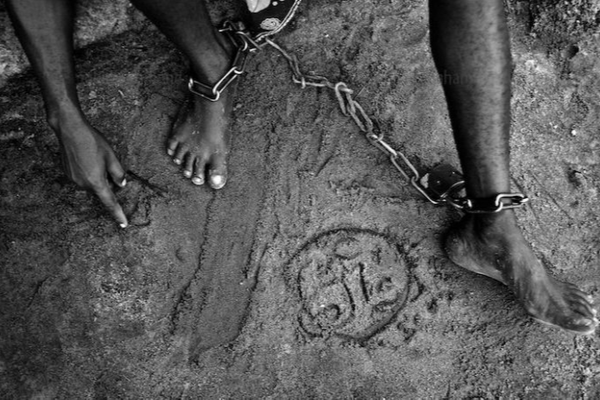
Nigeria is currently losing the mental health awareness and suicide prevention battle on many fronts not the least of them is the stigma attached to mental illness.
Read Also: Surviving Depression
As the country joins the rest of the world to commemorate World Mental Day today, October 10, experts say a lot more needs to be done.
The World Health Organisation (WHO) statistics of mental healthcare delivery for Nigeria show that for every 100,000 cases of mental healthcare delivery, Nigeria has 46 psychiatrists, 20 psychologists and 20 nurses against its 200 million people.

“Mental health is an aspect of our health that is highly neglected from various reasons, either from the fact that we do not understand what is mental health in general, or people are really in denial or ignorant about the fact that mental health does not come physically with blood or fractures that you can see and say you have a problem,” said Maymunah Yusuf Kardiri, medical director and psychiatrists, at Pinnacle Medical Services Limited, while discussing on this year’s World Mental Day theme “Mental Health Promotion and Suicide Prevention” on Classic FM 97.3.
According to Kardiri, mental health is as important as our physical health, explaining that health is holistic wellness, not neglecting mental health and focusing on one’s physical health because they are both interwoven. To her, we have to take mental health much more seriously than physical health.
Quoting the WHO, Kardiri said mental health was a state of wellbeing, where an individual had the ability to realise his or her potentials in life, which means the ability to work productively, fruitfully. It is also the ability to deal with the day-to-day stressors and the ability to give back to the society or community.
“Everyone has mental health but we just do not have mental illness or disorder. There are two distinct words. Mental health has various degrees but we do not have a mental illness which is the medical condition,” said Kardiri.
Also speaking Adisat David Moyo, consultant psychiatrist, Centre for Mental Health Research Initiative, said Nigeria needs to pay more attention to increasing awareness among citizens.

“Mental illness is more than stripping naked; it is not limited to such symptoms. There are some silent symptoms that people who have mental health problems will be coping with because we did not really know about,” she said
Moyo further said that if the changes are so intense and the individual is unable to do things that are essential to livelihood, not functioning well, unable to take care of his/herself, unable to perform the day-to-day activity and perform well in the society by not interacting properly with others within the environment, that is what mental illness is all about.
She explained that level of function is distrusted when one is mentally ill, that where the distress comes in and that is what people see.
“And that is what we always advise people to look out for. Which is, what has changed in this individual? So once you notice that change, it is left for you to look at this person two weeks, one month backward; three months backward and what is the person exhibiting now for you to politely say, “I have known you all my life for these number of period but recently, I noticed this. Is there something that you want me to know about? Is there a way I can help? Friends colleague, family and even concerned citizen should show concern,”
She therefore advised that people should avoid using the word depression loosely, saying it is a fancy word. “Depression is a serious mental illness and up until you are diagnosed with clinical depression you should not use the word.”
However, Nigeria has a very low ratio of mental health experts. Mental health is a key part of the Sustainable Development Goals and despite that the policy on mental health continues to suffer approval from the National Assembly.
The Bill foster advocacy, prevention, treatment, rehabilitation and protects the rights of persons with mental disorders, ensures equal access to treatment and care, discourages stigma and discrimination and sets standards for psychiatric practice in Nigeria.
“Some of our patients go as far as the borders of Cotonue to get free medication. There is a vicious poverty and averages Nigeria live below $1 per day. The bill has not been passed; we need to create this awareness so that medication will be subsidized,” said Moyo.