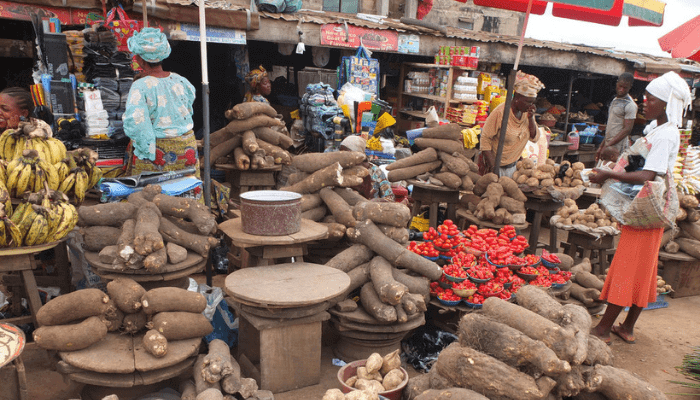
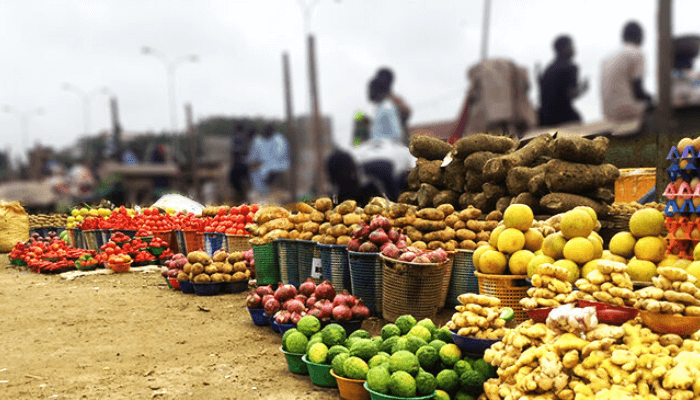
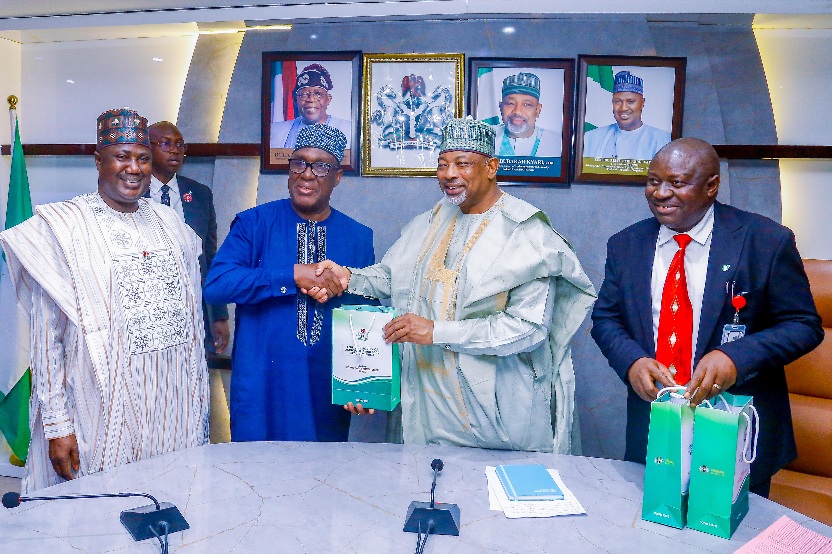
The Nigeria Investment Promotion Council (NIPC) headed by the very dynamic Ms. Yewande Sadiku, just concluded its 1st Direct Investor Summit in Nigeria (DISN). The event was very well attended all through and very engaging till very end. When participants “complain” about not having enough time to go into the depth they would have liked, and linger well beyond the time allotted for sessions, it is usually a testament to the good match between their interests and the topics as well as choice of speakers, from whom they would like to “mine” information more thoroughly.
This was my experience at the breakout session on “Maximizing the Agricultural Value Chains.” The topic has stuck with me and still rings in my head. I am also wondering how Nigeria’s agricultural value chains could successfully transit from being driven predominantly by subsistence farming into a well-oiled machine driven by modern agribusiness. I will start with the conclusion from the session, which was that to maximize the agricultural value chains in Nigeria, they would have to be SMART data-driven, unlocking the comparative advantage we have in each location in Nigeria.
Each location has its unique footprint (soil types, rainfall patterns, humidity levels and so on) which determines what crops/livestock should do best as well as what pests and diseases have to be controlled and what strategies need to be employed to make the agricultural venture sustainable in all ramifications of the term, “sustainable.” Climate smart agriculture is one thing, another is agriculture that is basically smart enough to be commercially viable for the entire chain from producers to processors and consumers.
For example, consumers may have a certain taste in breakfast cereal made from maize and the processor, a business entity can currently forecast what that demand looks like in terms of product to be placed on the market and from the perspective of tonnage of maize supplies that must be available for processing operations to meet the forecasted demand. From there backwards, the data image gets somewhat blurred. How may maize farmers do we have in Nigeria? Where are they located? What have their yields been over the last few seasons? What tonnage can we forecast to be available for all uses? What tonnage will be available to the industrial segment of the market? Will there be enough of the right variety e.g. yellow maize, the type with kernel size greater than 10mm for this processor to buy? What quality standard can we certify the produce will meet in terms of microbe load, impurities, aflatoxins, chemical residues and so on? Can we trace exactly where each bag of maize has come from and can we attest to it that it has been produced in sustainable ways e.g. meeting the sustainability standards of bodies like the Rainforest Alliance?

We are unable to address these data challenges at the moment as there are no public repositories with comprehensive, accurate and up-to-date information that could be mined for such business intelligence. Why is this so? We have traditionally focused on production and aggregation (of produce like in the case of Maize), in ways that do not necessarily overcome the constraints to achieving scale in both productivity, and quality practices of our subsistence farmers. Yes, there have been very many interventions, but the structural problems have not been fixed in ways that embed the lessons towards continuous improvement. Market intelligence of our smallholder (subsistence farmers) remains weak so they do not necessarily produce what industrial buyers are seeking; coordination of smallholders remains weak as secondary data on who is farming what, where, when, how and to what levels of success is still missing so transparency, accuracy and structure is largely missing from smallholder engagement. The lack of coordination hampers access to services like inputs, finance and good logistics and this in turn hampers the efficient aggregation of produce for commodity trading. The absence of a Warehouse Receipts System and good trading platforms means Industrial buyers can’t access a futures market and their supply chains in agricultural raw materials remains insecure thereby hampering investment.
The Business Innovation Facility (BIF), has grappled with these challenges and will present some of the solutions to these challenges in the next article.
Olusoji Apampa
Olusoji Apampa, Country Director, The Business Innovation Facility (Bif). Twitter: @Sojapa E-Mail: Soji.Apampa@Cbinigeria.Com