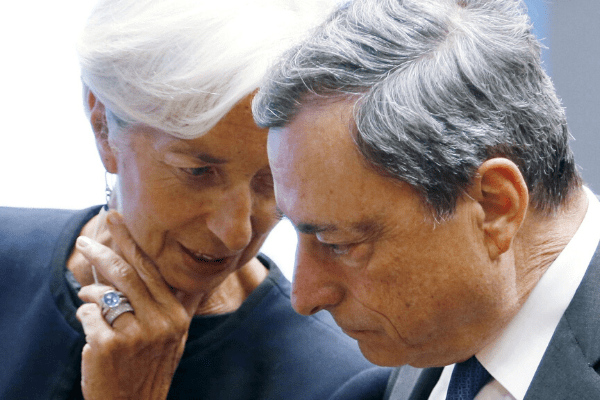
The European Central Bank’s main opponents of Mario Draghi’s recent stimulus package have shifted their attention from criticising his renewed bond-buying programme to piling pressure on to his successor, Christine Lagarde.
The heads of the German, French, Dutch and Austrian central banks have all spoken out this week to call for a change of strategy when Ms Lagarde takes charge at the central bank next month. They hope she will move on from the ambitious monetary easing strategy Mr Draghi has pursued over the past eight years.
In a speech in New York on Wednesday Jens Weidmann, head of Germany’s Bundesbank, said that central banks should “stick to a narrow interpretation of their mandate” of maintaining price stability and keeping inflation in check, warning that interpreting this too broadly would imperil their independence.
Read also: Africa’s eurobonds are a blank cheque

The German central banker has long been the most vocal critic of Mr Draghi’s move to broaden the ECB’S remit by launching unconventional measures such as negative interest rates and substantial bond purchases in response to the eurozone debt crisis.
Many economists question whether the ECB can go much further in this vein as it seeks to head off a fresh economic slowdown. As a result, some believe Ms Lagarde could seek a closer alignment of monetary and fiscal policy, such as buying governments’ bonds in return for investment in infrastructure or climate change mitigation.
Mr Weidmann warned against this. “It is true that, at the lower bound of interest rates, fiscal policy is in theory often considered a powerful instrument,” he said “However, the interests of monetary policy and fiscal policy will not overlap forever.”
He cited Bundesbank analysis that found every 1 per cent rise in wages will push up consumer prices by about 0.3 per cent, saying that once inflation began to rise, central banks would only be able to remove their monetary stimulus if they stayed independent.